
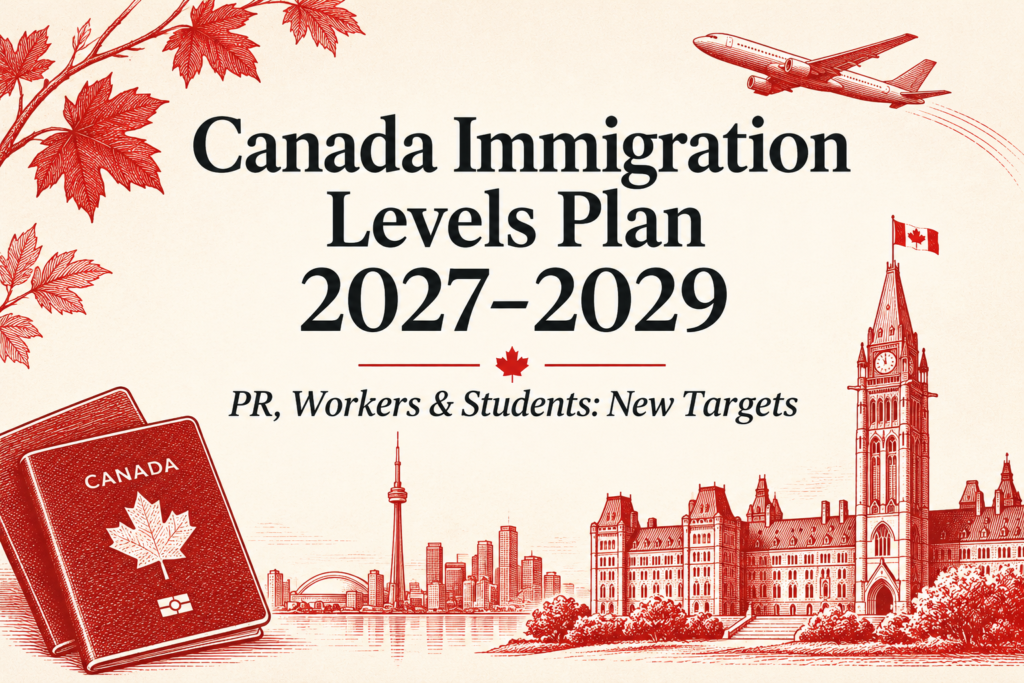
Canada Immigration Levels Plan 2027-2029 has been released by Immigration, Refugees and Citizenship Canada (IRCC), outlining targets for permanent residents, temporary foreign workers and international students over the next three years.
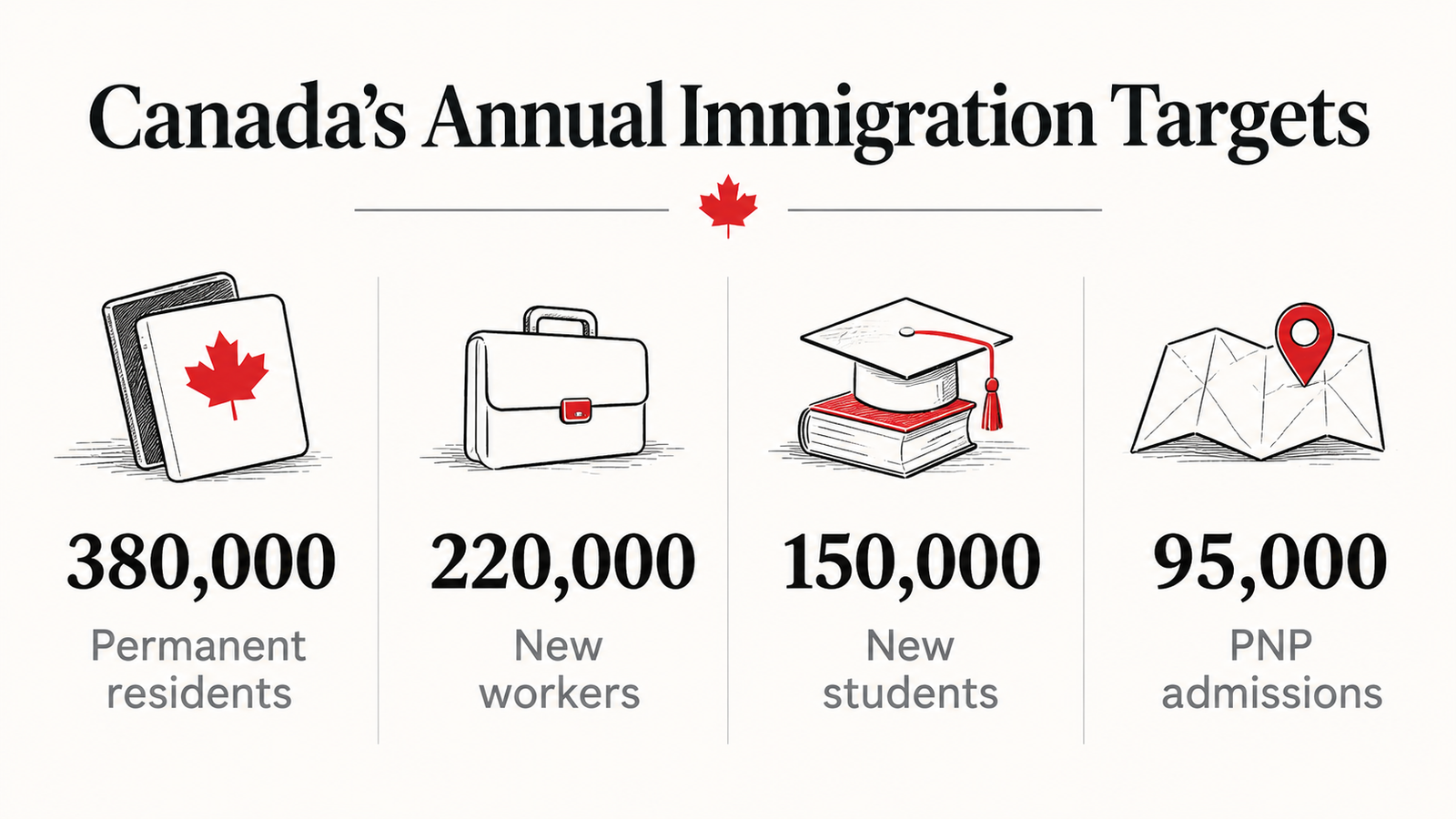
Canada plans to welcome 380,000 permanent residents annually while targeting 370,000 new temporary resident arrivals each year. These figures will influence how applicants prepare for Express Entry, provincial nominations, work permits, study permits and family sponsorship.
But what do these numbers actually mean for people planning to immigrate to Canada?
The answer depends on the immigration pathway. While overall permanent residence admissions remain stable, the government continues to prioritize economic immigration, provincial nominees, family reunification and French-speaking immigration outside Quebec.
In this guide, Eiffel Immigration Solutions explains the official targets, what they mean for applicants and the practical steps to consider before submitting an immigration application.
Canada Immigration Targets: Key Highlights
- 380,000 permanent residents targeted annually.
- 244,700 economic immigration admissions annually.
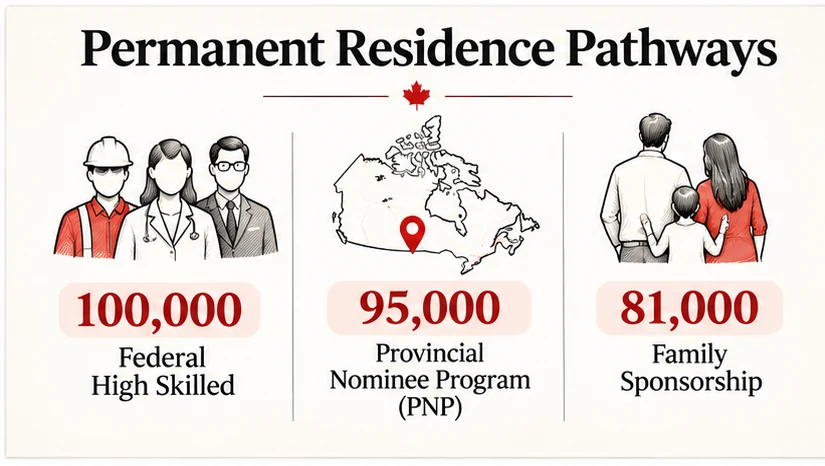
- 100,000 Federal High Skilled admissions annually.
- 95,000 Provincial Nominee Program admissions annually.
- 81,000 family immigration admissions annually.
- 220,000 new temporary worker arrivals annually.
- 150,000 new international student arrivals annually.
The 2028 and 2029 figures are notional targets and may be adjusted in future immigration levels plans.
Table of Contents
- What is the immigration levels plan?
- Annual immigration targets
- Permanent residence pathways
- Express Entry implications
- Provincial Nominee Program
- Temporary foreign worker targets
- International student targets
- French-speaking immigration
- Special immigration measures
- What applicants should do next
- Frequently asked questions
1. Canada Immigration Levels Plan 2027-2029: What Has Changed?
The Canada Immigration Levels Plan 2027-2029 is the federal government’s framework for setting annual immigration admissions targets.
It outlines how many permanent residents Canada intends to welcome and includes targets for new temporary resident arrivals, particularly international students and temporary foreign workers.
The government uses the plan to balance economic priorities, labour-market needs, family reunification, humanitarian commitments and the capacity of Canadian communities to welcome newcomers.
One of the most important details is that an immigration admissions target is not the same as the number of applications IRCC will accept or the number of invitations issued through Express Entry.
Applicants must still satisfy the eligibility requirements of the relevant immigration program.
Official source: IRCC’s official immigration levels plan.
2. Canada Immigration Levels Plan 2027-2029: Annual Targets
The government has outlined the following annual targets for permanent residents and new temporary resident arrivals.
| Immigration Category | 2027 | 2028 | 2029 |
|---|---|---|---|
| Permanent residents | 380,000 | 380,000 | 380,000 |
| Economic immigration | 244,700 | 244,700 | 244,700 |
| New temporary residents | 370,000 | 370,000 | 370,000 |
| New temporary workers | 220,000 | 220,000 | 220,000 |
| New international students | 150,000 | 150,000 | 150,000 |
The targets for 2028 and 2029 are notional and may be reviewed through future annual plans.
Temporary resident arrival targets should be interpreted carefully. They do not represent every work permit or study permit issued, and do not include all extensions or changes of status for people already in Canada.
3. Permanent Residence Targets: Canada’s Main Immigration Pathways
Economic immigration remains the largest component of the plan, with 244,700 permanent resident admissions annually.
Major permanent residence categories include:
| Permanent Residence Category | Annual Target |
|---|---|
| Federal High Skilled | 100,000 |
| Provincial Nominee Program | 95,000 |
| Family immigration | 81,000 |
| Refugees and protected persons | 49,300 |
| Humanitarian and compassionate and other | 5,000 |
Family immigration includes 66,000 admissions for spouses, partners and children, plus 15,000 for parents and grandparents.
These figures are admissions targets, not guaranteed application intake opportunities.
4. What Does the New Immigration Plan Mean for Express Entry?
The Federal High Skilled category has an annual admissions target of 100,000.
This category includes the Canadian Experience Class, Federal Skilled Worker Program and Federal Skilled Trades Program.
For Express Entry candidates, the target confirms that federal economic immigration remains an important part of Canada’s permanent residence system.
However, it does not tell applicants how many Express Entry draws will take place, what future CRS scores will be or how many invitations will be issued in a particular round.
The number of invitations issued and the number of people ultimately admitted as permanent residents are different measures.
Candidates should maintain accurate Express Entry profiles, review their eligibility and consider ways to improve their competitiveness.
5. Provincial Nominee Program: 95,000 Annual Admissions
The Provincial Nominee Program has a target of 95,000 admissions per year.
PNP pathways allow provinces and territories to nominate eligible applicants who meet their specific immigration and economic priorities.
For applicants who may not have a competitive Express Entry score, a provincial nomination could be worth exploring, provided they meet the relevant provincial criteria.
Some streams prioritize occupations, work experience, employer support or connections to a province.
A national PNP admissions target does not mean that every province has the same allocation or that every stream will remain open throughout the year.
6. Canada Work Permit Targets: 220,000 New Temporary Workers
Canada plans for 220,000 new temporary worker arrivals annually.
The target is divided into:
- 170,000 under the International Mobility Program.
- 50,000 under the Temporary Foreign Worker Program.
The International Mobility Program includes various work permit categories where an LMIA may not be required.
The Temporary Foreign Worker Program generally involves employer applications for a Labour Market Impact Assessment.
These arrival targets should not be interpreted as a limit on every work permit extension or application made inside Canada.
Applicants must still meet the relevant immigration requirements, including employer obligations where applicable.
If you are facing a work permit refusal, read our Canada Work Permit Refusal Guide for information about possible next steps.
7. International Student Targets: 150,000 New Arrivals
The plan targets 150,000 new international student arrivals annually.
This figure does not represent the total number of international students already studying in Canada.
It also does not mean that all study permit extensions are included in the new-arrival target.
Prospective students should carefully review their chosen designated learning institution, program eligibility, financial documentation and applicable study permit requirements.
Students already in Canada should monitor their permit expiry dates and maintain legal immigration status.
For useful IRCC resources and application links, visit Eiffel Immigration’s Self-Immigration Toolkit.
8. French-Speaking Immigration Outside Quebec
Canada’s immigration strategy continues to emphasize Francophone immigration outside Quebec.
The plan sets increasing targets for French-speaking permanent residents outside Quebec:
- 2027: 9.5%.
- 2028: 10.5%.
- 2029: 12%.
These targets indicate the federal government’s intention to support Francophone communities outside Quebec.
However, they are not a guarantee of invitations through any particular Express Entry draw or immigration stream.
Applicants with French-language ability should examine the relevant immigration requirements to determine whether they may qualify for a suitable pathway.
9. Special Immigration Measures for People Already in Canada
The supplementary plan also discusses temporary initiatives to facilitate permanent residence transitions for certain people already living in Canada.
These include previously announced measures involving eligible protected persons and certain work permit holders, as well as additional time-limited initiatives.
However, the levels plan alone does not provide a complete eligibility checklist for every special measure.
Applicants should not assume they qualify simply because they hold a work permit, have lived in Canada for several years or have an immigration application in progress.
Detailed IRCC eligibility requirements and implementation instructions should be reviewed before making decisions.
10. What Should Canadian Immigration Applicants Do Next?
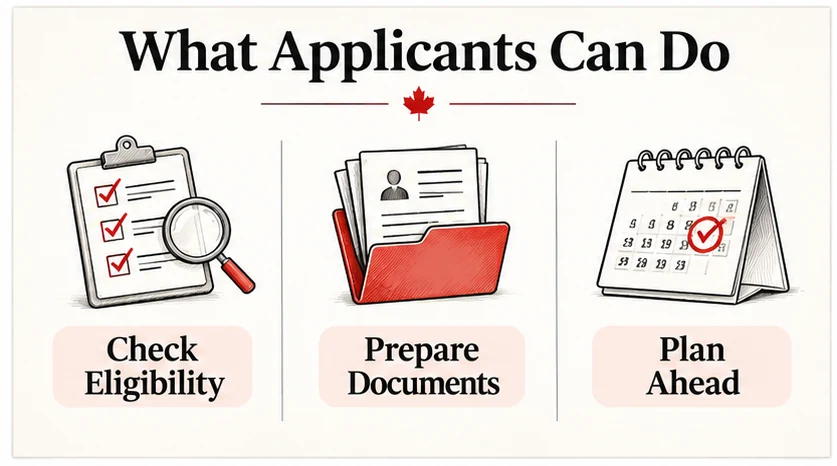
Immigration targets help explain the government’s direction, but the most useful strategy is one based on your personal circumstances.
Check Your Eligibility
Determine whether you meet the requirements for Express Entry, a provincial nomination, family sponsorship or another relevant immigration pathway.
Prepare Your Documents
Review the validity of your passport, language results, educational credentials, employment records and immigration documents.
Plan Around Your Immigration Status
If you are already in Canada, pay close attention to your work permit or study permit expiry date and any deadlines affecting your status.
Monitor Official Announcements
Immigration levels targets do not replace individual program requirements, invitations, application intake announcements or processing rules.
11. How Eiffel Immigration Solutions Can Help
The Canada Immigration Levels Plan 2027-2029 provides important insight into Canada’s future immigration priorities. However, the best pathway for each applicant depends on their education, language ability, work experience, immigration status and eligibility under current IRCC programs.
At Eiffel Immigration Solutions, we help individuals and families understand Canadian immigration options, relevant documentation and application requirements.
Whether you are considering permanent residence, a work permit, a study permit or family sponsorship, our team can help you review your circumstances and explore appropriate next steps.
EIFFEL IMMIGRATION SOLUTIONS
Planning Your Next Step in Canada?
Understand your immigration options and get guidance on the requirements relevant to your situation.
Call us: 905-606-0363
Frequently Asked Questions About Canada’s 2027–2029 Immigration Levels Plan
How many permanent residents will Canada admit in 2027?
The official target is 380,000 permanent resident admissions in 2027. The plan also lists 380,000 as the notional target for 2028 and 2029.
What is Canada’s Express Entry target for 2027?
The Federal High Skilled category has an admissions target of 100,000. This is not the same as the number of Express Entry invitations that will be issued.
How many PNP immigrants will Canada welcome?
The Provincial Nominee Program has an annual admissions target of 95,000 under the plan.
What is the target for international students?
The plan targets 150,000 new international student arrivals per year. This does not represent all international students already in Canada or every study permit extension.
How many new foreign workers will Canada welcome?
The plan targets 220,000 new temporary worker arrivals annually, divided between the International Mobility Program and Temporary Foreign Worker Program.
Will Express Entry CRS scores decrease because of the plan?
The plan does not predict future CRS cut-off scores. Scores depend on the candidates in the pool, the type of draw and the number of invitations issued.
Does the plan guarantee permanent residence for current work permit holders?
No. Work permit holders must meet the requirements of an eligible permanent residence pathway or any applicable special immigration measure.
Are the 2028 and 2029 immigration targets final?
No. IRCC identifies the later-year targets as notional, meaning they may be confirmed or revised through future immigration levels plans.
Official Government Source
Immigration, Refugees and Citizenship Canada:
Supplementary Information for the 2027–2029 Immigration Levels Plan
.
Related Immigration Resources
- Self-Immigration Toolkit
- Canada Work Permit Refusal: Reasons and Next Steps
- Immigration Consultant Fees in Canada
- Book an Immigration Consultation
Disclaimer: This article is for general informational purposes and is based on IRCC’s published immigration levels plan. Targets, program requirements and immigration policies may change. Individual applications are assessed under the applicable immigration rules.
This article is general information, not legal advice. Confirm details with IRCC or a regulated consultant before you act.