
If you’ve been following Canadian immigration, you’ve probably noticed one thing: PNP is becoming more important than ever.
While many applicants still focus only on Express Entry, Canada’s Provincial Nominee Program (PNP) has quietly become one of the biggest pathways to permanent residence.
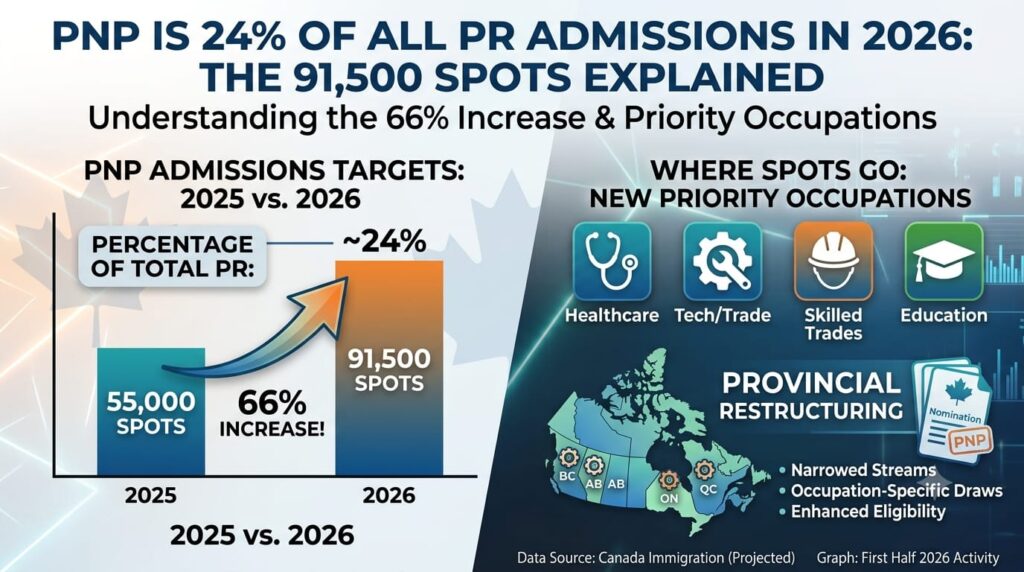
In 2026, Canada plans to welcome 91,500 new permanent residents through PNP, making it almost 24% of the country’s total permanent resident admissions target.
That’s a huge jump compared to previous years and shows that provinces now play a much larger role in selecting immigrants who meet their local labour market needs.
So what does this mean for you? Let’s break it down.
What Is PNP?
The Provincial Nominee Program (PNP) allows Canadian provinces and territories to nominate foreign workers, international graduates, and entrepreneurs for permanent residence.
Instead of relying only on federal immigration programs, provinces choose candidates who have the skills they need the most.
Every province has its own streams based on:
- Skilled workers
- Healthcare professionals
- Trades
- Technology occupations
- International graduates
- French-speaking candidates
- Entrepreneurs
Each province sets its own eligibility criteria depending on local labour shortages.
Why Is Everyone Talking About PNP in 2026?
Canada has significantly increased its reliance on provincial immigration.
The PNP target increased from approximately 55,000 admissions in 2025 to 91,500 in 2026, representing one of the largest increases in recent years.
That means nearly one out of every four new permanent residents this year will come through a Provincial Nominee Program.
This change reflects a simple reality:
Every province has different labour shortages.
Ontario needs healthcare workers.
British Columbia continues focusing on critical occupations.
Atlantic provinces are addressing population growth.
The Prairie provinces are looking for workers in agriculture, manufacturing, transportation, and skilled trades.
Rather than using one national system for everyone, Canada is allowing provinces to choose candidates who fit their regional economic needs.
What Happened During the First Half of 2026?
The first six months of 2026 were extremely active for PNP.
Several provinces introduced major changes to their nomination programs.
Some expanded priority occupation lists, while others became more selective because of limited nomination allocations.
Across Canada, provinces continued issuing invitations to candidates in areas such as:
- Healthcare
- Skilled trades
- Technology
- Education
- Transportation
- Agriculture
- Construction
Many provinces also shifted toward employer-driven pathways, making valid job offers even more valuable than before.
Ontario Continues to Be a Major Player
Ontario remains one of Canada’s most popular destinations for newcomers.
Throughout 2026, the Ontario Immigrant Nominee Program (OINP) continued inviting candidates through streams targeting:
- Healthcare occupations
- Skilled Trades
- Employer Job Offer streams
- International graduates
- Express Entry-linked streams
Ontario has also adjusted some of its selection methods to better align nominations with labour market priorities.
For applicants already working in Ontario, this has created additional opportunities beyond federal Express Entry draws.
Other Provinces Are Becoming More Selective
While Ontario receives significant attention, other provinces are also reshaping their programs.
Several provinces now prioritize candidates who:
- Already live in the province
- Have local work experience
- Hold employer-supported job offers
- Work in occupations experiencing severe labour shortages
- Demonstrate strong long-term settlement potential
Some provinces have also reduced invitations for occupations that are no longer experiencing shortages.
This means choosing the right province has become just as important as improving your CRS score.
Why PNP Can Be Better Than Waiting for Express Entry
Many applicants spend years trying to increase their CRS score.
But PNP can completely change the picture.
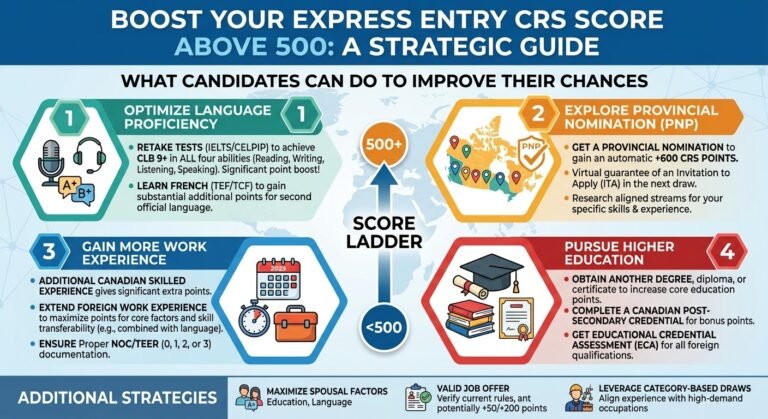
For Express Entry candidates, receiving a provincial nomination typically adds 600 CRS points, making an Invitation to Apply (ITA) almost guaranteed in most cases.
Even applicants outside Express Entry may qualify through base provincial nominee streams, depending on the province’s requirements.
For many people, a provincial nomination has become the fastest route to Canadian permanent residence.
Who Should Consider Applying Through PNP?
You may benefit from PNP if you:
- Have a CRS score below recent Express Entry cut-offs
- Have work experience in an in-demand occupation
- Already work in Canada
- Studied in Canada
- Have a job offer from a Canadian employer
- Speak French
- Want to settle outside the largest metropolitan areas
Many successful applicants receive provincial nominations even when they would not receive a direct Express Entry invitation.
How Can You Improve Your Chances?
Because provinces now focus heavily on labour market needs, applicants should prepare strategically.
Some practical steps include:
- Keeping your Express Entry profile updated
- Researching provincial occupation lists regularly
- Obtaining a valid Canadian job offer where possible
- Improving language test scores
- Completing Educational Credential Assessments (ECA)
- Monitoring provincial invitation rounds
Immigration policies continue to evolve throughout the year, so staying informed is essential.
The Future of PNP Looks Strong
Canada’s decision to allocate 91,500 permanent residence admissions through PNP sends a clear message.
Provincial immigration is no longer just an alternative—it has become one of Canada’s primary immigration pathways.
As labour shortages continue across healthcare, skilled trades, transportation, education, construction, and technology, provinces will likely continue refining their programs to attract workers who can contribute immediately to local economies.
For many applicants, the best immigration strategy may no longer be waiting for lower CRS scores. Instead, it may be identifying the province where their skills are most needed.
Final Thoughts
The PNP has become one of the most important immigration pathways in Canada in 2026. With **91,500 admissions planned—nearly 24% of all permanent resident targets—**provinces are playing a larger role than ever in selecting skilled workers.
Whether you’re already in Canada or applying from abroad, understanding provincial programs could significantly improve your chances of receiving permanent residence.
If your CRS score isn’t competitive, don’t lose hope. A well-planned PNP strategy may be the opportunity you’ve been waiting for.