
For many international students, studying in Canada is more than earning a diploma—it’s the first step toward building a long-term future. A Canadian education often leads to a Post-Graduation Work Permit (PGWP), which provides valuable Canadian work experience and creates a pathway to permanent residence.
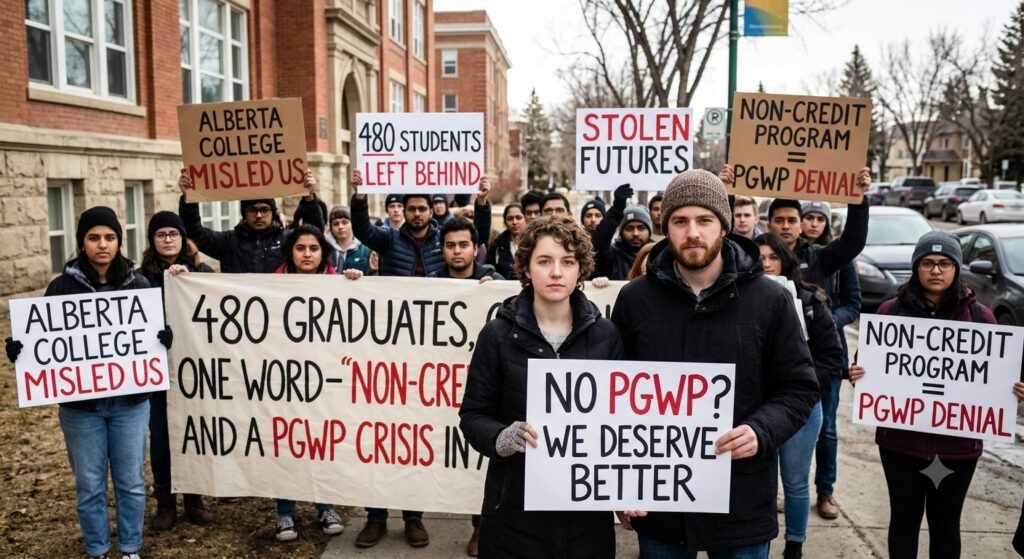
However, nearly 480 graduates in Alberta recently found themselves in a difficult situation because of one unexpected word: “non-credit.”
These students believed they had enrolled in eligible post-secondary programs, only to discover after graduation that their studies did not qualify for a PGWP. The result has left many graduates uncertain about their future in Canada.
In this blog, we’ll explain what happened, why it matters, and what current and future international students can do to avoid making the same mistake.
What Happened in Alberta?
According to recent reports, approximately 480 international students who completed programs at an Alberta institution discovered they were not eligible for a PGWP because the programs they completed were classified as non-credit programs.
Many students believed they were enrolling in programs that would support their immigration goals. Instead, after investing significant time, money, and effort, they learned that their studies did not meet the federal requirements for a Post-Graduation Work Permit.
For students who planned to gain Canadian work experience after graduation, the consequences are significant.
What Is a PGWP?
A Post-Graduation Work Permit (PGWP) is an open work permit that allows eligible international graduates to work for almost any employer in Canada after completing their studies.
The PGWP offers several advantages:
- Gain valuable Canadian work experience
- Improve eligibility for Express Entry
- Qualify for Provincial Nominee Programs (PNPs)
- Increase Comprehensive Ranking System (CRS) scores
- Build a pathway toward permanent residence
For many students, obtaining a PGWP is one of the primary reasons they choose Canada for higher education.
Why Did the Students Become Ineligible?
The issue comes down to one critical factor: program eligibility.
Not every program offered by a Designated Learning Institution (DLI) qualifies for a PGWP.
While many students assume that studying at an approved institution automatically makes them eligible, that is not always true.
To qualify for a PGWP, students generally must complete:
- An eligible program at a designated learning institution
- A program meeting minimum length requirements
- A credential that satisfies federal PGWP regulations
- A program that is not specifically excluded from PGWP eligibility
In the Alberta case, the completed programs were classified as non-credit, meaning they did not satisfy the federal requirements for a Post-Graduation Work Permit.
Why Is “Non-Credit” Such a Big Issue?
The phrase may sound minor, but in immigration, terminology matters.
A credit program generally contributes toward an academic credential such as a diploma, certificate, or degree.
A non-credit program is typically designed for professional development, continuing education, personal enrichment, or specialized training. These programs may provide valuable knowledge but often do not qualify for academic credentials recognized under PGWP rules.
This single distinction can determine whether a graduate is eligible to work in Canada after completing their studies.
The Financial and Emotional Impact
International students invest heavily in their education.
Many spend:
- Tens of thousands of dollars in tuition
- Living expenses
- Health insurance
- Books and supplies
- Travel costs
- Years away from family
Most also make these investments with the expectation of obtaining a PGWP after graduation.
Learning that a completed program does not qualify can create serious challenges, including:
- Losing the opportunity to gain Canadian work experience
- Reduced chances of qualifying for permanent residence
- Difficulty remaining in Canada legally after graduation
- Financial stress
- Emotional uncertainty about future plans
For many graduates, the news came only after completing their studies.
Could This Affect Students Across Canada?
Yes.
Although this case has drawn attention in Alberta, the lesson applies across Canada.
Every year, new programs are introduced, institutions modify course offerings, and immigration policies continue to evolve.
Students should never assume that every program at a designated institution automatically qualifies for a PGWP.
Eligibility depends on both:
- The institution
- The specific academic program
That is why verifying eligibility before accepting an admission offer is extremely important.
How Students Can Protect Themselves
Before enrolling in any Canadian program, international students should carefully verify:
1. Confirm the Institution Is a Designated Learning Institution
Only approved institutions can qualify students for a PGWP.
2. Verify the Program’s PGWP Eligibility
Do not rely solely on marketing materials.
Ask the institution directly whether the specific program qualifies for a Post-Graduation Work Permit.
3. Obtain Written Confirmation
If possible, request written confirmation regarding PGWP eligibility.
This documentation may become valuable if questions arise later.
4. Understand the Credential
Determine whether you will receive:
- Diploma
- Degree
- Certificate
- Graduate certificate
- Non-credit certificate
These distinctions matter.
5. Consult an Immigration Professional
Before paying tuition or accepting admission, consider speaking with a qualified immigration professional who understands current PGWP regulations.
A short consultation can help prevent costly mistakes.
What If You’re Already Studying?
If you’re currently studying in Canada, don’t panic.
Instead:
- Review your program details.
- Confirm your institution’s eligibility.
- Ask your registrar whether your specific credential qualifies for a PGWP.
- Keep records of all communications.
- Seek professional advice if you discover potential issues.
The earlier you identify concerns, the more options you may have.
Canada’s Immigration System Continues to Change
Recent years have brought multiple updates affecting international students, including:
- Changes to PGWP eligibility requirements
- Updates to eligible fields of study
- Provincial nomination program changes
- Study permit reforms
- New immigration pathways
These evolving policies make it increasingly important for students to verify information before making major educational investments.
Final Thoughts
The Alberta case involving approximately 480 graduates serves as an important reminder that even a single word—“non-credit”—can have life-changing immigration consequences.
A Canadian education remains an excellent pathway toward career growth and permanent residence, but careful planning is essential. Students should thoroughly research both their institution and their specific program before enrolling.
If you’re considering studying in Canada or are unsure whether your program qualifies for a PGWP, obtaining accurate advice before making decisions can help protect your future.
Need guidance about your PGWP eligibility? Contact Eiffel Immigration today for professional advice tailored to your academic and immigration goals.