
If you speak French and want to build a future in Canada outside Quebec, Francophone immigration Canada is becoming an area worth watching closely.
And this is not simply about promoting the French language.
These projects are connecting French-speaking candidates with employers, labour shortages, settlement support and immigration opportunities.
For someone sitting outside Canada—or even someone already in Canada wondering whether learning French could improve their options—these announcements show an important direction in Canada’s immigration system.
For skilled workers looking beyond Canada’s largest cities, Francophone Immigration Canada is creating new possibilities in communities that need workers.
The expansion of Francophone Immigration Canada also shows how French-language skills are becoming increasingly relevant to Canada’s economic immigration strategy.
Let’s understand what has changed in simple language.
Why Is Francophone Immigration Canada Becoming So Important?
Canada wants to increase the number of French-speaking permanent residents settling outside Quebec.
Under Canada’s 2026–2028 Immigration Levels Plan, the federal government has set targets for French-speaking permanent resident admissions outside Quebec at:
- 9% in 2026
- 9.5% in 2027
- 10.5% in 2028
The longer-term objective is to reach 12% by 2029.
Canada also reserved 5,000 federal immigration spaces beginning in 2026 that allow provinces and territories to designate French-speaking immigrants, in addition to their regular Provincial Nominee Program allocations.
That tells us something important:
French is increasingly becoming more than an extra CRS advantage. It is part of Canada’s broader immigration strategy.
What Are the New Francophone Immigration Canada Projects?
IRCC recently announced several projects through the Francophone Immigration Support Program.
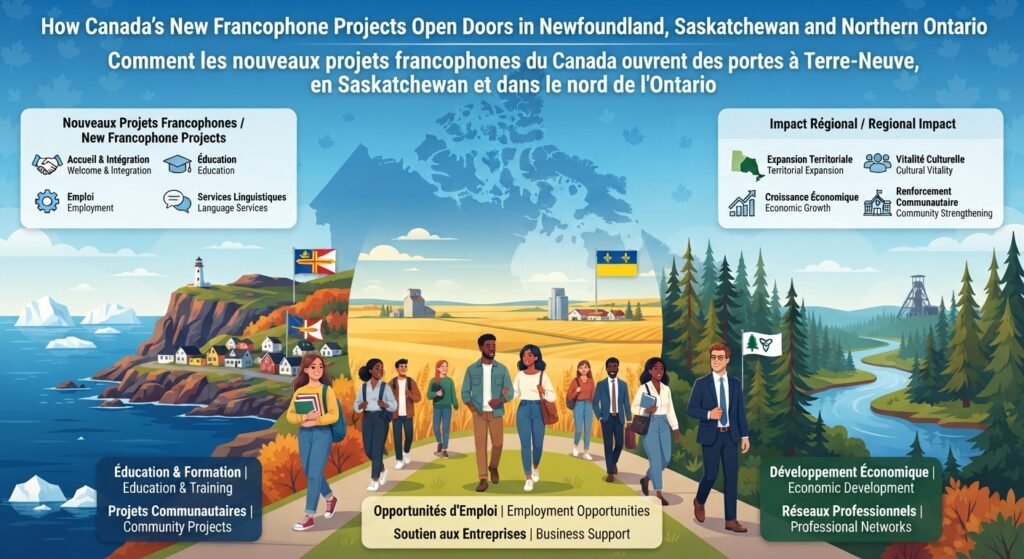
Three locations stand out for prospective immigrants:
Newfoundland and Labrador, Saskatchewan and Northern Ontario.
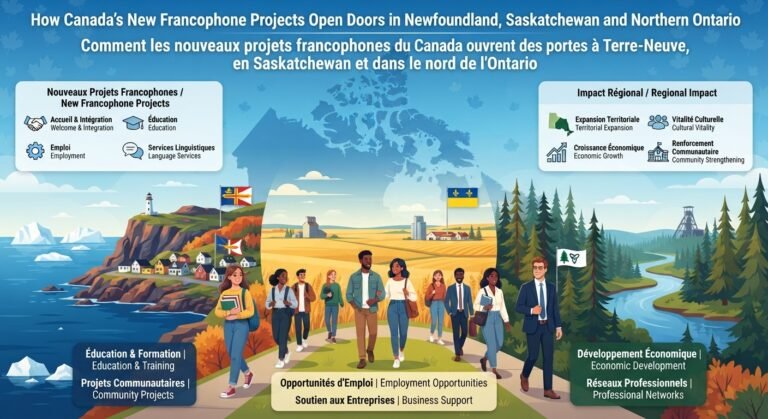
Each project works differently, but they share a similar goal—connect French-speaking or bilingual newcomers with communities and employers that need workers.
Let’s look at them individually.
1. Newfoundland and Labrador: Recruiting Francophone and Bilingual Workers
Newfoundland and Labrador is a good example of how Francophone Immigration Canada can connect French-speaking talent with local labour shortages.
For eligible French-speaking professionals, Francophone Immigration Canada may provide another reason to explore opportunities outside Canada’s largest provinces.
The federal government is providing $350,000 over two years for the initiative.
The province plans to conduct targeted international recruitment with a particular focus on workers who can contribute to important sectors.
These include:
Education
Health care
Early childhood education
The idea is to create a more sustainable pipeline of French-speaking and bilingual workers who can contribute to both the economy and French-language services in Newfoundland and Labrador.
What Could This Mean for Candidates?
If you are a French-speaking professional working in health care, education or early childhood services, Newfoundland and Labrador may become a region worth monitoring.
However, candidates need to understand one important point:
This announcement itself is not a new automatic PR program.
It is a recruitment and integration initiative.
Your eventual immigration pathway may depend on the program you qualify for, your occupation, job offer, language ability and other eligibility requirements.
2. Saskatchewan: Connecting French Speakers Directly With Employers
The Saskatchewan project is particularly interesting because it focuses heavily on matching international talent with actual labour-market needs.
Called Destination Saskatchewan, the two-year initiative is receiving $569,000 in funding.
The project is expected to target employers in sectors including:
Agriculture
Health care
Mining
Energy
Technology
Hospitality
This could create new opportunities for French-speaking candidates with experience in these industries.
Francophone Immigration Canada and Saskatchewan’s New Recruitment Model
One of the interesting parts of the Saskatchewan project is the proposed “Demand-Offer” mapping platform.
In simple language, the goal is to better connect:
What Saskatchewan employers need
with
What skills French-speaking candidates have.
The project also plans international recruitment activities called Speed-Jobbing, which can take place virtually and in person.
Support is also expected to include help with diploma recognition, professional certification equivalencies, cultural transition and retention after arrival.
That last point matters.
Canada is not only trying to recruit Francophone immigrants—it also wants them to stay and build their lives in these communities.
3. Northern Ontario: “Osez le Nord”
Northern Ontario is also receiving additional attention through a strategy called Osez le Nord, or “Dare the North.”
The project is receiving $300,000 over two years.
Its goal is to bring together organizations involved in Francophone immigration across Northern Ontario and promote the region internationally.
Instead of every newcomer automatically looking toward Toronto, Ottawa, Vancouver or another major metropolitan area, Canada wants more immigrants to consider smaller and northern communities.
For French-speaking newcomers, Northern Ontario could therefore become increasingly important.
Another Northern Ontario Project Could Connect Workers Directly With Jobs
There is another project that deserves attention.
The Société économique de l’Ontario is leading an initiative designed to place approximately 90 qualified Francophone candidates and their families into jobs that match labour needs in Northern Ontario.
The federal government has allocated approximately $909,000 over three years for this project.
Employers are expected to participate directly in integrating these workers into priority sectors.
This is important because employment is often one of the biggest challenges newcomers face.
Rather than attracting people first and asking them to figure everything out afterward, these initiatives increasingly try to connect immigration + employment + community settlement.
Does Northern Ontario Already Have Francophone PR Pathways?
Yes, and this is where the bigger picture becomes interesting.
Canada’s Francophone Community Immigration Pilot (FCIP) already provides a permanent residence pathway for eligible skilled workers who want to work and settle in participating Francophone minority communities.
Three participating FCIP communities are located in Ontario:
Sudbury
Timmins
Superior East Region
There are also Rural Community Immigration Pilot communities across Northern Ontario.
This does not mean every French-speaking worker in Northern Ontario automatically qualifies for PR.
Candidates must meet the requirements of the applicable immigration program, including requirements related to employment and community recommendation where applicable.
But it shows why Northern Ontario is becoming an important region within the wider Francophone immigration Canada strategy.
French Can Also Help Through Express Entry
You do not necessarily have to move to one of these communities to benefit from speaking French.
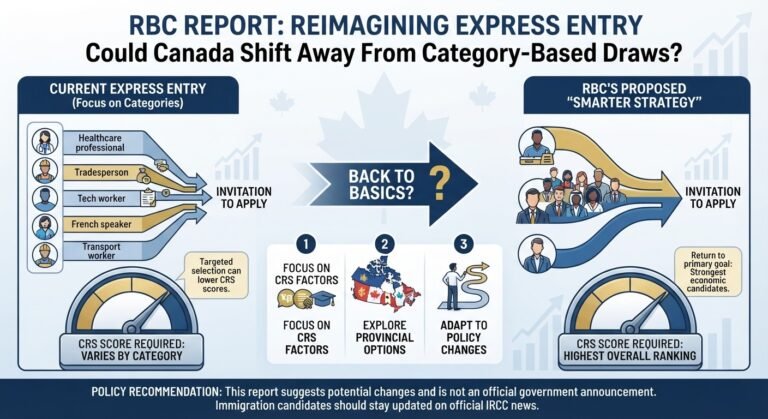
French-language proficiency continues to have its own Express Entry category.
Canada uses Express Entry as one of its main tools for increasing French-speaking permanent resident admissions outside Quebec.
Strong French ability can therefore potentially help candidates in more than one way.
Depending on their circumstances, candidates may explore pathways involving:
Express Entry French-language category
Francophone Community Immigration Pilot
Provincial Nominee Programs
Francophone Mobility work permits
Francophone Minority Communities Student Pilot
and other economic immigration programs.
Eligibility is different for every pathway, so speaking French alone does not guarantee permanent residence.
Is Learning French Worth It for Canadian Immigration?
For many candidates, French is certainly becoming more relevant.
But don’t think of French as simply:
“Learn French and get PR.”
Immigration does not work that way.
Instead, think of French as an additional skill that may open immigration and employment opportunities.
For example, imagine two candidates with similar education and work experience.
One speaks only English.
The other has strong English and French.
The bilingual candidate may potentially have access to additional opportunities, depending on their language test results, occupation and immigration program.
That’s why people planning their Canadian immigration journey should increasingly consider whether improving their French is realistic for them.
Francophone Immigration Canada Is Bigger Than Express Entry
This is perhaps the biggest takeaway from these announcements.
For years, many applicants associated French mainly with extra CRS points or French-category Express Entry draws.
Canada’s strategy is now much broader.
The government is investing in:
International recruitment
Employer connections
Community settlement
Credential recognition
French-language services
Regional immigration
and pathways toward permanent residence.
The goal is not simply to invite French-speaking candidates to Canada.
The goal is to encourage more French-speaking newcomers to work, settle and remain in communities outside Quebec.
Who Should Pay Attention to These New Projects?
These developments may be especially relevant for French-speaking or bilingual candidates working in areas such as:
- Health care
- Education
- Early childhood education
- Agriculture
- Mining
- Energy
- Technology
- Hospitality
The exact opportunities differ by province and community.
Your occupation, work experience, French level, English ability, licensing requirements and job prospects should all be reviewed before choosing an immigration pathway.
Final Thoughts from Eiffel Immigration
The latest announcements show that Francophone immigration Canada is moving beyond just Express Entry draws.
Newfoundland and Labrador wants to recruit French-speaking and bilingual professionals.
Saskatchewan wants to connect international Francophone talent directly with employers in industries facing labour needs.
Northern Ontario is investing in attracting, employing and retaining French-speaking newcomers and already has communities participating in federal immigration pilots.
For prospective immigrants, the message is simple:
French could open more than one door.
It may help with Express Entry, but it could also connect candidates with regional recruitment initiatives, employers, community immigration programs and provincial opportunities.
However, these projects should not be confused with automatic PR programs. A recruitment opportunity, job connection or ability to speak French does not guarantee permanent residence.
The right approach is to look at your French level + occupation + work experience + job opportunities + immigration program together.
As Canada continues increasing its Francophone immigration targets outside Quebec, French-speaking and bilingual candidates should keep a close eye on Newfoundland and Labrador, Saskatchewan and Northern Ontario.
Disclaimer: This article is for general information only. Immigration programs, eligibility requirements and community priorities can change. Candidates should review the latest IRCC and provincial requirements before making immigration, employment or educational decisions.