
With only a few months left in 2026, many Express Entry candidates are watching the remaining invitation rounds closely. The big question now is: which Express Entry categories could receive invitations before the end of the year, and what should candidates do now to be ready?
There is no fixed public schedule guaranteeing which category IRCC will select next. However, IRCC has clearly identified the categories it is using for 2026, and recent draws give candidates useful information about the direction of the program.
The latest Express Entry draw on September 15, 2026, invited 2,000 candidates through the Canadian Experience Class (CEC) with a minimum CRS score of 519. The following day, on September 16, IRCC invited 250 candidates under the Senior Managers with Canadian Work Experience category, with a CRS cut-off of 389.
So, if you are currently in the Express Entry pool—or planning to enter it—this is an important time to review your profile.
What Express Entry categories are active in 2026?
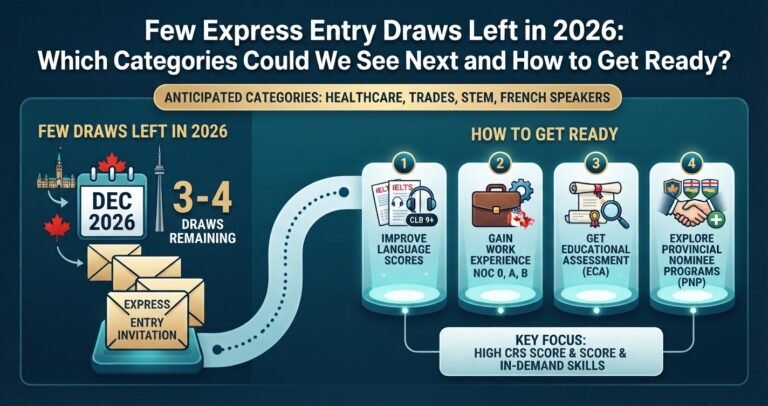
For 2026, IRCC has confirmed several categories under category-based selection.
These include:
- French-language proficiency
- Healthcare and social services occupations
- Science, Technology, Engineering and Mathematics (STEM) occupations
- Trade occupations
- Education occupations
- Transport occupations
- Physicians with Canadian work experience
- Senior managers with Canadian work experience
- Researchers with Canadian work experience
- Skilled military recruits
IRCC also continues to conduct program-specific rounds, including Canadian Experience Class and Provincial Nominee Program draws.
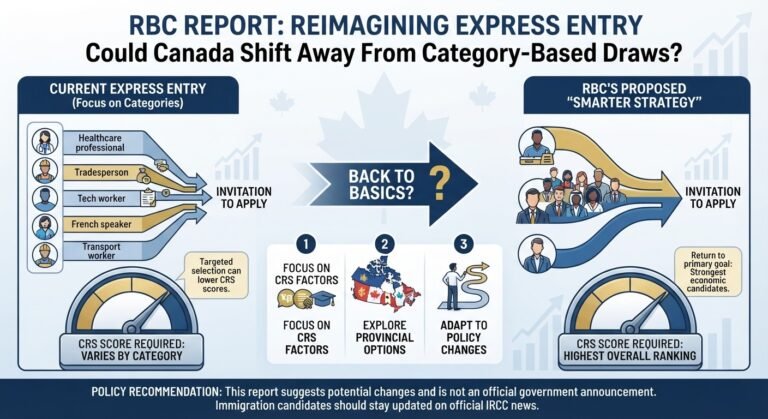
This means candidates should not look at Express Entry as simply a single CRS competition. Your chances of receiving an invitation depend on which round IRCC conducts and whether your profile meets that round’s requirements.
1. Canadian Experience Class could remain important
The CEC has been one of the most active Express Entry pathways in 2026.
On September 15, IRCC issued another 2,000 CEC invitations at CRS 519. Recent CEC rounds were:
| Date | ITAs | CRS |
|---|---|---|
| August 18, 2026 | 1,000 | 523 |
| September 1, 2026 | 2,000 | 521 |
| September 15, 2026 | 2,000 | 519 |
The recent movement shows why candidates should not assume that one CRS cut-off will remain constant. Draw size, pool composition and IRCC’s selection strategy can all affect the cut-off.
If you are gaining Canadian skilled work experience, make sure you understand when you will become eligible for CEC.
Generally, CEC requires at least 12 months of qualifying skilled Canadian work experience in TEER 0, 1, 2 or 3 within the previous three years, subject to the program’s other requirements.
What should CEC candidates do now?
If you are approaching one year of eligible Canadian experience:
- Track your exact qualifying work experience.
- Confirm your NOC and job duties.
- Keep employment letters and supporting documents.
- Maintain valid status in Canada.
- Check that your language test remains valid.
- Recalculate your CRS as your circumstances change.
- Prepare your Express Entry profile rather than waiting until the last minute.
2. French-language category
French remains one of IRCC’s designated 2026 Express Entry categories.
Candidates generally need French-language test results showing at least NCLC 7 in all four abilities to qualify for the French-language category, along with the other requirements applicable to the round.
For candidates who already speak French, this category can therefore be particularly important to monitor.
If you have not taken an approved French-language test, planning ahead matters. A candidate should not wait for an Express Entry draw announcement before starting the testing process.
3. Healthcare and social services
Healthcare and social services continues to be a designated category for 2026.
The category includes a range of occupations, and candidates generally need at least 12 months of eligible work experience in the previous three years in an occupation listed for the category. The experience can generally be gained in Canada or abroad, subject to the category requirements.
This can be relevant to professionals working in areas such as healthcare and social services.
However, having a job title that sounds related to healthcare is not enough. The actual NOC, duties and qualifying work experience need to be reviewed.
4. Trades and transport could also be relevant
IRCC has retained trade occupations as a 2026 category and added transport occupations to its category-based selection priorities.
The transport category is particularly notable because IRCC specifically identified occupations such as:
- Aircraft mechanics
- Aircraft inspectors
- Air pilots
- Flight engineers
- Flying instructors
- Aircraft instrument, electrical and avionics mechanics and technicians
- Automotive service technicians and related mechanics
Eligibility depends on the specific occupation and the requirements established by IRCC for the category.
For people working in skilled trades or transportation, now is a good time to verify whether their actual occupation—not simply their job title—matches an eligible NOC.
5. Education and STEM categories
Education and STEM also remain part of Canada’s 2026 category-based Express Entry system.
IRCC has increased the minimum work experience requirement for the renewed occupation-based categories from six months to one year of eligible experience within the previous three years.
This is an important point for candidates who may have assumed that a shorter period of experience would be sufficient based on older Express Entry information.
Before relying on a category, candidates should verify the current IRCC requirements.
6. Newer categories: physicians, researchers and senior managers
One of the major changes in 2026 is the introduction of additional categories.
IRCC introduced categories for:
- Physicians with Canadian work experience
- Researchers with Canadian work experience
- Senior managers with Canadian work experience
- Transport occupations
- Skilled military recruits
The government says these categories are intended to help attract and retain talent in areas identified as important to Canada’s labour market.
The September 16, 2026 Senior Managers draw demonstrates that these newer categories are not merely theoretical. IRCC issued 250 invitations in that round at a CRS cut-off of 389.
For professionals who may qualify under one of these categories, it is worth checking eligibility even if their CRS is considerably below recent CEC cut-offs.
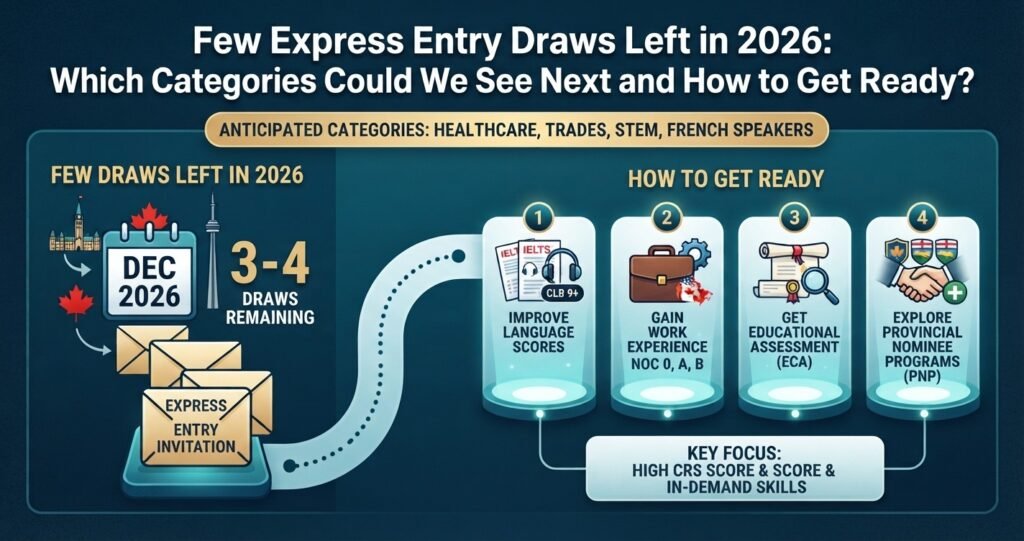
How to Get Ready Before the Remaining 2026 Draws
You do not need to wait for the next Express Entry draw to prepare.
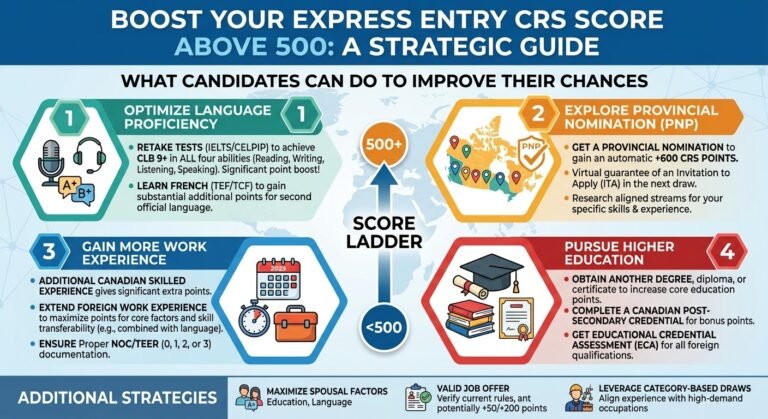
1. Check your CRS score
Start by calculating your current CRS score.
Then identify what could realistically change your score:
- Better language results
- Additional skilled work experience
- Canadian education
- Additional education
- Spouse factors
- Provincial nomination
- Other eligible CRS factors
IRCC states that candidates in the pool should keep their profiles updated when their circumstances change.
2. Check your NOC carefully
Your occupation can affect both Express Entry eligibility and category-based eligibility.
Do not select a NOC simply because the job title looks similar.
Review:
- Main duties
- Employment history
- TEER category
- Length of experience
- Whether the occupation appears in the relevant 2026 category
3. Check your language test expiry
A language test that is valid today may not remain valid when you receive an invitation or submit your application.
If your test is approaching expiry, review your options early.
For French-language candidates, verify whether your results meet the NCLC 7 requirement in all four abilities.
4. Prepare your documents now
If you receive an Invitation to Apply, you generally have 60 days to submit your permanent residence application.
That is not a long period to start collecting everything from scratch.
Depending on your situation, documents may include:
- Passport
- Language test results
- Educational Credential Assessment
- Education documents
- Employment reference letters
- Police certificates
- Proof of funds, where required
- Civil status documents
- Canadian employment records
- Supporting documents for your work experience
5. Do not rely only on the CRS
A CRS score by itself does not tell the whole story.
A candidate with a CRS below recent CEC cut-offs may still need to examine whether they qualify for a category-based round.
For example, someone with eligible French-language ability, healthcare experience, STEM experience, trade experience, transport experience, or qualifying Canadian experience as a physician, researcher or senior manager may have additional pathways to consider.
What Should Candidates Expect for the Rest of 2026?
The most important point is that IRCC does not guarantee a fixed sequence of remaining draws.
The department decides the type of round, the number of candidates to invite and the eligibility requirements for category-based rounds.
Therefore, candidates should avoid relying on statements such as:
“The next draw will definitely be CEC.”
or
“The next category will definitely have a CRS below 500.”
Those outcomes cannot be guaranteed in advance.
Instead, the better approach is to prepare for the categories that match your actual profile.
If your CRS is close to recent CEC scores, keep your profile active and updated. If your CRS is lower, investigate whether you qualify for a category-based selection round or a Provincial Nominee Program.
Final Thoughts from Eiffel Immigration
The remaining Express Entry draws of 2026 could be important for candidates who have already entered the pool as well as those who are approaching eligibility.
The latest rounds show that IRCC continues to use a combination of CEC, PNP and category-based selection, rather than relying on one single type of draw. The 2026 categories also provide opportunities for candidates with French-language ability, healthcare, STEM, trades, education and transport experience, as well as certain physicians, researchers, senior managers and skilled military recruits.
The best time to prepare is before the ITA arrives.
At Eiffel Immigration, we can review your Express Entry profile, assess your CRS and category eligibility, and help you understand which factors may affect your permanent residence strategy.
Have questions about your Express Entry profile? Message Eiffel Immigration to know more.
Information in this article is based on IRCC information available as of September 18, 2026. Express Entry draw dates, CRS cut-offs, invitation numbers and category requirements can change. Candidates should always verify the current requirements on the official IRCC website before taking action