

For years, Canada built its reputation as one of the most welcoming destinations for international students. The promise was simple: study, gain work experience, and transition to permanent residency.
But Canada student visa changes 2026 are reshaping that promise.
After nearly a decade of rapid expansion, Canada is now tightening its immigration system—and international students are at the center of this shift.
A Turning Point in Immigration Policy
The latest Canada student visa changes 2026 reflect a major policy reset.
According to official data from Immigration, Refugees and Citizenship Canada (IRCC), the number of incoming students and temporary workers is declining significantly. This is not accidental—it is a controlled reduction.
The government has introduced:
- Caps on study permits
- Stricter financial requirements
- Mandatory verification of acceptance letters
- Reduced intake targets through 2028
These measures signal a clear move away from the open-door era toward a more selective system.
The Numbers Behind Canada Student Visa Changes 2026
The data tells a compelling story.
As per IRCC statistics (updated January 31, 2026):
- December 2023: 95,310 study permit holders entered Canada
- February 2025: Only 4,075 arrivals recorded
This sharp drop highlights how Canada student visa changes 2026 are already impacting real numbers.
Looking ahead:
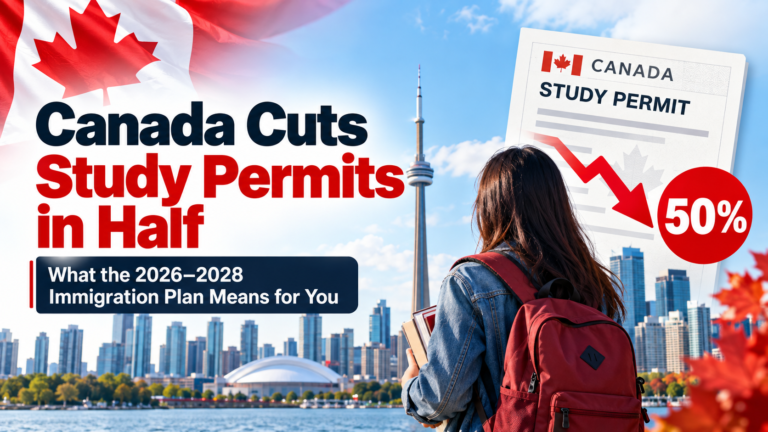
- Canada plans to issue 408,000 study permits in 2026, down from 485,000 in 2024
- Temporary resident levels are being reduced across the board
This isn’t a temporary dip—it’s a structural correction.
Why Canada Is Tightening Student Intake
To understand Canada student visa changes 2026, you need to look beyond immigration.
Canada faced several challenges:
- Housing shortages in major cities
- Increased strain on healthcare and infrastructure
- Concerns about misuse of study permits
- Rapid growth that outpaced system capacity
International students were a major contributor to population growth, which made them a key focus of policy adjustments.
The Impact on International Students
The new Canada student visa changes 2026 are already affecting applicants worldwide.
For New Applicants:
- Lower approval rates
- Higher financial proof requirements
- Increased scrutiny of colleges and programs
For Current Students:
- Changes in Post-Graduation Work Permit (PGWP) eligibility
- Restrictions on spousal open work permits
- Greater competition for permanent residency pathways
In short, the journey from student to PR is no longer automatic.
What About Work Opportunities?
The impact of Canada student visa changes 2026 goes beyond study permits.
Work permit trends show a similar decline:
- Over 63,000 work permits issued in March 2024
- Dropping to around 14,000 by early 2025
Canada is now prioritizing:
- Skilled workers already in the country
- Occupations facing real labor shortages
- Economic alignment over volume
This means students must now plan their careers more strategically than ever.
Is Canada Closing Its Doors?
Despite the headlines, Canada student visa changes 2026 do not mean Canada is shutting down immigration.
Instead, the system is evolving.
Canada still:
- Relies on international talent
- Maintains strong permanent residency targets
- Offers pathways for skilled graduates
However, the focus has shifted to:
- Quality over quantity
- Strategic selection over open access
The New Reality: Strategy Over Simplicity
Previously, the pathway was straightforward:
Under Canada student visa changes 2026, this pathway still exists—but with conditions.
Students must now:
- Choose programs aligned with in-demand occupations
- Gain relevant Canadian work experience
- Stay informed about policy updates
- Compete in a more selective system
Success now depends on planning—not just participation.
Opportunities Still Exist for the Right Candidates
Even with Canada student visa changes 2026, opportunities remain strong for well-prepared students.
Canada continues to value:
- Skilled graduates in healthcare, trades, and technology
- Candidates with Canadian work experience
- Applicants aligned with economic priorities
For those who adapt to the new system, the long-term benefits remain significant.
The Bigger Immigration Picture
Canada’s immigration strategy is shifting toward balance.
Key long-term goals include:
- Reducing temporary residents to sustainable levels
- Aligning immigration with housing and infrastructure capacity
- Maintaining economic growth through targeted immigration
The Canada student visa changes 2026 are part of this broader transformation.
Final Thoughts
The era of easy access is over.
The era of strategy has begun.
Canada student visa changes 2026 mark a turning point—not just for students, but for the entire immigration system.
Canada is still one of the best destinations in the world for education and long-term settlement. But today, success requires:
- Better planning
- Stronger profiles
- Smarter decisions
For international students, the opportunity is still there—but it now belongs to those who approach it with clarity and purpose.