
Canada’s immigration system is once again facing growing delays — and this time, many skilled worker applicants are feeling the pressure.
The latest updates from Immigration, Refugees and Citizenship Canada (IRCC) show that processing times for Express Entry and Provincial Nominee Program (PNP) applications have increased in 2026. For many candidates waiting for permanent residence approval, this means longer uncertainty, delayed career plans, and extended stress.
If you are planning to apply for PR this year or already waiting for a decision, understanding these new timelines is extremely important.
Express Entry Processing Times Are Increasing
According to recent IRCC updates, several Express Entry categories have moved beyond the traditional six-month service standard.
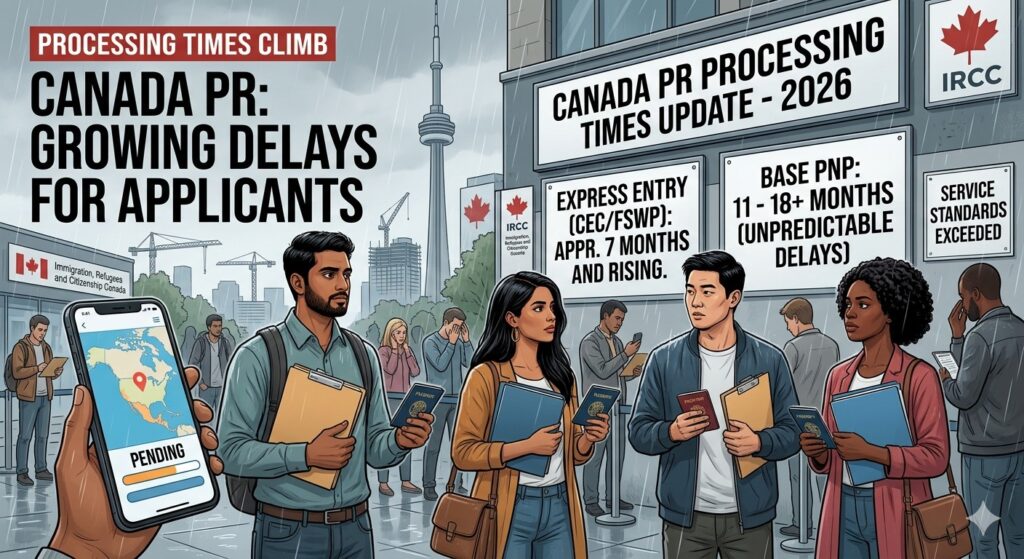
Current estimates for processing times now show:
- Canadian Experience Class (CEC): around 7 months
- Federal Skilled Worker Program (FSWP): around 7 months
- Express Entry linked PNP streams: around 7 months or more
This may not sound like a major increase, but for applicants waiting for medical updates, background checks, or Confirmation of Permanent Residence (COPR), even one extra month can feel significant.
Many applicants on immigration forums and communities are also reporting slower movement in background verification and portal updates compared to previous years.
Base PNP Applicants Facing Longer Delays
The biggest concern right now is for non-Express Entry PNP applicants.
Federal processing times for base Provincial Nominee Program applications is now taking approximately 11 to 18 months in many cases.
This timeline does not even include the provincial nomination stage, which can itself take several months depending on the province.
For applicants under streams like:
- OINP Employer Job Offer
- BC PNP Skills Immigration
- Manitoba PNP
- Saskatchewan PNP
- Alberta Opportunity Stream
the total PR journey can become much longer than expected.
Some applicants are now reporting processing times of over 18 months due to security checks, workload pressure, and growing application inventories.
Why Are Processing Times Increasing?
There are several reasons behind these rising processing times in Canada’s immigration system.
1. Higher Application Volumes
Canada continues to receive a massive number of immigration applications across all categories.
IRCC inventories for permanent residence programs have increased in recent months, especially in Express Entry and PNP streams.
More applications naturally create longer queues.
2. More Targeted Draws
IRCC is now conducting more category-based and PNP-specific draws.
While this helps Canada address labour shortages, it also means officers are processing applications across multiple priority streams at the same time.
This creates uneven workloads and slower movement for some applicants.
3. Increased Background and Security Checks
Applications involving multiple countries of residence, extensive travel history, or additional document verification may take longer.
Many applicants are noticing extended background verification timelines in 2026 compared to previous years.
4. Operational Pressure at IRCC
Reports earlier this year suggested staffing pressures and growing operational demand within IRCC.
At the same time, Canada continues handling:
- visitor visa backlogs,
- work permit applications,
- citizenship files,
- refugee processing,
- and major event-related travel demand.
All of this impacts overall processing capacity.
What This Means for PR Applicants
If you are applying for PR in 2026, patience and preparation are becoming more important than ever.
Longer processing times can affect:
- work permit renewals,
- travel plans,
- family sponsorship timelines,
- job changes,
- and mental stress during the waiting period.
For temporary residents in Canada, delays may also create uncertainty around status extensions and bridging open work permits.
That is why applicants should avoid assuming older timelines still apply.
How Applicants Can Avoid Additional Delays
Although some delays are beyond your control, there are still ways to reduce the risk of complications.
Submit a Complete Application
Missing documents remain one of the biggest causes of delays.
Before submission, carefully review:
- employment letters,
- police certificates,
- proof of funds,
- travel history,
- and language results.
Even a small mistake can trigger additional review requests.
Keep Documents Updated
Expired passports, medical exams, or police clearances can slow down final decisions.
Make sure your file stays current throughout processing.
Monitor IRCC Updates Regularly
IRCC processing estimates can change every month.
Applicants should regularly check official updates rather than relying only on older timelines or unofficial social media posts.
Is Canada Slowing Down Immigration?
Not exactly.
Canada is still actively inviting skilled immigrants through Express Entry and Provincial Nominee Programs. In fact, IRCC continues conducting regular draws throughout 2026.
However, the system is clearly under pressure.
The government is trying to balance:
- immigration targets,
- economic priorities,
- housing concerns,
- and operational capacity.
As a result, applicants should expect a more competitive and slower PR environment compared to earlier years.
Final Thoughts
The latest Canada PR update confirms that rising processing times are becoming a major reality for Express Entry and PNP applicants in 2026.
While Express Entry remains faster than many other pathways, delays are increasing across several streams. Base PNP applicants are facing even longer waiting periods, especially at the federal stage.
For applicants, the best approach right now is:
- submit a strong and complete application,
- prepare for longer timelines,
- maintain valid status in Canada,
- and stay informed about IRCC updates.
Canada’s immigration system is still moving forward — just not as quickly as many applicants hoped.