
Canada’s immigration system is changing again — and this time, the spotlight is on French-speaking candidates in Express Entry.
Over the last few months, immigration professionals and applicants have noticed something interesting: the number of French-speaking profiles in the Express Entry pool is getting smaller.
At first glance, this may sound like just another immigration update. But if you’re planning for Canadian PR in 2026, this trend could directly affect your chances — whether you speak French or not.
So, what does this really mean?
Why Is Canada Focusing on Francophone Candidates?
Canada has been actively trying to increase the number of Francophone-speaking immigrants outside Quebec.
To support this goal, IRCC started conducting category-based Express Entry draws specifically for French-language proficiency.
These draws usually have:
- Lower CRS scores
- More invitations
- Faster PR opportunities for eligible candidates
For many temporary residents, learning French became one of the biggest PR strategies in the last two years.
And honestly — it worked.
Thousands of applicants improved their CRS scores through Francophone and received invitations even when general Express Entry draws remained competitive.
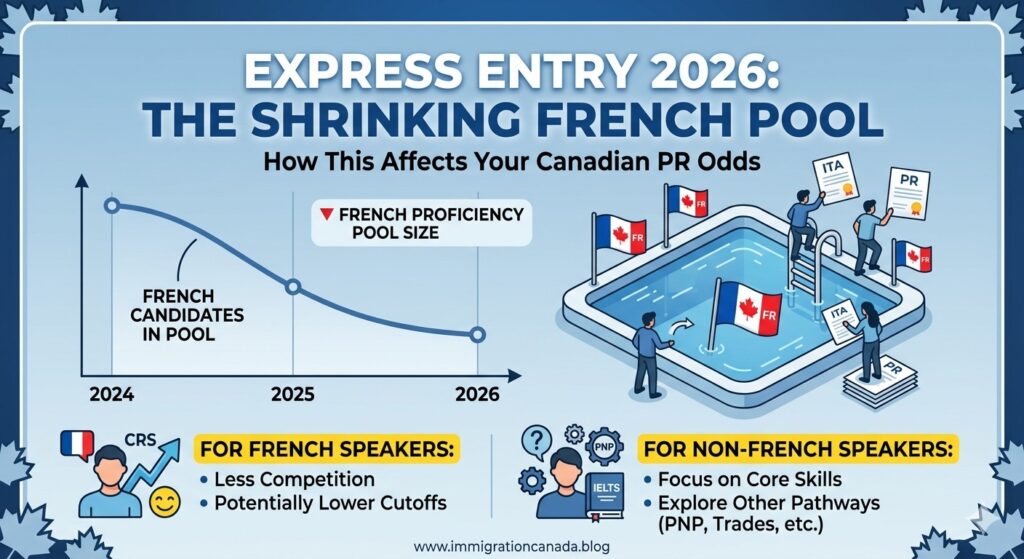
So Why Is the French Pool Shrinking in 2026?
There are a few major reasons behind this.
1. Many Francophone Candidates Already Got PR
Over multiple French-category draws, a large number of qualified candidates already received Invitations to Apply (ITAs).
That naturally reduced the number of strong Francophone profiles left in the pool.
2. Fewer New Candidates Are Entering With Strong French Scores
Learning French takes time.
While many applicants started studying French after seeing low CRS cutoffs in 2024 and 2025, not everyone reached the required level quickly enough.
As a result, the number of candidates entering the pool with high French proficiency is lower than expected.
3. More Applicants Are Choosing Other PR Pathways
Some temporary residents are now focusing on:
- Provincial Nominee Programs (PNPs)
- Healthcare category draws
- Trade occupations
- Rural immigration pathways
Because of this, fewer people are relying only on Francophone-based draws.
What Does This Mean for Your PR Chances?
This depends on your profile.
Let’s look at both situations.
If You Speak French
This could actually be very good news for you.
A smaller Francophone pool may mean:
- Less competition
- Better CRS cutoffs
- Higher chances of getting invited
- Faster PR opportunities
If you already have:
- TEF or TCF scores
- CLB 7 or higher in French
- Work experience in Canada
…you may still have a strong advantage in Express Entry 2026.
Even candidates with moderate CRS scores can become competitive when combined with French proficiency.
Example:
A candidate with:
- CRS 470–500
- One year Canadian work experience
- Strong French test results
…could still receive an invitation through category-based draws.
That’s why French remains one of the smartest long-term PR strategies right now.
If You Don’t Speak French
Don’t panic.
Francophone is helpful — but it’s not the only pathway to PR.
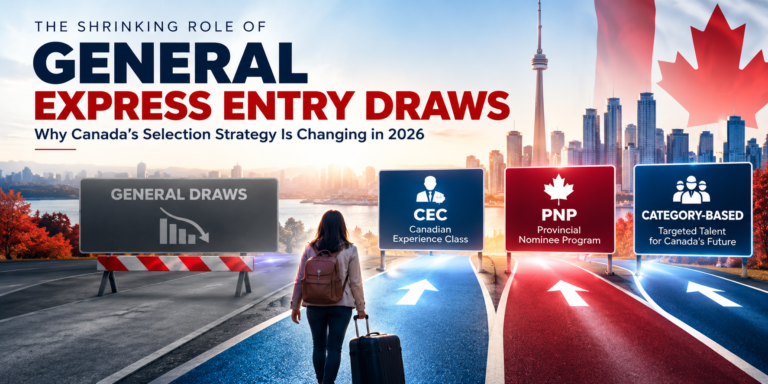
Canada is still prioritizing:
- Healthcare workers
- Education occupations
- Skilled trades
- Canadian work experience
- Provincial nominations
If your CRS score is lower, you can still improve your profile through:
- Better IELTS scores
- More Canadian experience
- LMIA-supported job offers
- PNP programs
- Additional education
The important thing is to avoid relying on only one immigration strategy.
Will Francophone Draws Continue in 2026?
Most likely, yes.
Canada has long-term targets for Francophone immigration outside Quebec, and IRCC continues to emphasize bilingual immigration.
That means Francophone-focused draws are expected to remain important throughout 2026.
However, the size of draws and CRS cutoffs may continue changing depending on:
- Pool composition
- Immigration targets
- Labour shortages
- Political priorities
So while Francophone is still powerful, timing will matter more than ever.
Should You Start Learning French Now?
If you are serious about PR and have time to invest, learning new language can still be worth it.
Even moderate French proficiency can:
- Increase CRS points
- Open category-based draw eligibility
- Improve job opportunities
- Strengthen PNP applications
But you should approach it realistically.
Francophone is not a “quick PR hack.”
It requires:
- Consistent study
- Language testing
- Patience
- Long-term planning
Applicants who start early usually benefit the most.
Biggest Mistake Applicants Are Making Right Now
Many candidates are waiting for “easy draws” instead of improving their profile.
That’s risky.
Express Entry changes quickly.
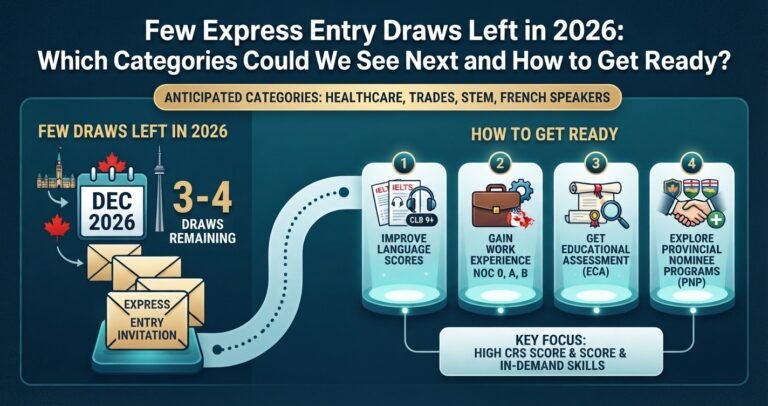
A good strategy in 2026 is to build multiple options at the same time:
- Improve language scores
- Gain Canadian experience
- Explore PNPs
- Consider French
- Stay updated with category-based draws
The stronger your profile becomes, the less you depend on luck.
Final Thoughts
The shrinking Francophone pool is one of the most important Express Entry trends heading into 2026.
For Francophone candidates, this could mean stronger PR opportunities and lower competition.
For others, it’s a reminder that Canada’s immigration system is becoming more targeted and skill-based.
The reality is simple:
PR is still possible — but planning matters more than ever.
Instead of waiting for the perfect draw, focus on building the strongest profile you can.
Because in Express Entry 2026, preparation will always beat uncertainty.