
Canada remains one of the most popular destinations for people looking to build a better future, but the immigration landscape is changing.
If you are planning to apply for Canada PR in 2026, you may have noticed reports that Canada could admit fewer permanent residents this year.
So, should you be worried?
Not necessarily. But the latest immigration targets show that Canada is becoming more selective about who it wants to welcome as permanent residents.
Here is what you need to know.
Canada PR 2026 Target Is Lower Than 2025
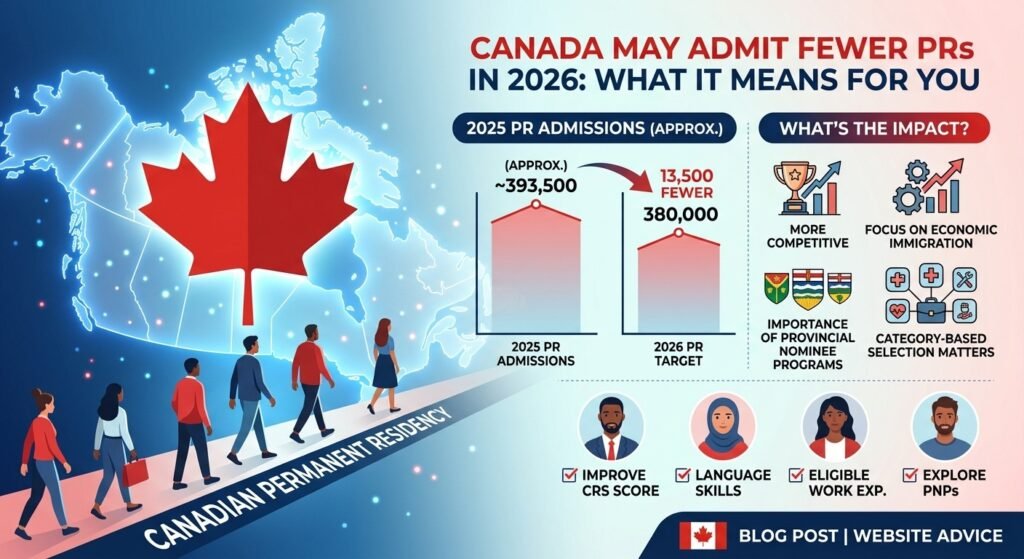
Under Canada’s 2026–2028 Immigration Levels Plan, the government has set a target of 380,000 permanent resident admissions for 2026.
For comparison, Canada welcomed approximately 393,500 permanent residents in 2025. This means the 2026 target is about 13,500 lower than the number admitted in 2025.
However, Canada has not announced that it is closing the door to immigration.
In fact, the government plans to maintain the PR target at 380,000 in 2026, 2027 and 2028. The objective is to stabilize permanent resident admissions while reducing the number of new temporary residents.
What does this mean?
Simply put, Canada PR is moving toward controlled and targeted immigration rather than significantly increasing the number of new immigrants every year.
That could make competition more important for some applicants.
Canada Is Focusing More on Economic Immigration for Canada PR
One of the biggest takeaways from the new immigration plan is the government’s focus on people who can contribute to Canada’s economy.
In 2026, approximately 63% of planned permanent resident admissions are allocated to the economic category. That share increases to about 64% in 2027 and 2028, which is the highest proportion in more than a decade.
This includes pathways such as:
- Express Entry
- Provincial Nominee Programs (PNPs)
- Federal skilled immigration programs
- Economic pilot programs
- Other programs targeting workers with skills Canada needs
This means having the right skills, Canadian work experience, language ability and education can become even more important.
Does This Mean Express Entry Will Become Harder for Canada PR?
It could.
A lower overall PR target does not automatically mean that every Express Entry draw will have a higher CRS cut-off.
CRS scores can change depending on:
- Number of candidates in the pool
- Number of invitations issued
- Type of Express Entry draw
- Category-based priorities
- Provincial nominations
- Labour market needs
- Government immigration targets
For example, Canada can choose to focus more invitations on candidates in specific occupations or categories instead of simply issuing invitations based on overall CRS ranking.
That is why applicants should not build their entire immigration strategy around one expected CRS score.
Category-Based Selection Could Become More Important in Canada PR
Canada has increasingly used category-based selection to target candidates with skills and experience that are considered important to the Canadian economy.
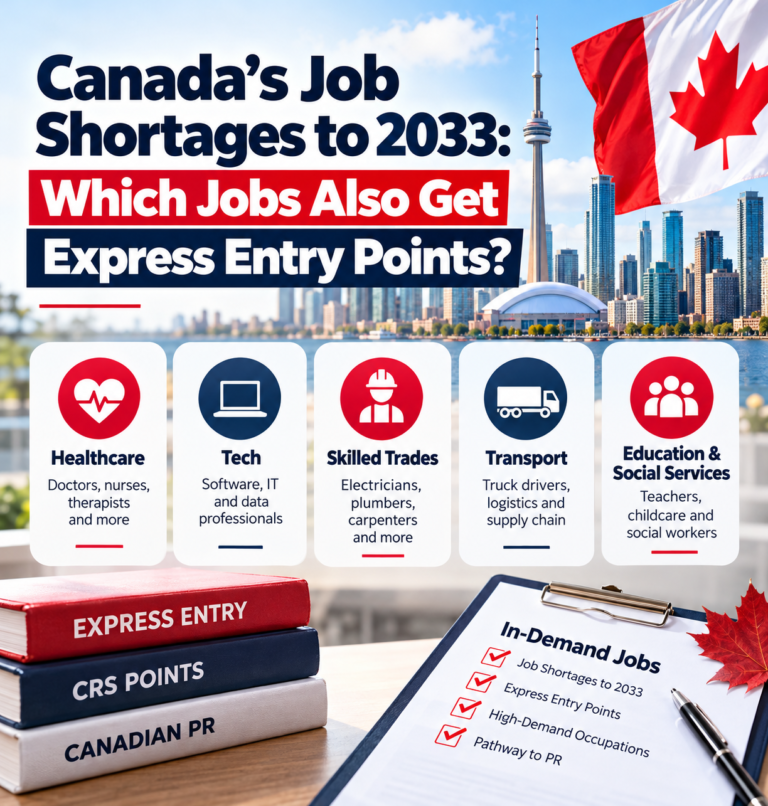
The government has stated that immigration priorities include areas such as health care, skilled trades and emerging technologies, among other economic priorities.
For applicants, this means your occupation and work experience could matter just as much as your CRS score.
If you qualify for a category-based pathway, it may create an additional opportunity to receive an invitation.
Provincial Nominee Programs Could Become More Important in Canada PR
If your CRS score is not high enough for a federal Express Entry invitation, you should not automatically assume that your PR plans are over.
Provincial Nominee Programs can provide another pathway to permanent residence.
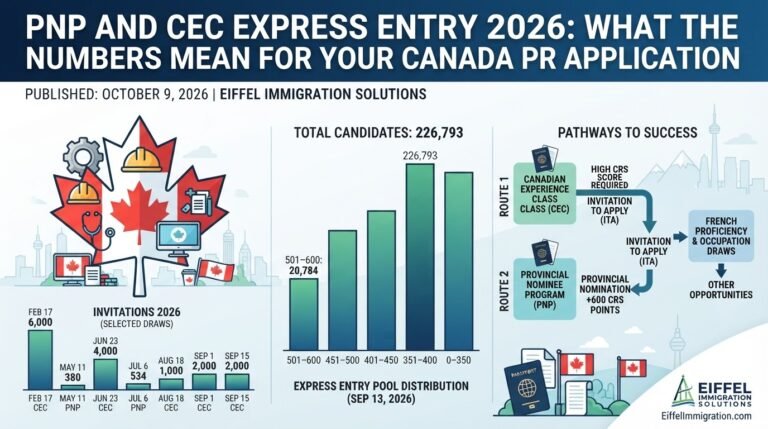
A provincial nomination through an Express Entry-linked stream can provide 600 additional CRS points, which can significantly improve your chances of receiving an invitation.
However, provincial programs have their own requirements, priorities and available spaces. Applicants should therefore monitor provincial announcements instead of waiting only for federal Express Entry draws.
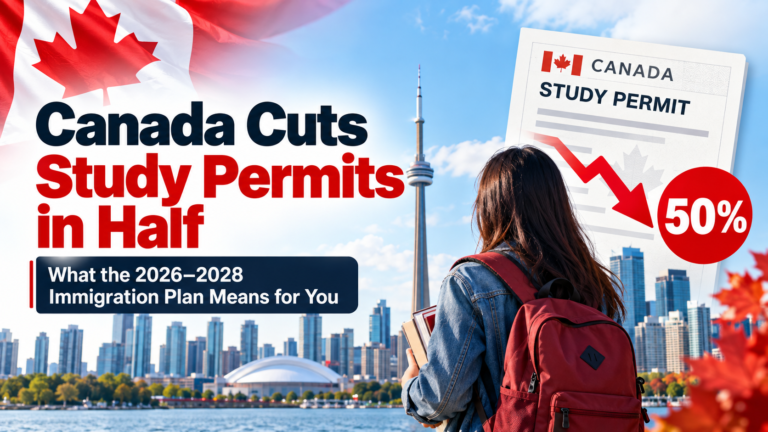
What About International Students and Temporary Workers?
This is where the biggest changes are happening.
The government is also trying to reduce the temporary resident population to less than 5% of Canada’s population by the end of 2027.
At the same time, Canada is trying to create pathways for people who are already in Canada, working and contributing to the economy.
The government has announced a two-year initiative to transition approximately 33,000 skilled temporary workers to permanent residence during 2026 and 2027, with a particular focus on workers in in-demand sectors and rural communities.
This is an important signal for temporary workers.
If you are already working in Canada, building eligible Canadian work experience and improving your language score, your current experience could become increasingly valuable.
So, Should You Apply for Canada PR in 2026?
For many applicants, waiting may not necessarily make things easier.
Canada’s immigration targets are being carefully managed, and the government is placing more emphasis on economic needs and targeted immigration.
If you already qualify for a PR pathway, it may make sense to prepare your application rather than simply waiting for immigration policies to become more favourable.
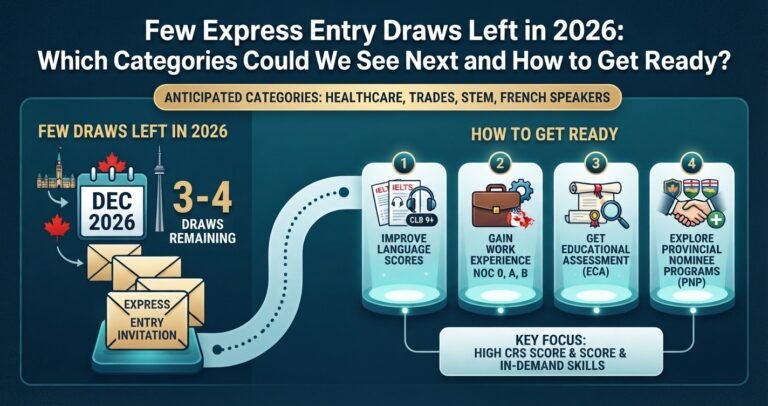
Before applying, review:
1. Your CRS score
Check whether your current score is competitive.
2. Your language test
Even a small improvement in IELTS, CELPIP, PTE Core or French language results can sometimes make a meaningful difference.
3. Your work experience
Make sure your work experience meets the requirements of the program and is properly documented.
4. Your occupation
Check whether your occupation may benefit from current category-based or provincial priorities.
5. Provincial opportunities
Do not focus only on Express Entry. Explore PNP options that match your profile.
6. Your education
An Educational Credential Assessment may be required for foreign education, depending on the pathway.
The Bottom Line
Canada’s 2026 PR target is 380,000, lower than the approximately 393,500 permanent residents admitted in 2025. But this is better understood as part of Canada’s broader move toward stable and targeted immigration, rather than a complete shutdown or major reduction in PR opportunities.
The message for future immigrants is simple:
Canada is still accepting immigrants — but the focus is increasingly on the right skills, occupations, experience and economic contribution.
If Canada is part of your long-term plan, 2026 may be a good time to review your profile, improve your CRS score, explore PNP options and understand which immigration pathway best fits your situation.
This article is for general information only. Canadian immigration programs, eligibility requirements and selection priorities can change. Applicants should review the latest IRCC and provincial requirements before making immigration decisions.