
Canada’s immigration system went through a noticeable transformation during the first year of Lena Diab as Minister of Immigration, Refugees and Citizenship. Since taking office in May 2025, Diab has overseen policy changes that reshaped how Canada approaches permanent residence, temporary residence, asylum processing, and labour market priorities.
Her first year as immigration minister marked a shift away from the rapid expansion seen in previous years toward a more controlled, targeted, and economically focused strategy. The federal government under Prime Minister Mark Carney emphasized “sustainable immigration,” balancing economic growth with public concerns around housing, healthcare, infrastructure, and temporary resident volumes.
Who Is Lena Diab?
Her legal background and provincial immigration experience positioned her as a minister focused on regional labour shortages, targeted economic immigration, and immigration system modernization.
A Shift Toward “Controlled Immigration”
One of the biggest changes during Diab’s first year was the federal government’s decision to reduce and stabilize growth.
In early 2026, the government announced plans to lower permanent resident intake levels to below one percent of Canada’s population while also reducing the temporary resident population — including international students and temporary foreign workers — to below five percent by 2027.
This represented a major policy adjustment compared to previous years when Canada aggressively increased levels to address labour shortages and demographic challenges.
The new direction was driven by several concerns:
- Housing affordability pressures
- Strained healthcare and infrastructure systems
- Public debate over sustainability
- Growing temporary resident populations
- Provincial labour market imbalances
Under Diab’s leadership, IRCC began focusing more on selecting immigrants who could immediately contribute to Canada’s economy and integrate faster into communities.
More Power for Provinces and Regional Immigration
Another major development during Lena Diab’s first year was the increased importance of provincial programs.
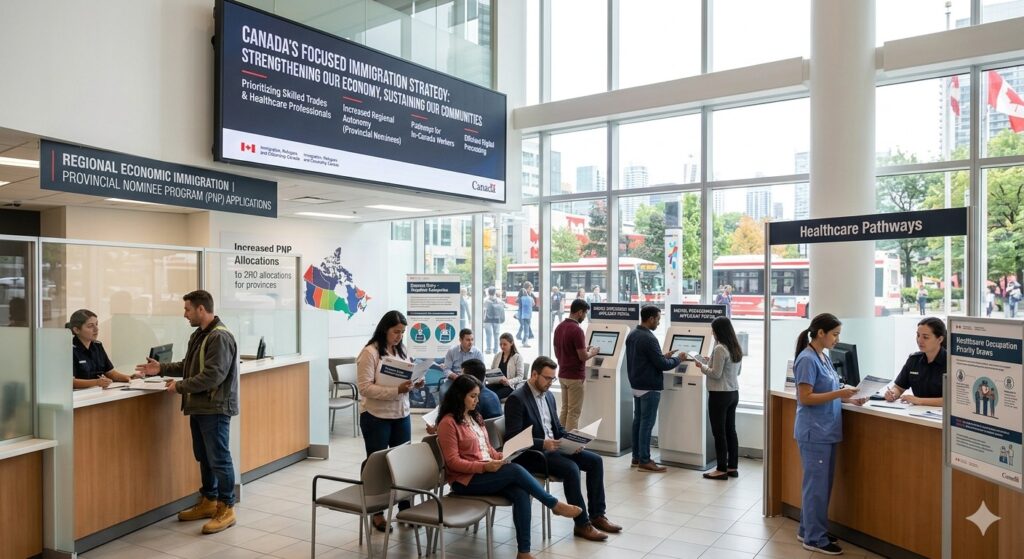
The 2026 Immigration Levels Plan significantly increased Provincial Nominee Program (PNP) allocations, boosting annual provincial admissions targets from 55,000 to 91,500.
This shift showed the federal government’s growing reliance on provinces to identify local labour shortages and nominate skilled workers based on regional economic needs.
Provinces such as British Columbia prioritized healthcare professionals, skilled trades workers, entrepreneurs, and other high-demand occupations through their nomination programs.
The government also continued strengthening rural initiatives designed to support smaller communities facing labour shortages and population decline.
Major Changes to Express Entry
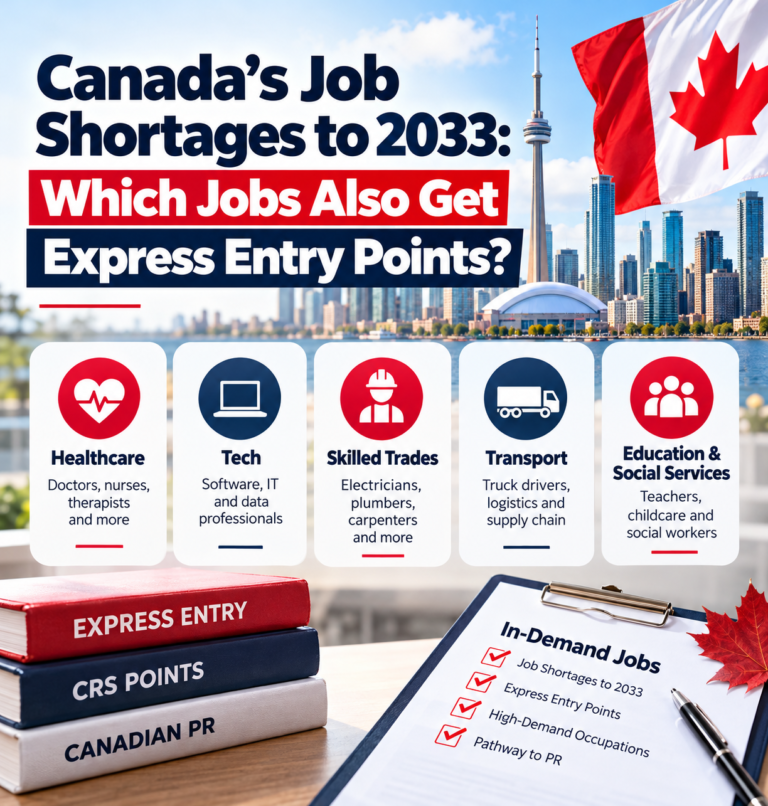
One of the most important policy shifts under Diab was the continued expansion of category-based Express Entry draws.
In 2026, IRCC introduced new priority categories targeting:
- Researchers
- Senior managers with Canadian work experience
- Transport professionals
- Aviation workers
- Certain military occupations
- Healthcare professionals including doctors
These changes aimed to attract highly specialized talent capable of filling critical shortages in strategic sectors.
Healthcare immigrants became a particularly important focus. The government introduced new pathways to help internationally trained doctors gain permanent residence faster and work more quickly in Canada’s healthcare system.
At the same time, Canada continued prioritizing French-speaking immigrants and candidates with Canadian work experience.
Greater Focus on Temporary Residents Already in Canada
A significant policy trend during Diab’s first year was prioritizing individuals already living and working in Canada.
The federal government repeatedly emphasized that international students and temporary foreign workers already contributing to the economy should receive stronger pathways to permanent residence.
One of the most discussed initiatives was the “In-Canada Workers Initiative,” a program expected to transition approximately 33,000 temporary workers in rural and high-demand sectors to permanent residence over two years.
This strategy reflected a broader effort to retain workers already integrated into Canadian communities rather than relying solely on new arrivals from abroad.
Stricter Measures for Asylum and Temporary Residents
While economic immigration remained a priority, Diab’s first year also introduced tougher measures in other parts of the system.
The federal government proposed reforms aimed at tightening asylum procedures and reducing abuse of refugee processes. Some proposed measures included limiting eligibility for refugee hearings in certain cases and increasing enforcement powers related to documentation.
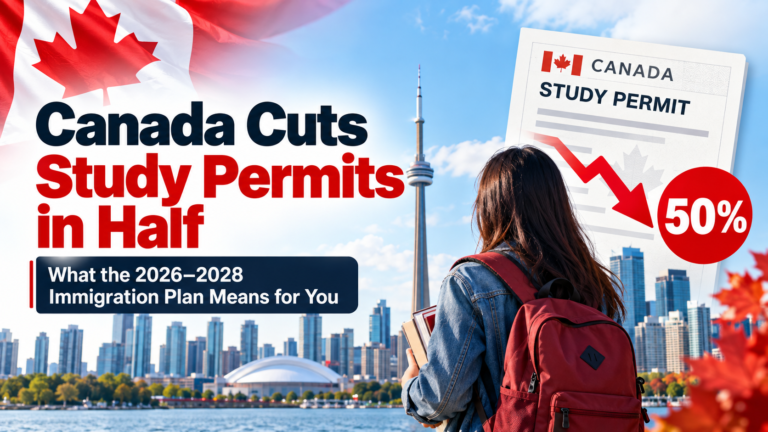
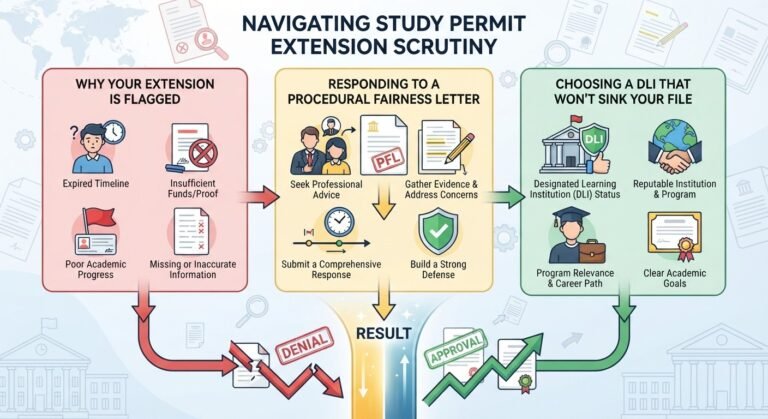
IRCC also intensified efforts to reduce the overall temporary resident population. This included stricter controls on international student permits and temporary work permit programs.
These changes reflected the government’s broader objective of restoring what officials called “balance” to the system.
Digital Modernization and Faster Processing Goals
The federal government announced plans to improve:
- Digital processing systems
- Application tracking tools
- Service delivery efficiency
- Backlog management
- Communication with applicants
The government stated that modernization efforts were necessary to handle volumes more efficiently while improving transparency for applicants.
Public Reaction and Debate
Public reaction to Diab’s policies has been mixed.
Supporters argue that the government is taking a more realistic and sustainable approach by aligning immigration with housing, infrastructure, and labour market capacity.
Others believe the government’s measures — especially temporary resident reductions and asylum reforms — may negatively affect international students, foreign workers, and Canada’s reputation as a welcoming destination.
Online discussions across communities and forums have reflected growing concern over CRS scores, tighter competition, and future PR opportunities.
At the same time, employers in healthcare, transportation, and skilled trades have largely welcomed the introduction of more targeted immigration pathways.
What This Means for Future Immigrants
Lena Diab’s first year as immigration minister signals that Canada is entering a new phase of immigration policy.
Rather than focusing mainly on increasing numbers, the government is now prioritizing:
- Targeted economic draws
- Regional labour shortages
- Retention of temporary residents already in Canada
- Sustainable immigration levels
- Faster integration into the workforce
- Greater provincial involvement
For future immigrants, this means strategic profile building will become even more important. Candidates with Canadian experience, French-language ability, healthcare backgrounds, skilled trades experience, or strong provincial nomination opportunities may continue to benefit the most under the evolving system.
Final Thoughts
The first year of Lena Diab as immigration minister brought some of the most significant shifts to Canada’s immigration system in recent years.
Her leadership has focused on balancing economic immigration with sustainability, giving provinces a larger role, targeting critical labour shortages, and restructuring temporary policies.
While debate continues over the long-term impact of these reforms, one thing is clear: Canada’s immigration system is moving toward a more selective, regionally driven, and economically targeted model under Diab’s leadership.