
Canada’s immigration changes continues to evolve in 2026, bringing significant updates that impact permanent residents, temporary workers, families, and employers.
As of April 1, 2026, several new policies and adjustments have officially taken effect. Whether you’re planning to apply for permanent residency, sponsor family members, or work in Canada, staying informed about these Immigration Changes is essential.
Let’s break down the 8 major updates on Immigration Changes and what they mean for you.
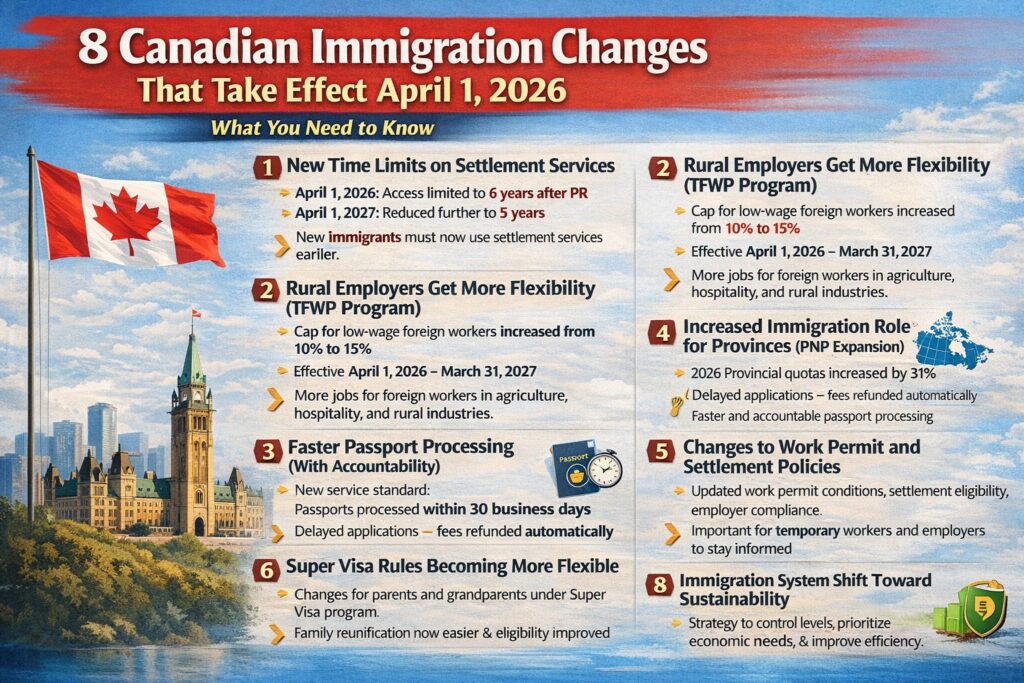
1. New Time Limits on Settlement Services
Canada has introduced time restrictions on access to settlement services for economic immigrants.
- Effective April 1, 2026: Access limited to 6 years after becoming a PR
- Effective April 1, 2027: Reduced further to 5 years
👉 Impact:
Newcomers must now take advantage of services like job assistance, language training, and integration programs much earlier.
2. Rural Employers Get More Flexibility (TFWP Program)
To address labour shortages, rural employers can now hire more low-wage foreign workers.
- Cap increased from 10% to 15%
- Valid from April 1, 2026 to March 31, 2027
👉 Impact:
This creates more job opportunities for foreign workers, particularly in sectors like agriculture, hospitality, and manufacturing.
3. Faster Passport Processing with Refund Guarantee
Canada is improving service standards for passport processing:
- Applications to be processed within 30 business days
- If delayed, applicants will receive an automatic fee refund
👉 Impact:
Greater efficiency and accountability for Canadian citizens applying for passports.
4. Increased Provincial Role in Immigration (PNP Expansion)
Provinces are gaining more authority through increased allocations under the Provincial Nominee Program (PNP).
👉 Impact:
- More pathways for applicants with job offers or provincial ties
- Higher chances for candidates in targeted occupations
5. Updates to Work Permit and Employer Compliance Rules
New regulatory adjustments are being introduced for:
- Work permit conditions
- Employer compliance requirements
- Settlement program eligibility
👉 Impact:
Both employers and foreign workers must stay compliant with evolving rules to avoid penalties or refusals.
6. Super Visa Rules Becoming More Flexible (Big Win for Families)
Canada has introduced key improvements to the Super Visa program, making it easier for families to reunite with their parents and grandparents.
What’s new?
- Sponsors can now meet income requirements through a more flexible and extended income assessment
- A co-signer option allows a spouse or partner to help meet the income threshold
👉 Why this matters:
This is a major win for families who previously struggled to meet strict financial requirements. By combining incomes or using a co-signer, many more applicants will now qualify.
👉 Impact:
- Higher approval rates
- Easier family reunification
- Reduced financial burden on individual sponsors
7. Provincial Fee and Policy Changes
Certain provinces are introducing updated fee structures and policies.
👉 Impact:
Applicants should be prepared for increased application costs and evolving provincial requirements.
8. Shift Toward a More Targeted Immigration System
Canada is continuing its shift toward a more controlled and economically focused immigration system.
- Emphasis on skilled workers and labour market needs
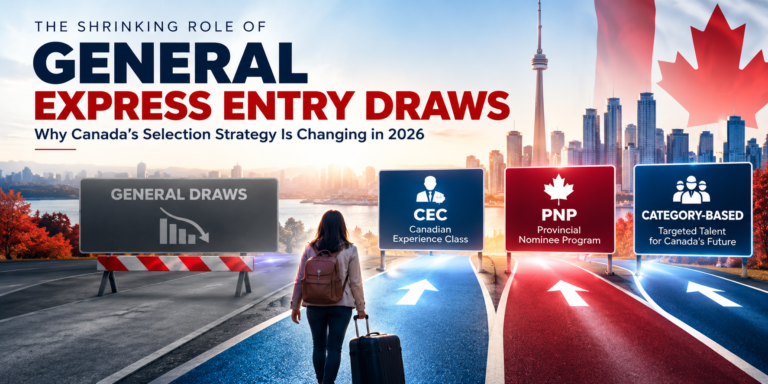
- More targeted draws and stricter selection criteria
- Focus on long-term economic sustainability
👉 Impact:
Immigration is becoming more competitive, requiring stronger profiles and better planning.
What These Immigration Changes Mean for You
These April 2026 updates reflect a clear and strategic shift in Canada’s immigration system—moving toward a model that is more targeted, efficient, and economically driven.
✔ More structured and time-bound policies
Canada is reducing open-ended access to benefits like settlement services and introducing clearer timelines. This signals a move toward accountability, where newcomers are expected to integrate and become economically active within defined periods.
✔ Increased provincial involvement in selection
With expanded allocations under the Provincial Nominee Program (PNP), provinces now play a larger role in choosing candidates who meet their specific labour market needs. This means immigration pathways are becoming more localized and occupation-focused.
✔ Faster processing with accountability measures
New service standards, such as guaranteed passport processing timelines with fee refunds, reflect a broader push toward efficiency. The system is being designed to deliver quicker decisions while holding authorities accountable for delays.
✔ Greater emphasis on economic outcomes and labour market alignment
Canada is prioritizing applicants who can directly contribute to the economy. This includes skilled workers, trades professionals, and candidates with Canadian work experience or job offers—making immigration more competitive and performance-based.
For applicants, this means one thing: you need a well-planned strategy to succeed.
Final Thoughts
Canada remains one of the top destinations for immigrants worldwide—but the rules are evolving quickly.
Understanding these Immigration Changes can help you:
- Avoid costly mistakes
- Improve your eligibility
- Maximize your chances of success
Whether you’re applying for PR, a work permit, or sponsoring family, staying updated is no longer optional—it’s essential.
Need Expert Guidance?
At Eiffel Immigration, we specialize in helping clients navigate complex immigration changes with confidence.
📞 Book a consultation today and take the next step toward your Canadian journey.