

Canada’s Express Entry system has long been one of the most sought-after pathways for skilled workers aiming to gain Canadian permanent residence (PR). But recent data from Immigration, Refugees and Citizenship Canada (IRCC) shows a major development affecting applicants in 2025–2026: the Express Entry application backlog has reached its highest level in three years. This update has left many candidates wondering what it means and how it may affect their plans.
In this blog, we simplify everything — from what the backlog means to how it could impact your immigration journey — in language that anyone can easily understand. We’ll also provide helpful tips so you can navigate Express Entry with confidence.
📌 What Is the Express Entry Backlog?
The Express Entry backlog refers to the number of PR applications that have not been finalized within IRCC’s published service standards. In IRCC terms, when an application takes longer than the target timeframe to be processed (for instance, more than six months for most EE applications), it is counted as part of the backlog.
This doesn’t necessarily mean your application is rejected — it simply means it is taking longer than expected under IRCC’s goals.
📈 Backlog Hits a Three-Year High
According to the latest update from IRCC (data as of November 30, 2025):
-
IRCC had over 1 million immigration applications waiting beyond service standards.
-
Of these, a large portion was related to Express Entry — and the share of Express Entry files considered backlog rose to 32%.
-
This is the highest backlog percentage for Express Entry since October 2022.
In plain language: nearly one-in-three Express Entry applications were waiting longer than IRCC’s target timeframe at the end of November 2025.
For context, EE backlog levels earlier in 2025 were lower — around 27% — before rising later in the year.
🧠 Why Is This Happening?
Several key factors contribute to this growing backlog:
1. High Volume of Applications
IRCC is dealing with millions of applications across all immigration categories — including Express Entry, Provincial Nominee Programs (PNP), family sponsorship, study permits, work permits, and more. As of November 2025, total inventory stood at 2.13 million applications.
2. Processing Takes Time
Even though IRCC continues to make decisions, the number of new submissions often outpaces processing capacity, especially for popular programs like Express Entry. This naturally increases wait times and backlog.
3. Complex Applications
EE applications can involve multiple checks, including language results, education assessments, medical exams, security clearances, and more — all of which take time.
📊 Express Entry Backlog: What the Numbers Say
Here’s a clear breakdown of the backlog situation using IRCC’s data as of November 30, 2025:
-
Total IRCC inventory: ~2.13 million applications
-
Applications within service standards: ~1.12 million
-
Backlogged applications (all streams): ~1.00 million
-
Express Entry backlog rate: ~32%
-
Express Entry-aligned PNP backlog rate: ~53%
-
Family sponsorship backlog rate: ~20%
This tells us two big things:
-
Express Entry and PNP streams are experiencing particular pressure.
-
Family sponsorship streams remain more stable relative to targets.
Even with these delays, IRCC continues to process applications; backlog simply means more applications are taking longer than IRCC’s own service targets.
📅 What This Means for Applicants
✅ Longer Wait Times
If your EE profile has been submitted, be prepared for processing to take longer than the usual service standard of six months. That doesn’t mean your application won’t succeed — only that the wait for a decision might be longer.
✅ Service Standards vs. Reality
IRCC’s official service standards are targets, not guarantees. When the backlog rises, many cases simply take longer than those targets.
✅ Draws Continue
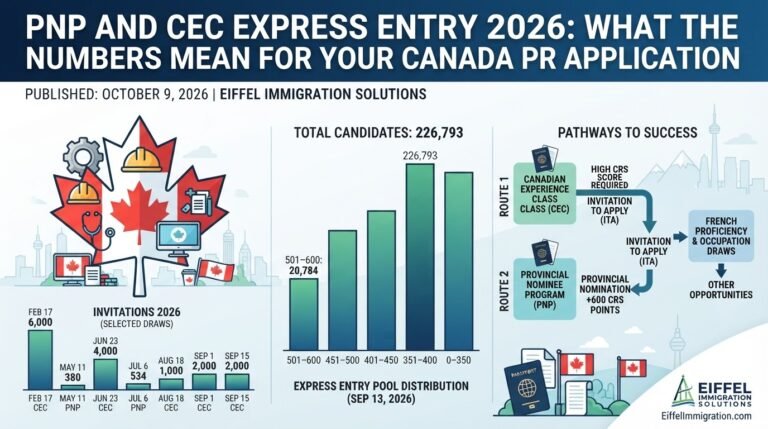
Despite the backlog, IRCC still conducts EE draws and invites candidates to apply for permanent residence. For example, IRCC issued invitations to 6,000 candidates in a recent draw with a comprehensive ranking system (CRS) cutoff around 509.
✅ Express Entry Still Worth It
Even with longer processing times, EE continues as Canada’s flagship system for skilled worker immigration. Draws still occur regularly.
🛠 How to Plan Your Express Entry Strategy
If you’re considering or already in the Express Entry process, here are practical tips to help you navigate today’s backlog:
📌 Keep Your Profile Complete
Ensure all required documents — language tests, education credentials, employment evidence — are submitted and up to date. Missing information can delay processing further.
📌 Boost Your CRS Score
A higher CRS score increases your chances of receiving an Invitation to Apply (ITA) sooner, even if overall processing times are longer.
📌 Explore Provincial Nominee Programs
Many provinces have Express Entry-aligned streams that can offer additional points or alternate pathways to PR.
📌 Stay Updated with IRCC
Check official IRCC updates regularly (like inventory releases and service standard changes) to understand timing and expectations.
📌 Be Patient and Prepared
Backlogs don’t mean the system is closed — it simply reflects high demand. Staying informed and proactive can make the wait more manageable.
📍 Real Stories: What Applicants Are Saying
While official data paints the macro picture, many applicants have shared experiences of longer waits, especially for complete decisions after an ITA. Waiting beyond expected timelines — even after submission — has become common, reflecting the higher backlog situation. Applicants often report that even after receiving an ITA, processing can extend well beyond typical service standards.
These personal stories don’t contradict official data — they reinforce the reality behind it: a high backlog means a longer wait for many applicants.
📌 Final Thoughts
Express Entry: Express Entry application backlog hits highest level in three years is not just a headline — it’s an important reality for anyone planning to immigrate to Canada through economic streams.
Here’s what you need to keep in mind:
✔️ Backlogs mean waits longer than IRCC’s targets, not rejections.
✔️ Express Entry draws are still happening.
✔️ The system remains one of the strongest pathways to PR in Canada.
✔️ Preparing your profile and boosting your score are as important as ever.
Staying informed, planning ahead, and keeping expectations realistic will help you navigate the immigration process more confidently — even during periods of high backlog.