
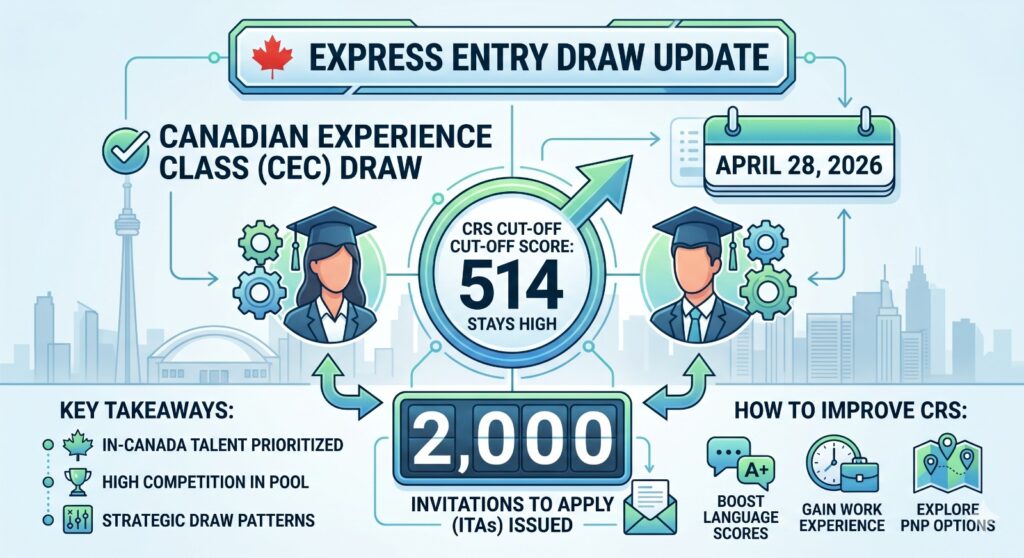
Canada has closed out April 2026 with a notable immigration update, and if you’re already working in Canada, this one matters. The latest draw under Canadian Experience Class (CEC) issued 2,000 Invitations to Apply (ITAs) with a minimum CRS score of 514. For many candidates in the pool, this draw wasn’t just another update—it was a signal of where Canada’s immigration priorities currently stand.
As someone who has spent over eight years closely tracking immigration trends and policy shifts, I can tell you this: CEC draws like this are not random—they reflect a clear strategy.
A Quick Snapshot of the Draw
- Program: Canadian Experience Class (CEC)
- Date: April 28, 2026
- Invitations Issued: 2,000
- Minimum CRS Score: 514
- Tie-breaking Rule: September 24, 2025
Managed under Express Entry, this draw specifically targeted candidates who already have Canadian work experience—people who are already contributing to the economy and are easier to integrate long-term.
Why This Draw Matters
At first glance, 2,000 ITAs may seem like a standard number. But the CRS score of 514 tells a deeper story.
For months, candidates have been waiting for a drop in scores, especially those sitting in the 490–505 range. Instead, this draw shows that competition remains strong, particularly among candidates with Canadian experience.
Here’s what stands out:
1. Canada is Prioritizing In-Canada Talent
Canadian Experience Class draws are designed for individuals who:
- Have at least one year of skilled work experience in Canada
- Meet language requirements
- Are already familiar with Canadian workplace culture
This aligns with the broader immigration strategy of Immigration, Refugees and Citizenship Canada to retain talent already contributing to the economy.
2. High CRS Indicates a Competitive Pool
A 514 cut-off means:
- Many candidates have strong language scores
- Additional points from education, Canadian work experience, or job offers
- Possibly provincial nominations or spousal points boosting profiles
This is not a low-bar entry—it reflects a high-quality candidate pool.
3. Strategic Draw Patterns Continue
Throughout 2026, we’ve seen:
- Category-based draws
- Targeted occupation-based invitations
- Alternating program-specific rounds
This CEC draw fits into a pattern of controlled, strategic invitations, not mass intake.
What It Means for Candidates
If you’re currently in the Express Entry pool under the Canadian Experience Class, your next steps depend heavily on your CRS score.
If Your CRS is 510+
You’re in a relatively strong position. With consistent draws, your chances remain realistic—especially if draw sizes increase slightly.
If Your CRS is 490–509
This is where most candidates are stuck right now. You’re close, but not quite there. The reality is:
Waiting alone may not be enough.
If Your CRS is Below 490
You’ll likely need to actively improve your profile. The gap is too large to rely on score drops alone.
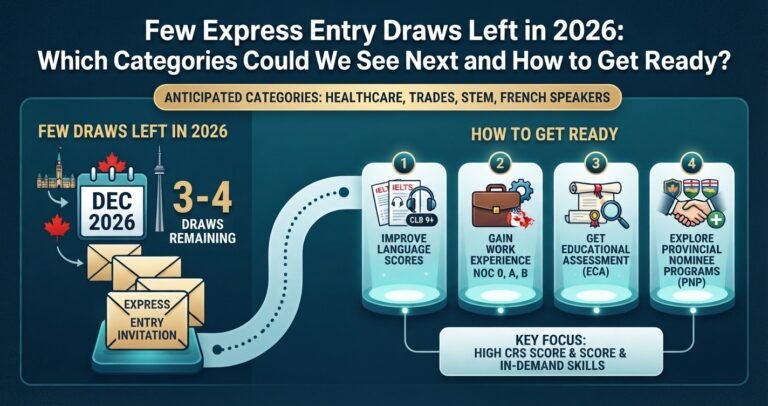
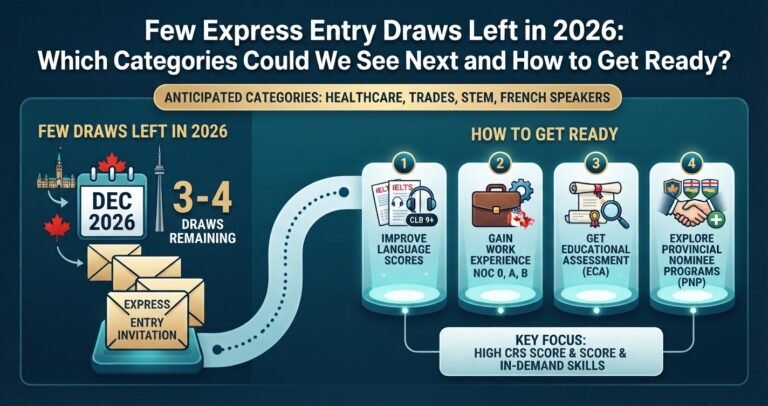
How to Improve Your CRS Score
Based on years of case handling and successful PR strategies, here are the most effective ways to boost your score:
1. Language Scores Make the Biggest Difference
Improving your IELTS or CELPIP scores can significantly increase your CRS—sometimes by 20–50 points.
Even moving from CLB 8 to CLB 9 can be a game-changer.
2. Gain More Canadian Work Experience
If you’re close to completing another year of work, that additional experience under Canadian experience Class can:
- Increase core CRS points
- Strengthen eligibility
- Improve long-term immigration stability
3. Consider a Provincial Nominee Program (PNP)
A nomination from a province adds 600 CRS points, essentially guaranteeing an ITA.
Keep an eye on streams aligned with your occupation and location.
4. Update Your Profile Strategically
Many candidates overlook simple updates like:
- Adding new work experience
- Updating language test results
- Including spouse credentials
Small updates can lead to meaningful score increases.
The Bigger Picture: Canada’s Immigration Direction
This draw reinforces a broader trend: Canada is becoming more selective, not less.
Rather than lowering CRS scores across the board, immigration authorities are:
- Targeting candidates with proven Canadian experience
- Prioritizing economic contribution
- Focusing on long-term integration success
This is especially important for international students and temporary workers already in Canada. Your time and experience here are becoming more valuable than ever under Canadian Experience Class.
What to Expect in the Coming Months
Looking ahead, here are a few realistic expectations:
- More Canadian Express Class focused draws are likely
- CRS scores may fluctuate but not drop drastically overnight
- Category-based draws will continue alongside program-specific rounds
- Candidates with strong profiles under Canadian Experience Class will continue to be prioritized
In short, the system is not slowing down—it’s becoming more targeted and strategic.
Final Thoughts
April’s final draw under the Canadian Experience Class is a clear reminder:
Canada is rewarding those who are already part of its workforce (Canadian Experience Class)—but competition is intense.
If you received an ITA—congratulations, you’re one step closer to permanent residency.
If you didn’t, this isn’t the end—it’s a signal to refine your strategy.
In today’s Express Entry landscape, success doesn’t come from waiting. It comes from planning, improving, and acting at the right time.