
Understanding the Immigration Levels Plan 2026–2028
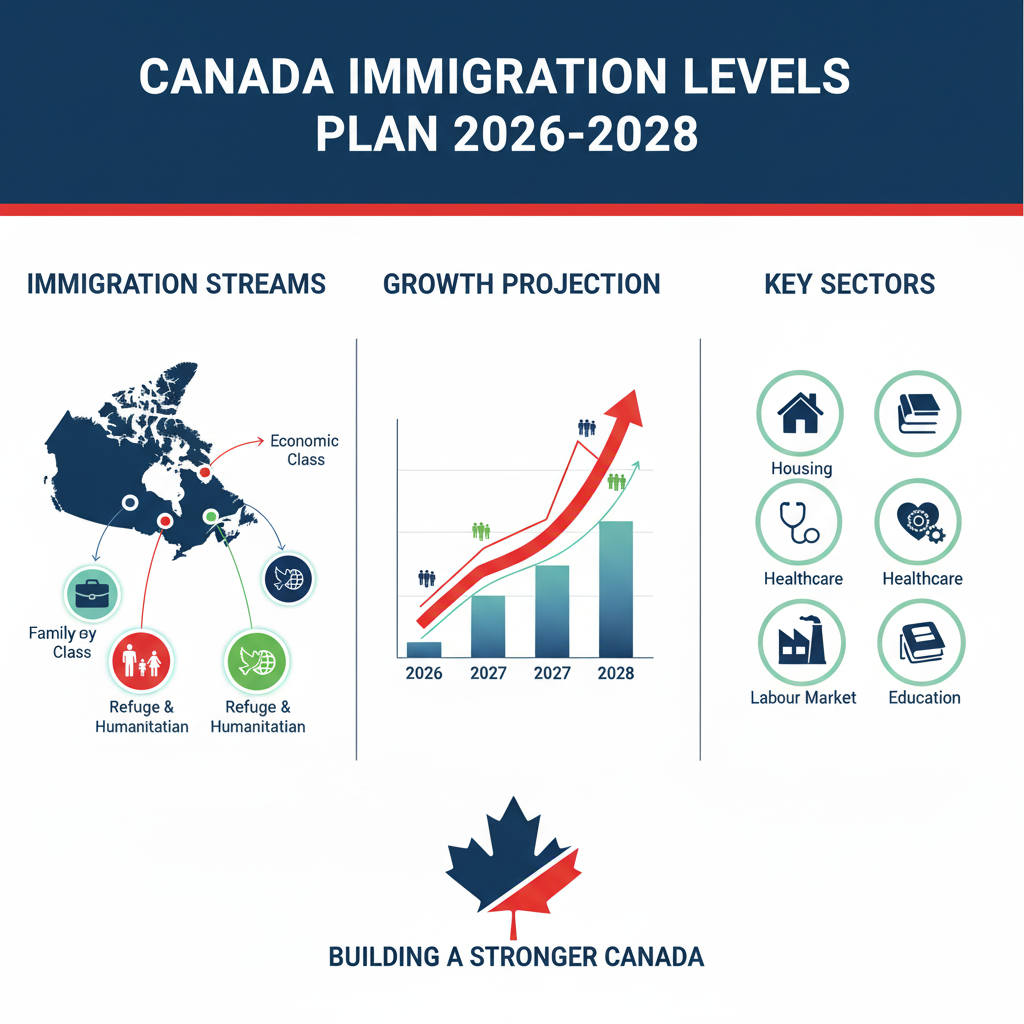
The Immigration Levels Plan is more than just a set of targets; it’s a roadmap for sustainable population growth, thriving labor markets, and stronger communities. From Express Entry to Provincial Nominee Programs (PNPs), from Francophone program outside Quebec to humanitarian pathways, the plan is engineered to meet both current demands and future challenges.
Trends: Targets and Pathways
| Year | Permanent Residents | Temporary Residents | Economic Class (%) | Francophone Outside Quebec (%) | Temporary to PR Pathways | Protected Persons to PR | Temp Resident Pop. Target |
|---|---|---|---|---|---|---|---|
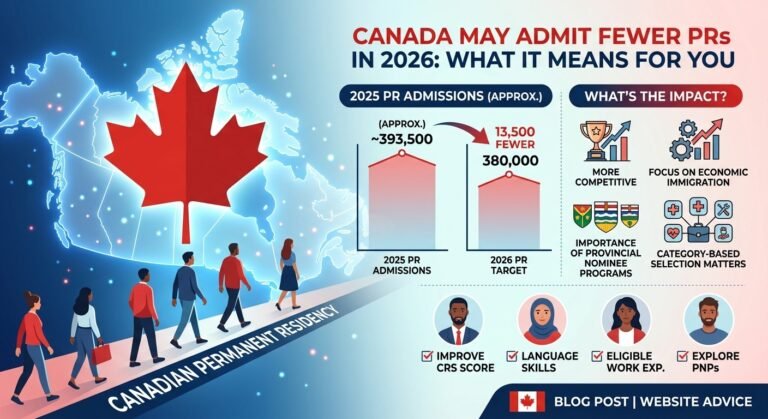
| 2026 | 380,000 | 385,000 | 64 | 9.0 | Up to 33,000 | – | – |
| 2027 | 380,000 | 370,000 | 64 | 9.5 | – | Up to 115,000 | Under 5% |
| 2028 | 380,000 | 370,000 | 64 | 10.5 | – | – | – |
The government’s intent is clear: optimize immigration for economic benefits, manage growth sustainably, and invest in integration capacity across Canada.
Visualizing Flows: Permanent vs Temporary Residents
The above chart displays annual intake numbers. Shifting dynamics between permanent residents (PRs) and temporary residents (TRs) reflect the country’s careful balancing act. While PR admissions stabilize at 380,000 annually, TR entries decline, mirroring prioritization of integration.
Who Is Immigrating? Breakdown by Category
| Immigration Class | Percentage (%) |
|---|---|
| Economic | 64 |
| Family | 22 |
| Protected Persons | 10 |
| Other | 4 |
Francophone Program Growth Outside Quebec
| Year | Francophone (%) |
|---|---|
| 2026 | 9.0 |
| 2027 | 9.5 |
| 2028 | 10.5 |
Strategic Recommendations
- Monitor official IRCC updates and consult professionals for eligibility changes.
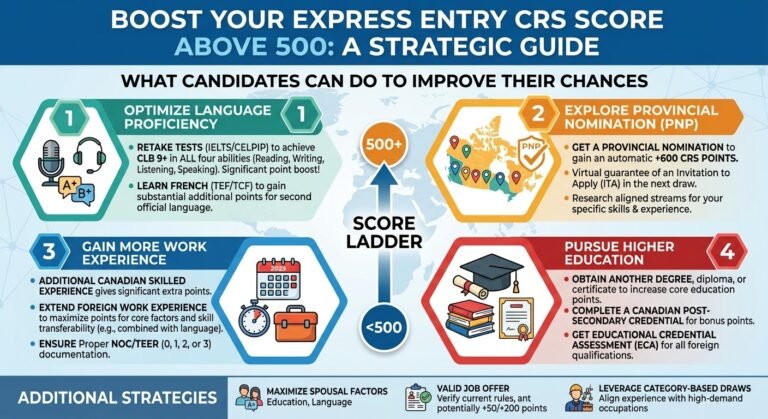
- Strengthen Express Entry profiles (work experience, language scores, education).
- Investigate PNP streams and in-demand occupation lists in target provinces.
- If international student, select compliant institutions and consider alternate pathways for post-graduation work permits.
- Stay prepared for operational shifts or targeted pilot programs (Francophone streams, rural/Atlantic immigration).
Conclusion: Immigration in Canada – Outlook and Action
Canada’s Immigration Levels Plan 2026–2028, led by Immigration, Refugees and Citizenship Canada, stands as both an opportunity and a challenge for candidates, employers, and communities across the country. With immigration positioned at the core of national economic and demographic development, the plan offers stability, strategic direction, and greater transparency—but it also demands higher competitiveness, stronger documentation, and better preparation from applicants.
For candidates, the message is clear: immigration is still very much open, but it is no longer passive. Targeted draws under systems like Express Entry, category-based selections, and sector-specific priorities mean that profiles must be carefully aligned with Canada’s labour market needs. Healthcare professionals, skilled trades workers, French-language speakers, and high-demand technical professionals continue to benefit from focused selection. However, higher scrutiny on documentation, work experience verification, proof of funds, and compliance with program requirements means that even small errors can lead to refusals. Preparation, timing, and strategy now play a decisive role.
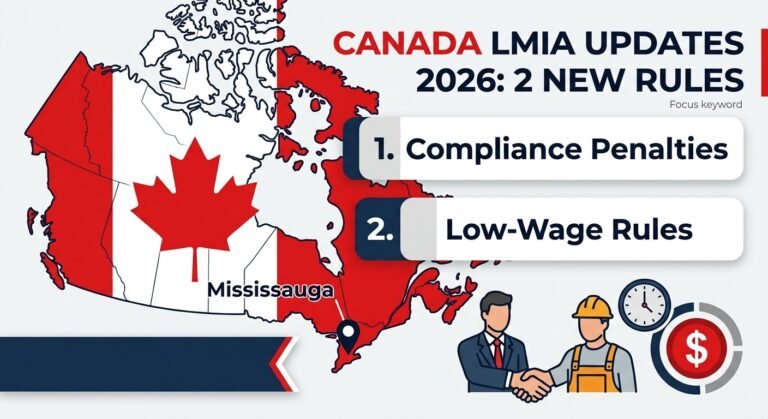
For employers, especially those relying on the Temporary Foreign Worker Program or LMIA-based hiring, recent tightening measures reflect a shift toward labour market balance and protection of domestic employment. Employers must demonstrate genuine labour shortages, maintain compliance standards, and adapt to evolving wage and occupation requirements. At the same time, immigration remains a critical tool to address workforce gaps in essential sectors such as healthcare, construction, logistics, and technology.
For communities and provinces, programs like the Provincial Nominee Program continue to play a central role in distributing immigration benefits beyond major metropolitan areas. Regional immigration pathways support economic growth in smaller cities and rural communities while aligning newcomers with local labour demands. This decentralized approach strengthens long-term settlement outcomes and economic sustainability.
Looking ahead, Canada’s immigration outlook reflects a careful balancing act. The government aims to manage housing pressures, infrastructure capacity, and public services while maintaining immigration as a driver of GDP growth, innovation, and population renewal. The focus is shifting from quantity to quality—prioritizing skilled integration, labour market alignment, and long-term economic contribution.
The key takeaway: Immigration to Canada remains one of the strongest pathways globally—but success now depends on strategy, precision, and proactive planning. Applicants must build competitive profiles, maintain legal status, understand policy shifts, and act within defined timelines. Employers must remain compliant and forward-thinking. Communities must continue fostering inclusion and integration.
In this evolving landscape, informed decisions and expert guidance are no longer optional—they are essential.
For best outcomes in this new era:
- Start preparation early
- Use integrated platforms and professional consultations
- Target growth sectors and regional programs for higher success rates.
At Eiffel Immigration, we help you analyze your profile, identify optimal pathways, and prepare documentation to maximize your chances in Canada’s competitive immigration landscape.
Ready to take the next step? Contact the team of Eiffel for expert guidance on your pathway to Canada.