

Bill C-3 Certificate Surrenders Explained: Why It Happened and Who’s Actually Impacted
IRCC sent surrender letters to Bill C-3 citizenship certificate holders — then reversed course in less than a week. Here’s the complete story.
⏱ 8 min read
✍️ Eiffel Immigration
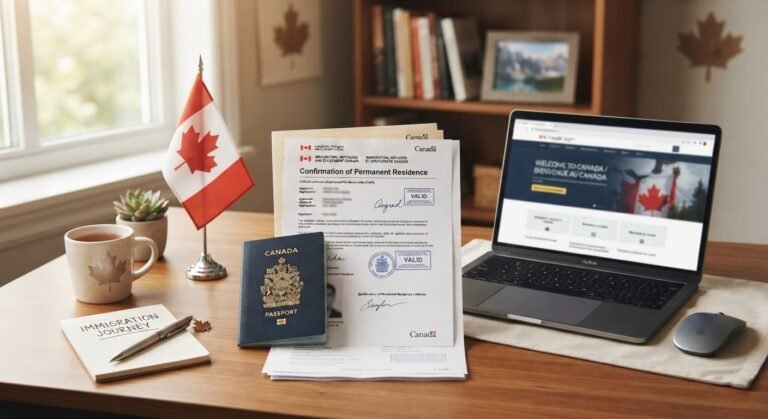
In mid-June 2026, hundreds of people who had successfully obtained Canadian citizenship certificates under Bill C-3 received a startling email from Immigration, Refugees and Citizenship Canada (IRCC): a formal Bill C-3 citizenship certificate surrender notice, signed by the Registrar of Canadian Citizenship, directing them to return their documents pending a file review. For many families who had already relocated — or were in the process of moving — to Canada, the news was devastating. Less than a week later, IRCC reversed course entirely, issuing revalidation letters confirming those certificates remained active. So what exactly happened, who was actually impacted, and what does it mean for the tens of thousands of people still waiting to apply? This is the complete story.
At Eiffel Immigration, our RCIC-regulated team has been closely monitoring the Bill C-3 situation since the law came into effect in December 2025. This article walks you through the timeline, the legal implications, and the exact steps you should take to protect your application.
Important notice: The information in this article is for general information only. Immigration law is complex and subject to rapid change. Always consult a Regulated Canadian Immigration Consultant (RCIC) before taking any action regarding your citizenship or immigration file.
What Is Bill C-3? Understanding the Law Behind the Bill C-3 Citizenship Certificate Surge
Bill C-3 — formally titled An Act to Amend the Citizenship Act (2025) — received Royal Assent on November 20, 2025 and came into force on December 15, 2025. The law was Parliament’s remedy for a longstanding injustice affecting what are known as “Lost Canadians” — people who lost or never obtained citizenship due to outdated provisions in earlier versions of the Citizenship Act.
The most significant change Bill C-3 introduced was the removal of the first-generation limit on citizenship by descent for those born before December 15, 2025. Under the old rules, Canadian citizenship could only pass to a child born or adopted outside Canada if that child’s Canadian parent was themselves born in Canada. This meant that grandchildren and great-grandchildren of Canadians — even those with deep cultural and familial ties to Canada — were excluded.
The change was triggered by a 2023 Ontario Superior Court ruling that found the first-generation limit unconstitutional. Parliament was required to act. Bill C-3 was the result — and its scope was enormous. The Parliamentary Budget Officer estimated that as many as 115,000 people worldwide could potentially claim Canadian citizenship under the new rules, with a significant share being Americans with French-Canadian or Maritime roots.
A critical legal distinction: under Bill C-3, individuals are not applying for citizenship — they are applying for proof of citizenship for a status the law recognizes they have held since birth. This automatic and retroactive recognition has significant implications for how surrender orders can legally be challenged.
Why Did IRCC Issue Bill C-3 Citizenship Certificate Surrender Letters in June 2026?
Between December 15, 2025 and March 31, 2026, IRCC issued 4,075 citizenship certificates under the new Bill C-3 descent provisions. Of those, approximately 1,955 — nearly half — went to applicants born in the United States.
On June 13–15, 2026, IRCC began emailing a number of those certificate holders with a formal surrender demand, signed by Registrar of Canadian Citizenship Peggy Sun. The core allegation was that applicants had not provided documents obtained from the original source authority responsible for creating or maintaining the relevant historical records. Instead, the department implied these applicants had relied on informal records from genealogy websites such as Ancestry.ca and FamilySearch — screenshots, photocopies, or records without verifying metadata.
The exact number of surrender letters sent was never officially confirmed by IRCC, though immigration lawyers estimated at least several hundred recipients were affected. The letters cited a provision in Canada’s Citizenship Regulations allowing the Registrar to require the surrender of a certificate when there is reason to believe the holder may not be entitled to it. Recipients were told they could submit additional documentary evidence, and that their certificate would be returned if the review confirmed their entitlement.
Immigration lawyers were swift to call out the irregularity. Montreal immigration lawyer Lisa Middlemiss noted to CBC News that mass suspension of already-issued citizenship certificates is extremely unusual — and that if IRCC had concerns about documentation, those concerns should have been raised before issuing the certificates, not after.
Dec 15/25 – Mar 31/26
(nearly half of total)
as of June 2026
(up from 5 months)
The Rapid Reversal: How IRCC Walked Back the Bill C-3 Certificate Surrender Orders
In what has been described as one of the fastest administrative reversals in recent memory, IRCC began walking back the surrender orders before the end of June 2026. On June 19, 2026 — less than a week after the first surrender letters went out — IRCC started issuing revalidation letters, also signed by Registrar Peggy Sun, confirming that many of the targeted certificates remained active and valid.
The reversal was swift but raised hard questions about how the original demand had been issued at all, and whether adequate internal review had been completed before sending the surrender notices. The episode exposed the tension between IRCC’s documentary standards and the practical reality that many historical records — particularly those dating back several generations — simply do not exist in the format IRCC’s checklist implicitly expects.
Parliamentary intervention also played a role. A May 25, 2026 response to the House of Commons had already confirmed that alternative evidence — hospital and physician records, baptismal certificates, census entries, and boat manifests — is perfectly acceptable to meet the legal burden of a “balance of probabilities” standard. The Federal Court had reinforced this through established precedents holding that applicants are entitled to rely on IRCC’s own instructions in determining what constitutes acceptable evidence.
Is Your Bill C-3 Citizenship Certificate Still Valid After the Surrender Controversy?
Yes — and this is the most important takeaway from the entire episode. Bill C-3 remains fully in force. The law itself was not repealed or amended. The eligibility rules are unchanged. What the surrender controversy involved was an administrative review of how specific applications were documented, not a legal repeal of the right to citizenship by descent.
If you received a revalidation letter dated June 19, 2026 or later, your certificate has been confirmed as active. If you received a surrender letter and have not yet received a revalidation, do not return your certificate without first speaking to a regulated immigration professional. Preserve all correspondence: the original email, any attachments, your certificate number, and any envelope if the notice was mailed.
For those with pending applications — the backlog stood at over 82,000 applications as of June 2026, with wait times reaching 15 months compared to just 5 months in May 2025 — the episode underscores the importance of submitting a complete, properly sourced application from the outset.
What Documents You Actually Need for a Bill C-3 Citizenship Certificate Application
The June 2026 controversy makes one thing crystal clear: documentation is everything. A strong Bill C-3 application requires an unbroken documentary chain covering every generation in the line of descent. Here is what IRCC expects:
The lesson from June 2026 is straightforward: applications built on properly sourced evidence from the outset are far less likely to be flagged — and far easier to defend if they are. This is exactly where working with a Regulated Canadian Immigration Consultant becomes invaluable. Learn more about our citizenship services and how we can help you build a complete, defensible file.
Did You Receive a Bill C-3 Surrender or Suspension Notice?
Don’t respond without professional guidance. Our RCIC-regulated team can review your file, assess your options, and help you respond correctly — protecting the Canadian citizenship you’re entitled to.
Frequently Asked Questions About Bill C-3 Certificate Surrenders
Disclaimer: This article is for general information purposes only and does not constitute legal or immigration advice. Immigration rules and policies are subject to frequent change. Always consult a CICC-regulated immigration consultant or licensed lawyer before making any decisions. Sources: Government of Canada, CBC News.
📍 Eiffel Immigration — 120 Traders Blvd E #202, Mississauga, ON | 📞 (905) 606-0363 | ✉️ inquiry@eiffelimmigration.com | RCIC: Babbandeep Kaur, R70846