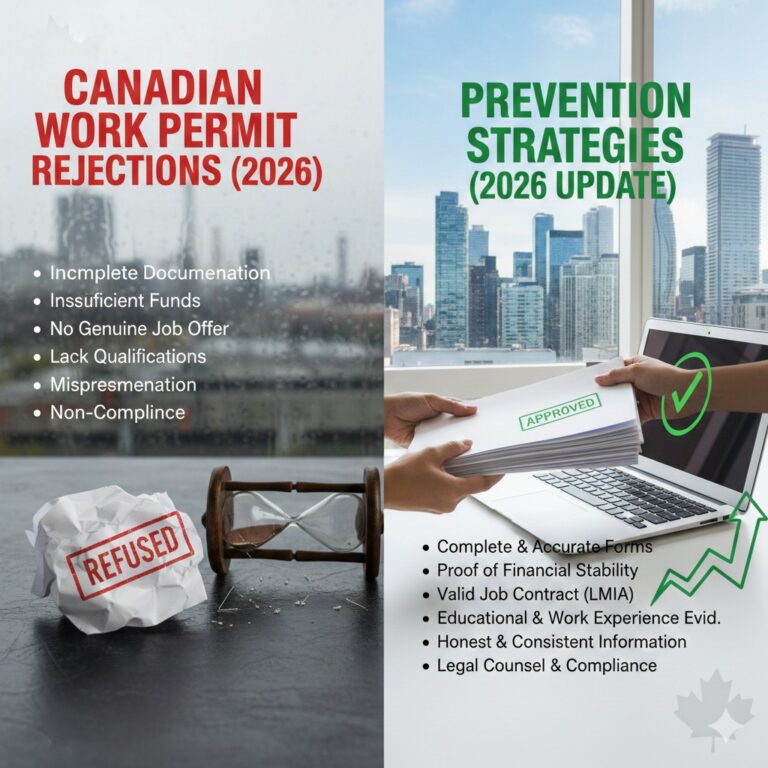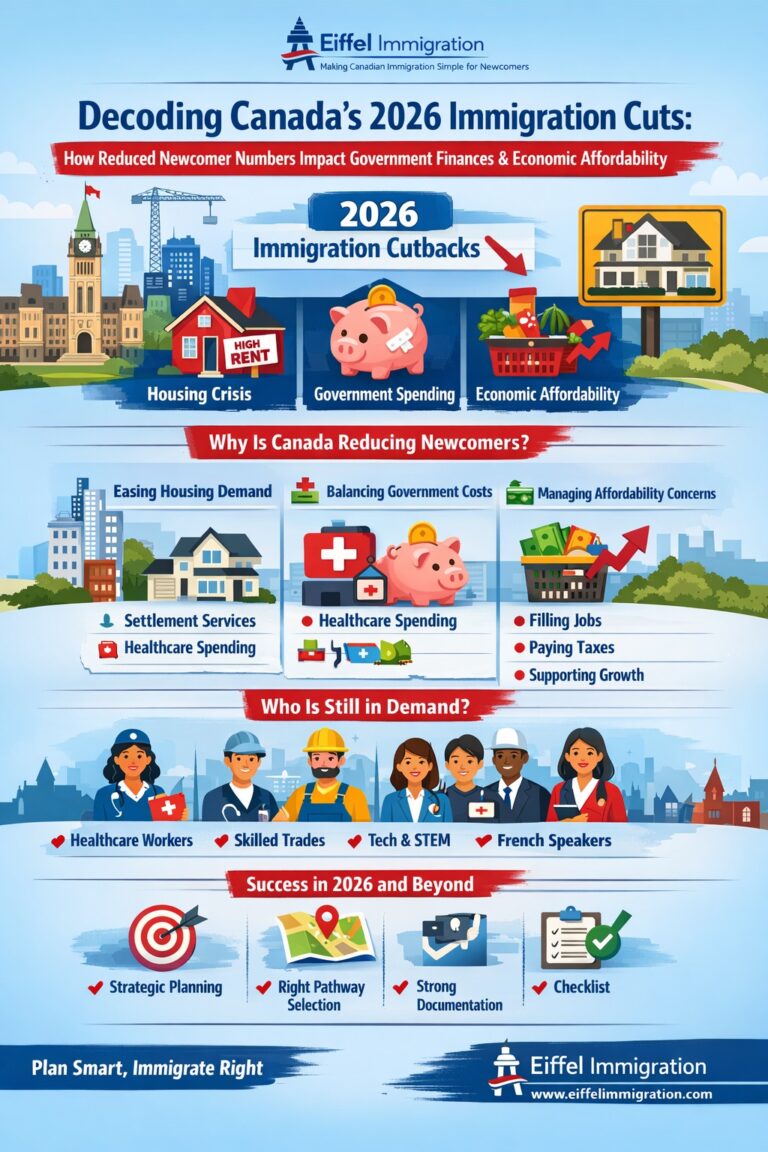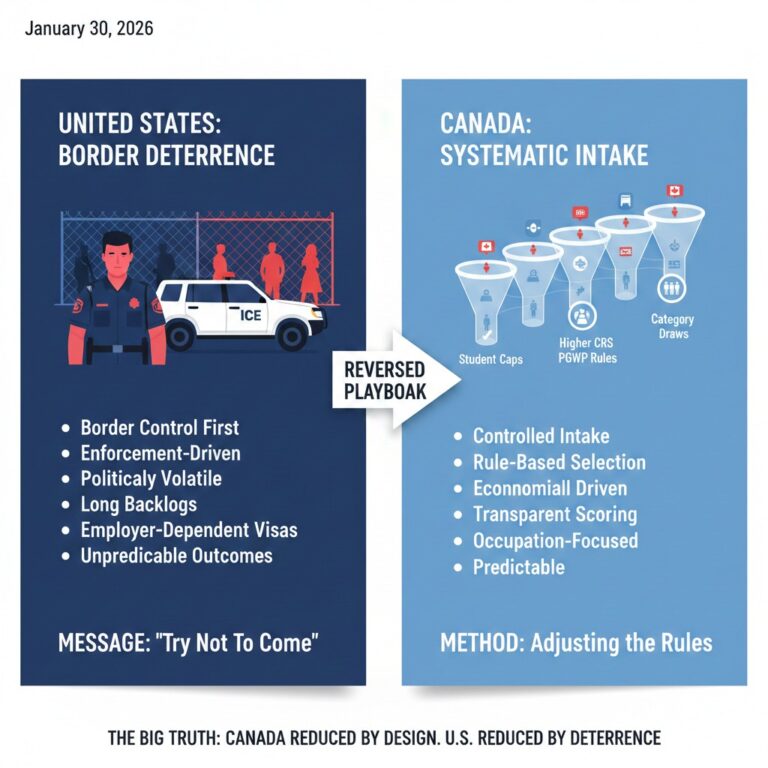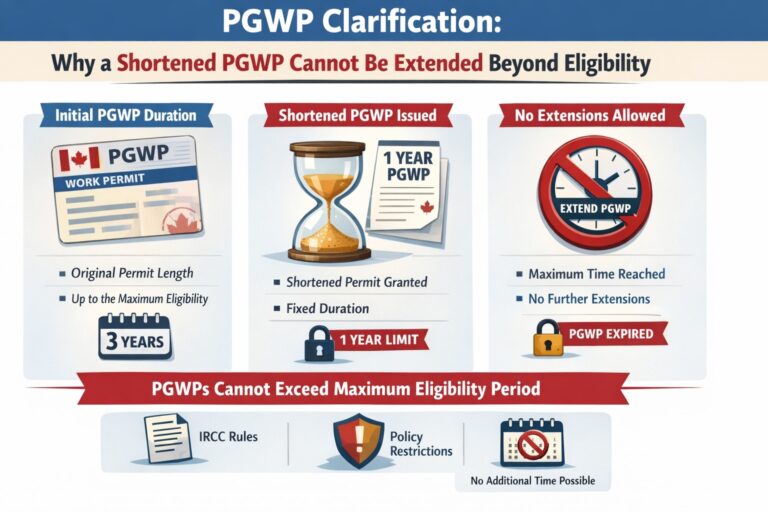

Applying for a Canadian work permit is a big step toward building your future in Canada. But in 2026, the process has become stricter than before. Due to recent changes in immigration policies, Work Permit Rejections have increased, especially under the Temporary Foreign Worker Program (TFWP).
At Eiffel Immigration, we are seeing more refusals because IRCC is now carefully reviewing applications, tightening employer compliance, and prioritizing workers in high-demand sectors like healthcare and skilled trades.
In this updated guide, we explain:
-
The most common reasons for Work Permit Rejections
-
Recent 2026 policy changes affecting applications
-
Smart prevention strategies to increase approval chances
Let’s understand everything in simple language.
2026 Update: Why Work Permit Rejections Are Increasing
In 2026, IRCC has:
-
Tightened rules under the Temporary Foreign Worker Program (TFWP)
-
Increased inspections of employers offering LMIA-based jobs
-
Limited approvals in low-wage streams in certain regions
-
Allowed some temporary public policies to expire (especially certain LMIA-exempt categories)
-
Started prioritizing high-demand occupations such as:
-
Healthcare workers
-
Construction & skilled trades
-
Essential services
-
This means applications in non-priority sectors are facing more scrutiny, leading to higher Work Permit Rejections.
For official updates, applicants should always review IRCC guidelines directly on the Government of Canada website before applying.
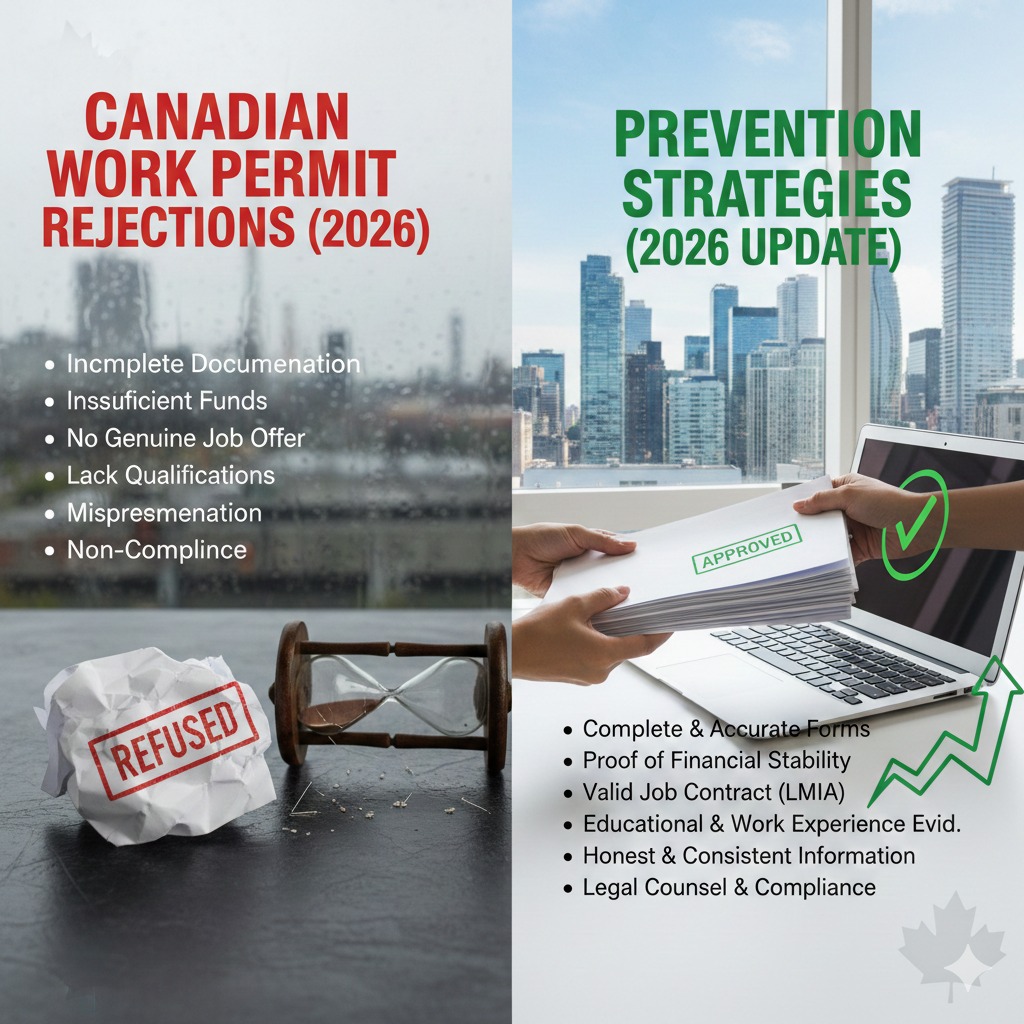
1. Incomplete or Incorrect Documents
This remains the #1 reason for Work Permit Rejections.
Even small mistakes can lead to refusal because IRCC officers only assess what is uploaded.
Common mistakes:
-
Missing forms
-
Expired passport
-
Incorrect answers
-
Blurry scans
-
Missing signatures
Prevention Strategy:
-
Review your entire application twice
-
Ensure all forms are validated properly
-
Upload clear documents
-
Seek professional review before submission
2. Weak or Non-Genuine Job Offer (Especially Under TFWP)
With the 2026 tightening of the TFWP, IRCC is verifying employers more strictly.
Applications may be refused if:
-
Employer has compliance issues
-
LMIA details are incorrect
-
Wage does not meet provincial standards
-
Job duties don’t match the correct NOC code
-
Employer is not actively operating
Prevention Strategy:
-
Verify employer’s legitimacy
-
Confirm wage meets median wage requirements
-
Ensure job duties match the correct TEER category
-
Double-check LMIA validity
Many recent Work Permit Rejections are linked to employer compliance issues, not the applicant.
3. Expired or Changed LMIA-Exempt Policies
In previous years, some temporary public policies allowed easier LMIA-exempt work permits. However, several of these policies have expired in 2026.
Applicants who rely on outdated information are facing refusals.
Prevention Strategy:
-
Always check the latest IRCC updates
-
Confirm whether your LMIA-exempt category is still valid
-
Do not rely on old YouTube or social media information
Immigration rules change frequently. What worked in 2024 or 2025 may not work in 2026.
4. Insufficient Financial Proof
Even for work permits, IRCC wants proof that you can support yourself.
Red flags include:
-
Low bank balance
-
Large unexplained deposits
-
No income history
-
No financial stability
Prevention Strategy:
-
Provide 4–6 months of bank statements
-
Explain large deposits with proof
-
Show employment or income history clearly
Financial clarity reduces the chances of Work Permit Rejections.
5. Lack of Strong Ties to Home Country
If the officer believes you may overstay your visa, your application can be refused.
IRCC checks:
-
Family ties
-
Property ownership
-
Career stability
-
Travel history
Prevention Strategy:
-
Include family documents
-
Add property documents if available
-
Show clear employment background
-
Write a strong and honest Letter of Explanation (LOE)
6. Weak or Generic Letter of Explanation
Many applicants copy sample letters from the internet. This is risky.
A generic letter can:
-
Sound unnatural
-
Fail to explain career progression
-
Create doubts
Prevention Strategy:
-
Make it personalized
-
Connect your job offer with your experience
-
Address any gaps clearly
-
Explain your long-term plans honestly
A strong LOE often makes a major difference in avoiding Work Permit Rejections.
7. Previous Refusals Not Properly Addressed
If you had a past refusal (visitor, study, or work permit) and you do not fix the issues, IRCC may refuse again.
Prevention Strategy:
-
Order GCMS notes
-
Understand exact refusal reasons
-
Submit stronger documents
-
Directly address each concern
At Eiffel Immigration, many of our Success Stories involve clients who came to us after refusal — and we helped them get approval by correcting mistakes properly.
8. Misrepresentation (Intentional or Accidental)
Submitting fake documents or hiding information can result in:
-
Immediate refusal
-
5-year ban
-
Long-term immigration issues
Even unintentional mistakes can be considered misrepresentation.
Prevention Strategy:
-
Always review your own file
-
Never submit fake documents
-
Be transparent about your history
-
Work with licensed professionals
What To Do If You Receive a Work Permit Refusal?
Do not panic.
In 2026, many applicants are getting refused due to stricter rules — but refusals can often be fixed.
Options may include:
-
Reapplying with stronger documentation
-
Filing reconsideration (if officer error is evident)
-
Reviewing eligibility under a different category
-
Applying under high-demand sectors if eligible
Every refusal has a reason — and every reason has a solution when handled properly.
Final Thoughts: Avoiding Work Permit Rejections in 2026
With recent tightening of the Temporary Foreign Worker Program and policy changes, applicants must be more careful than ever.
Most Work Permit Rejections happen due to:
-
Weak employer documentation
-
Outdated policy understanding
-
Financial gaps
-
Poor explanation letters
-
Ignoring previous refusals
The key is preparation, accuracy, and updated knowledge.
Before applying, always:
-
Review official IRCC guidelines
-
Understand current 2026 rules
-
Ensure your category is still active
-
Prepare strong documentation
Need Help With Your Work Permit?
At Eiffel Immigration, we stay updated with the latest IRCC policy changes and sector priorities. Whether you are applying for the first time or after a refusal, we can guide you step-by-step.
Your Canadian dream deserves expert handling.
Book a consultation today and avoid unnecessary Work Permit Rejections.