

For thousands of immigrants dreaming about moving to Canada, receiving an ITA (Invitation to Apply) is the moment everything finally starts to feel real. Once you receive an ITA through the Express Entry system, you can officially apply for Permanent Residence (PR).
But here’s something many applicants don’t fully understand:
Your work experience could be the most powerful factor in your ITA journey.
Many candidates focus only on language test scores or education. While these are important, immigration experts often see that well-documented and strategic work experience can significantly improve your chances of receiving an ITA.
In fact, with the new 2026 Express Entry changes, work experience is no longer just helpful — it can be the deciding factor between staying in the pool or receiving an ITA.
In this guide, we’ll explain in simple terms how your work experience can become your secret weapon in the ITA battle.
What Is an ITA in Express Entry?
Before we dive deeper, let’s understand what an ITA actually means.
An Invitation to Apply (ITA) is issued by Immigration, Refugees and Citizenship Canada (IRCC) to candidates in the Express Entry pool who meet the required score in a draw.
Once you receive an ITA, you can submit your complete PR application within 60 days.
Candidates in the pool are ranked using the Comprehensive Ranking System (CRS) based on factors like:
-
Age
-
Education
-
Language test results
-
Work experience
-
Canadian work experience
-
Provincial nominations
-
Additional factors like French ability
The higher your CRS score, the greater your chances of receiving an ITA.
However, as immigration draws become more competitive, candidates must use every advantage possible to increase their score — and that’s where work experience becomes extremely valuable.
Why Work Experience Matters More Than Ever
Many applicants underestimate the value of their professional background.
But in the Express Entry system, both foreign work experience and Canadian work experience can significantly increase your CRS score and improve your chances of receiving an ITA.
Work experience strengthens your profile in several important ways.
1. Direct CRS Points
First, work experience contributes directly to your CRS score.
For example:
-
1 year of skilled work experience gives you CRS points.
-
2–3 years of experience adds even more.
-
3 or more years helps you maximize the points available in this category.
This means candidates with longer and consistent work histories often have stronger Express Entry profiles.
2. Skill Transferability Points
This is where work experience becomes even more powerful.
The Express Entry system also awards Skill Transferability Points, which combine work experience with:
-
Language proficiency
-
Education
For example:
If you have:
-
3 or more years of foreign work experience
-
Strong English scores (CLB 9 or higher)
You may receive additional CRS points, significantly increasing your chances of receiving an ITA.
This is why two candidates with similar profiles can end up with very different CRS scores.
3. Canadian Work Experience Advantage
Candidates who have already worked in Canada often have a major advantage.
Canadian work experience:
-
Provides additional CRS points
-
Shows IRCC that you are already familiar with the Canadian workplace
-
Demonstrates that you can successfully integrate into the labour market
Even one year of skilled work experience in Canada can make a significant difference in your ITA chances.
The New 2026 Rule: The “12-Month Experience Requirement”
Canada introduced an important change in February 2026 that affects many Express Entry applicants.
Previously, some category-based draws required only 6 months of experience in a specific occupation.
However, the rule has now changed.
To qualify for many category-based Express Entry draws, candidates must have:
✔ At least 12 months of work experience
✔ In the same occupation
✔ Within the last 3 years
This means short-term or mixed work experience across multiple occupations may not be enough anymore.
For candidates hoping to receive an ITA, this change highlights the importance of consistent and specialized work experience.
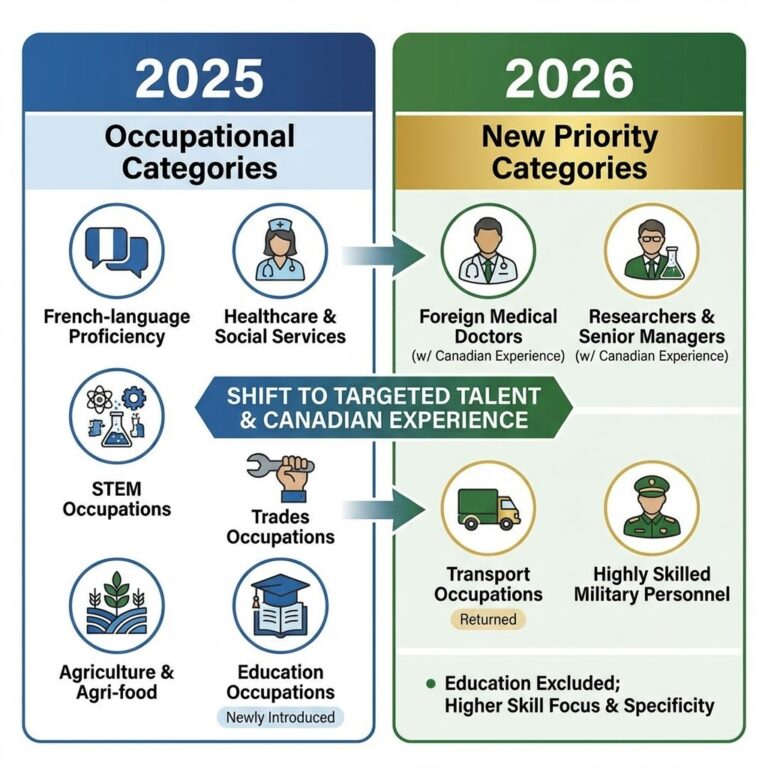
New Express Entry Categories Introduced in 2026
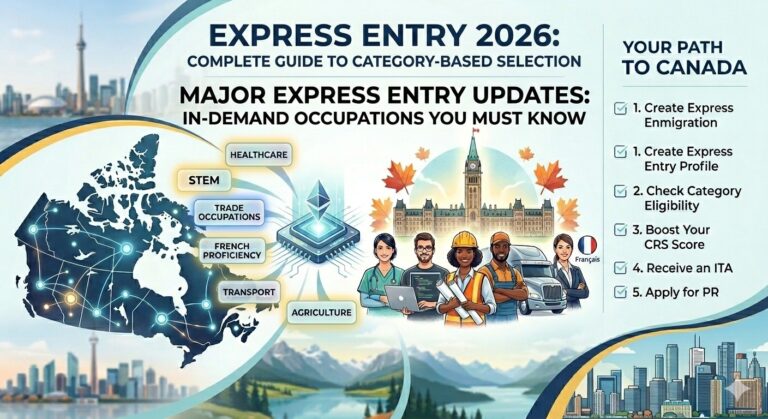
Another major development in 2026 is the expansion of category-based Express Entry draws.
Previously, categories mainly focused on sectors like:
-
Healthcare
-
STEM
-
Skilled trades
-
Transport
-
Agriculture
-
French language proficiency
However, Canada has now introduced new priority categories to address labour shortages.
These include:
Medical Doctors
Canada continues to face shortages of physicians across many provinces. As a result, medical doctors may now receive targeted invitations through category-based Express Entry draws.
Researchers
Professionals involved in scientific research, innovation, and advanced academic work are also receiving more attention in immigration selection.
This reflects Canada’s long-term goal of strengthening its innovation and research sectors.
Senior Managers
Experienced senior-level managers and executives may also benefit from targeted draws because of the strategic value they bring to Canada’s economy.
Transport Occupations with Canadian Experience
Another growing priority includes transport and logistics occupations, particularly those with Canadian work experience.
These roles are critical for supply chains and national infrastructure.
If your professional background fits into one of these sectors, your work experience could directly increase your chances of receiving an ITA.
The “530+ CRS Wall” Many Candidates Are Facing
One challenge many Express Entry candidates face today is what immigration experts informally call the “530+ CRS wall.”
In many Canadian Experience Class (CEC) draws, CRS cut-off scores have been hovering around:
508 – 534 CRS points
For many candidates, reaching these scores through language tests or education alone can be extremely difficult.
This is where work experience becomes crucial.
Instead of simply adding a few points, work experience can help candidates qualify for targeted category-based draws, where CRS cutoffs may be lower.
In other words:
Work experience is often the bridge that helps candidates cross the ITA barrier.
Choosing the Right Occupation Code (NOC)
Your work experience must match the correct NOC (National Occupation Classification) code.
The NOC system categorizes jobs based on duties and responsibilities.
If your job duties do not match the selected NOC code, it may cause serious problems, such as:
-
Loss of CRS points
-
Application refusal
-
Concerns about misrepresentation
To avoid this, your reference letters must clearly match the duties listed under the chosen NOC code.
Documents Needed to Prove Work Experience
Even strong work experience must be properly documented.
IRCC expects clear proof that confirms your employment.
Typical documents include:
-
Employer reference letters
-
Job title
-
Salary information
-
Number of working hours
-
Detailed job duties
-
Start and end dates of employment
Many ITA holders unfortunately face refusals because their documentation does not clearly prove their work experience.
This is why preparing proper documents early is extremely important.
Common Work Experience Mistakes That Can Hurt Your ITA Chances
Many applicants unintentionally weaken their Express Entry profile because of avoidable mistakes.
Some of the most common ones include:
Selecting the Wrong NOC Code
Choosing an occupation code that does not match your duties can lead to refusal.
Weak Employer Reference Letters
If your reference letter lacks job duties or essential details, IRCC may reject the work experience.
Claiming Ineligible Experience
Volunteer work, unpaid internships, or casual work usually do not qualify for Express Entry.
Miscalculating Work Hours
To qualify, work experience must typically be:
30 hours per week (full-time) or equivalent part-time work.
How to Turn Your Work Experience Into an ITA Strategy
Smart applicants treat their work experience as part of their immigration strategy.
Here are some ways to strengthen your profile:
✔ Ensure your job duties match the correct NOC code
✔ Maintain consistent employment in the same occupation
✔ Improve language scores to unlock transferability points
✔ Gain additional skilled work experience when possible
✔ Explore Provincial Nominee Programs linked to your occupation
With the right strategy, your work experience can become the strongest part of your Express Entry profile.
Final Thoughts
The journey to receiving an ITA can feel competitive, especially as Express Entry draws become more selective.
However, many applicants overlook the powerful advantage already within their profile:
Their work experience.
With the new 2026 changes, including the 12-month experience rule, new targeted categories, and higher CRS cutoffs, work experience has become more important than ever.
When properly documented and strategically presented, your professional background can significantly improve your chances of receiving an ITA.
In many cases, it becomes the secret weapon that turns an average profile into a successful immigration story.
Need help assessing your Express Entry profile or reviewing your work experience documents?
The experts at Eiffel Immigration can help you build a stronger strategy and improve your chances of receiving your ITA for Canada.