
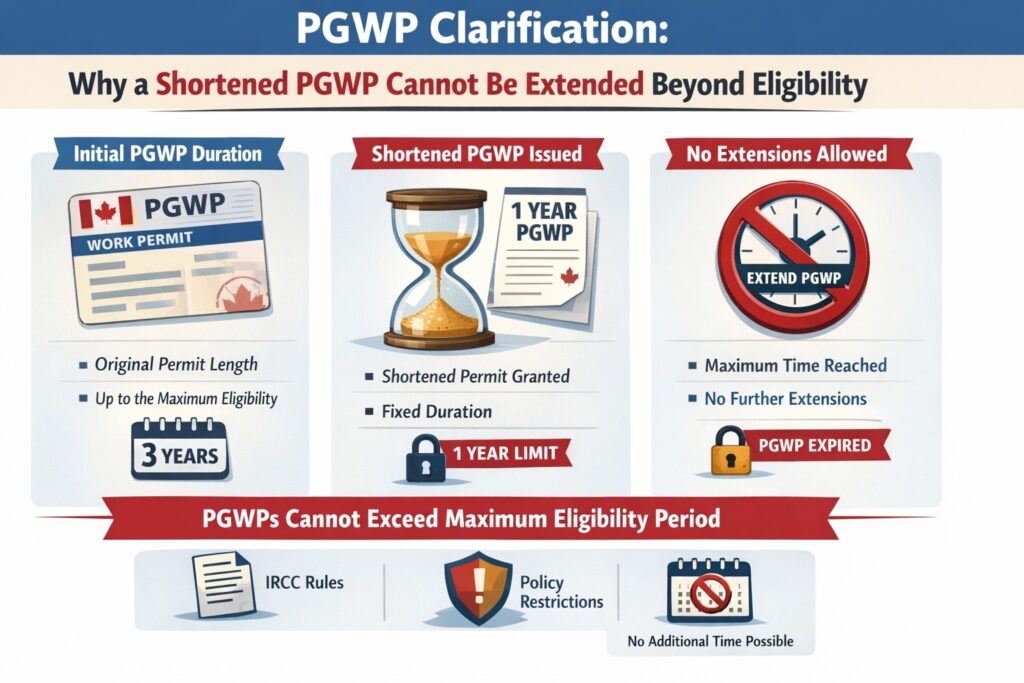
The Post-Graduation Work Permit (PGWP) is one of the most important immigration tools available to international students in Canada. It allows graduates to gain valuable Canadian work experience and often becomes the bridge to permanent residence.
Yet, despite its importance, it is also one of the most misunderstood permits in Canada’s immigration system.
One misunderstanding, in particular, is causing thousands of avoidable refusals every year:
the belief that a shortened PGWP can be extended later.
What Is a PGWP?
A PGWP allows eligible international graduates to work in Canada after completing a qualifying program of study at a designated learning institution.
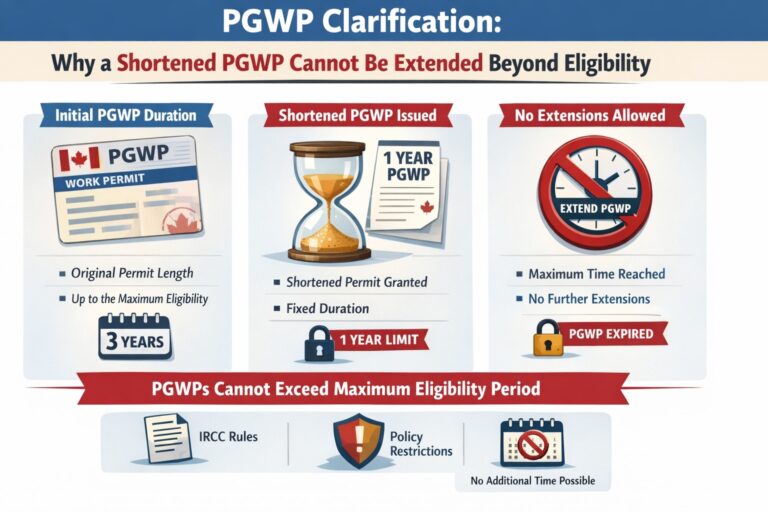
Depending on the length of the study program, this work permit can be issued for up to three years. It is an open work permit, meaning you can work for almost any employer, anywhere in Canada.
However—and this is critical—PGWP eligibility is time-limited and non-renewable.
Once that eligibility period ends, it is permanently closed.
Why Some PGWPs Are Issued for a Shorter Duration
One of the most common reasons graduates receive a shorter work permit is passport expiry.
For example:
-
You completed a program that qualifies you for a 3-year permit
-
Your passport was valid for only 12 more months
-
IRCC issued your work permit only until your passport expiry date
This is standard IRCC procedure, not an error or discretionary decision.
Immigration officers cannot issue a work permit beyond the validity of your passport.
The Most Dangerous Misunderstanding
Many graduates believe:
“Once I renew my passport, I can apply again and get the remaining time.”
❌ Unfortunately, this is incorrect.
Here is the rule that matters most:
Your eligibility is locked to the original eligibility window, not your passport validity.
If that eligibility period ends before IRCC finalizes your new application, the application will be refused—even if you were previously entitled to more time.
Key Rules Every Graduate Must Understand
To avoid irreversible mistakes, keep these points in mind:
-
Renewing your passport does not reset eligibility
-
Reapplying does not extend your work authorization beyond the original eligibility period
-
If eligibility expires while your application is being processed, IRCC will refuse the application
-
Maintained (implied) status does not revive eligibility
-
Processing delays do not create new rights
This is where many well-intentioned applicants go wrong.
Refusal vs Withdrawal: A Critical Difference
Another commonly overlooked detail is the outcome itself.
These cases result in refusals, not withdrawals.
Why does this matter?
-
A refusal becomes part of your permanent immigration record
-
It must be disclosed in future visa or work permit applications
-
It can raise credibility concerns if not properly explained
This is why strategic planning matters long before you reach the expiry date.
IRCC’s Official Position
IRCC has clearly stated that:
-
A shortened post-graduation work permit cannot be extended beyond eligibility
-
Passport expiry is the applicant’s responsibility
-
Processing time does not pause or protect eligibility
-
There is no mechanism to “add back” unused time later
In simple terms: IRCC does not freeze or hold eligibility for future use.
Online vs Paper Application: Where Many Applicants Miss an Opportunity
Here is an important clarification many graduates are unaware of.
If your passport is expiring soon at the time of your initial application, a paper application can sometimes help.
Why?
-
A paper application allows you to submit proof of passport renewal in progress
-
In some cases, this enables IRCC to issue the permit for the full eligible duration
-
Online applications often result in automatic shortening when passport validity is limited
This option must be used before the first permit is issued—not after.
Once a shortened permit is issued and eligibility time passes, no application method can fix it.
What You Should Do Instead
If you are planning to apply—or already hold a shortened permit—smart planning is essential:
-
Renew your passport before submitting your application whenever possible
-
Calculate your exact eligibility end date carefully
-
Consider alternative work permit pathways early
-
Do not rely on maintained status as a solution
-
Seek professional advice before reapplying
Waiting too long can permanently close this pathway.
How This Reflects Canada’s Changing Immigration Landscape
This issue fits into a larger trend in Canada’s immigration system:
-
Stricter interpretation of existing rules
-
Less flexibility for technical mistakes
-
Greater responsibility placed on applicants
Canada is not removing opportunities—but it is enforcing them far more precisely than before.
Final Thoughts from Eiffel Immigration
At Eiffel Immigration, we regularly see refusals that could have been avoided with the right guidance and timing.
The takeaway is simple and non-negotiable:
A shortened PGWP cannot be extended beyond the original eligibility window—regardless of passport renewal, maintained status, or processing delays.
If you are planning your PGWP or dealing with a shortened permit, informed strategy matters more than ever.
This article is for general information only and does not constitute legal advice.