
Canada has finally made a move that many skilled workers have been waiting for.
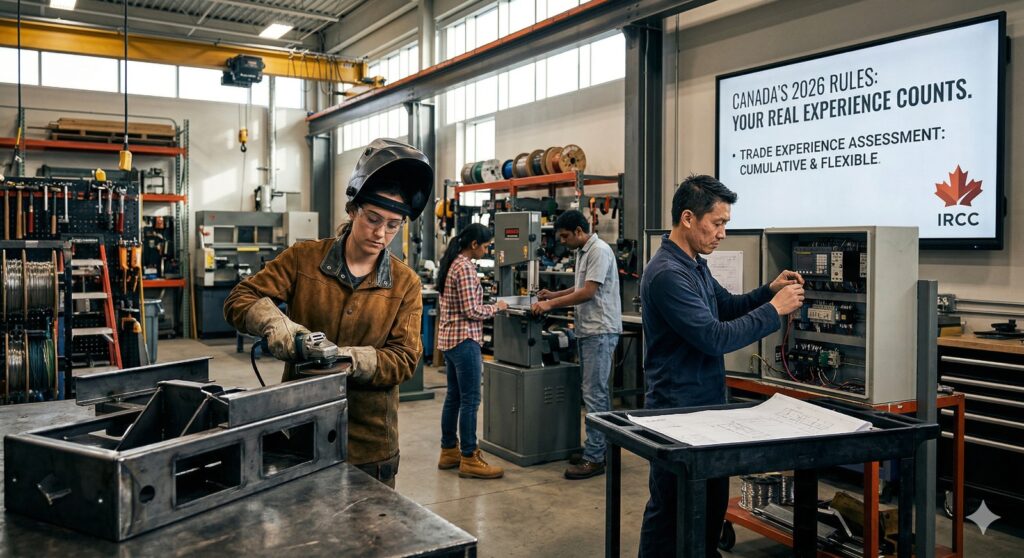
In 2026, new trade-focused immigration rules are changing how experience is evaluated—and for the better. If you work in a skilled trade, this could be your biggest opportunity yet.
For years, many applicants struggled because their real-world experience didn’t fit perfectly into strict system requirements. Gaps in employment, informal training, or overseas experience often worked against them.
But now, that’s changing.
Let’s break it down in simple terms 👇
What Changed in Canada’s 2026 Trade Rules?
The Canadian government, through Immigration, Refugees and Citizenship Canada, has updated how trade experience is assessed under immigration programs like Express Entry.
The biggest shift?
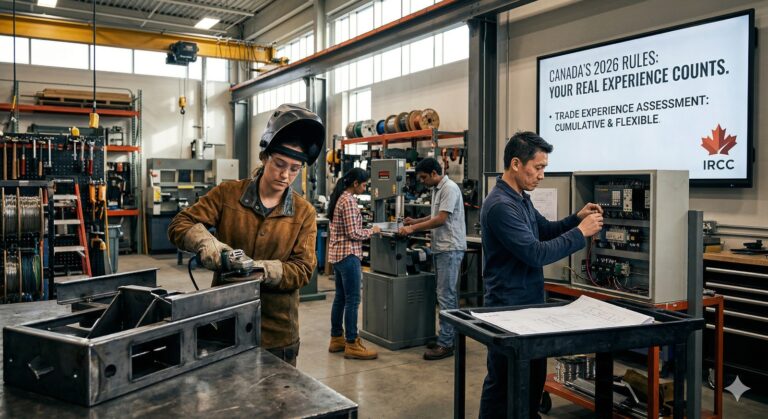
👉 Real-world experience now matters more than perfect timelines.
Previously, applicants had to show continuous, gap-free work experience. Even a short break could reduce points or lead to refusal.
Now, the system is more flexible and realistic.
No More “Perfect Timeline” Pressure
Let’s be honest—life isn’t perfect.
People take breaks for:
- Family responsibilities
- Health issues
- Job transitions
- Further training
Under the old system, these gaps could hurt your profile.
But under the 2026 updates:
✔ Short employment gaps are no longer heavily penalized
✔ Experience is assessed based on overall skills and duration, not just continuity
✔ More weight is given to actual work performed
This is a huge win for trade workers.
Why This Matters for Skilled Trades
Canada has been facing a serious shortage in skilled trades.
We’re talking about jobs like:
- Electricians
- Welders
- Plumbers
- Carpenters
- Heavy-duty mechanics
These roles are critical for infrastructure, housing, and economic growth.
That’s why programs like the Federal Skilled Trades Program are now being aligned with real labor market needs.
👉 The focus is shifting from “paper-perfect profiles” to people who can actually do the job.
Real-World Experience Is Finally Recognized
One of the biggest improvements is how experience is evaluated.
Under the new rules:
1. Overseas Experience Counts More
If you gained trade experience outside Canada, it is now better recognized.
Before, many applicants struggled to prove their foreign work experience.
Now:
- More flexible documentation is accepted
- Practical skills are valued alongside formal credentials
2. Informal Training Gets Credit
Not everyone learns through formal education.
Many tradespeople learn through:
- Apprenticeships
- On-the-job training
- Family businesses
The 2026 rules acknowledge this.
👉 If you can prove your skills, you have a fair chance.
3. Gaps Don’t Define You
Instead of rejecting profiles due to gaps, officers now look at:
✔ Total years of experience
✔ Skill level (based on TEER categories)
✔ Consistency over time—not perfection
This makes the system more human—and fair.
Impact on Express Entry Candidates
If you’re applying through Express Entry, these changes can directly affect your CRS score and eligibility.
Here’s how:
Higher Chances of Qualification
More candidates will now meet eligibility under trade categories.
Better CRS Outcomes
Your score may improve because:
- Experience gaps won’t reduce your points as much
- Trade-specific draws are increasing
More Invitations for Trades
Canada is prioritizing skilled trades in targeted draws.
👉 This means less competition compared to general draws.
A Shift Toward Category-Based Selection
Another major change is the rise of category-based draws.
Instead of inviting candidates only based on high CRS scores, Canada is selecting candidates based on specific sectors—including trades.
This approach by Immigration, Refugees and Citizenship Canada focuses on:
✔ Labour shortages
✔ Economic needs
✔ Industry demand
Trades are now a top priority.
What This Means for You
If you are a tradesperson, this is your moment.
Here’s what you should do next:
1. Document Your Experience Properly
Even with flexibility, documentation is still key.
Make sure you have:
- Reference letters
- Job duties clearly listed
- Proof of work duration
2. Focus on Skill Matching
Your job duties must match the correct TEER category under the National Occupation system.
Accuracy matters more than ever.
3. Consider Certification
While not always mandatory, Canadian certification can boost your profile significantly.
4. Stay Updated on Draws
Trade-specific draws can happen anytime.
Being ready is critical.
Common Mistakes to Avoid
Even with relaxed rules, mistakes can still cost you.
Avoid these:
❌ Submitting incomplete work experience
❌ Not explaining employment gaps
❌ Using generic job descriptions
❌ Ignoring TEER classification
👉 Remember: flexibility does NOT mean carelessness.
The Bigger Picture: Why Canada Made This Change
Canada’s immigration strategy is evolving.
The goal is simple:
👉 Bring in people who can contribute immediately.
The 2026 trade rule updates reflect:
✔ A practical approach to immigration
✔ Recognition of global talent
✔ Faster integration into the workforce
This aligns with Canada’s long-term economic goals.
Final Thoughts
For years, skilled trade workers were held back by rigid rules that didn’t reflect real life.
But in 2026, that’s finally changing.
Canada is saying:
👉 “Show us what you can do—not just what your paperwork says.”
If you have real experience, skills, and the ability to contribute, your chances are now stronger than ever.