
For years, Canada has proudly called itself a nation built by newcomers. Immigration has helped grow the economy, support aging populations, and keep key industries running.
But in 2026, the conversation has shifted.
The Canadian government has announced immigration level reductions, and many people are asking the same question:
👉 Why reduce newcomer numbers when Canada still needs workers?
👉 How does this affect the economy, housing, and government finances?
👉 What does this mean for future newcomers planning their Canadian dream?
Let’s break this down in simple, practical language—no policy jargon, no confusion.
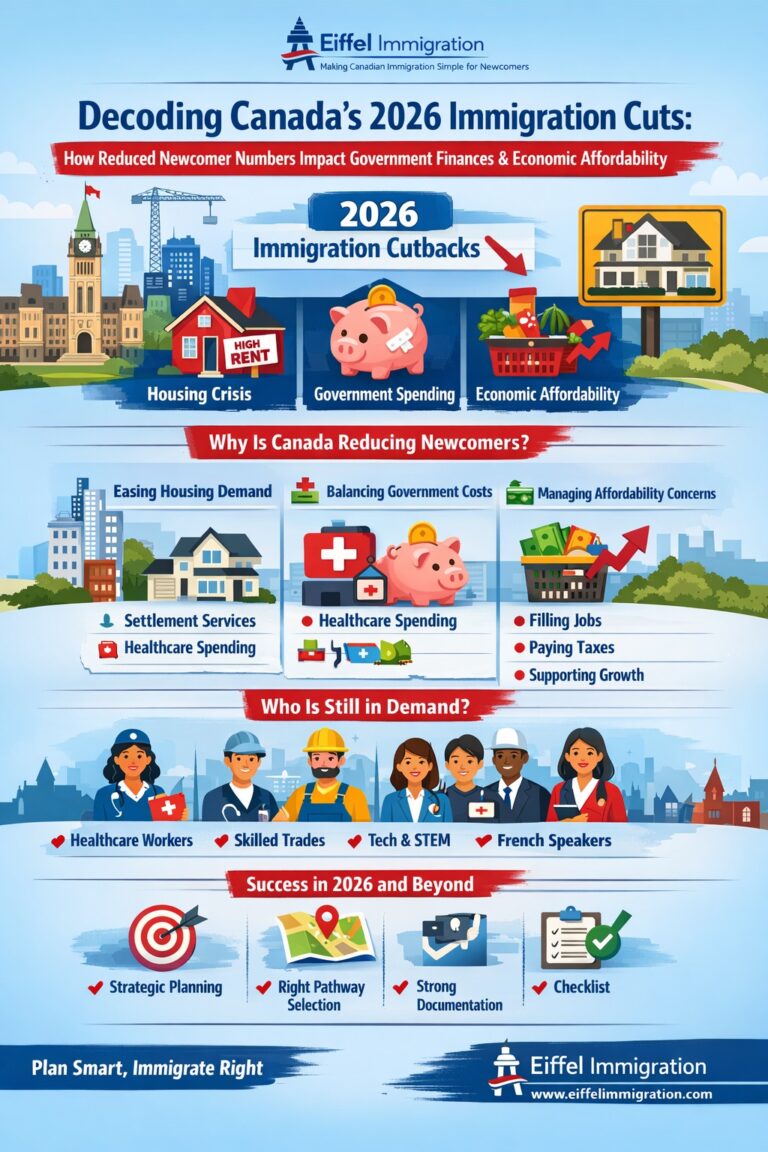
What Are Canada’s 2026 Immigration Cuts?
Canada sets yearly immigration targets through its Immigration Levels Plan. These targets control how many newcomers are welcomed as permanent residents each year.
-
Reduced overall permanent resident targets
-
Tightened pathways for some temporary residents
-
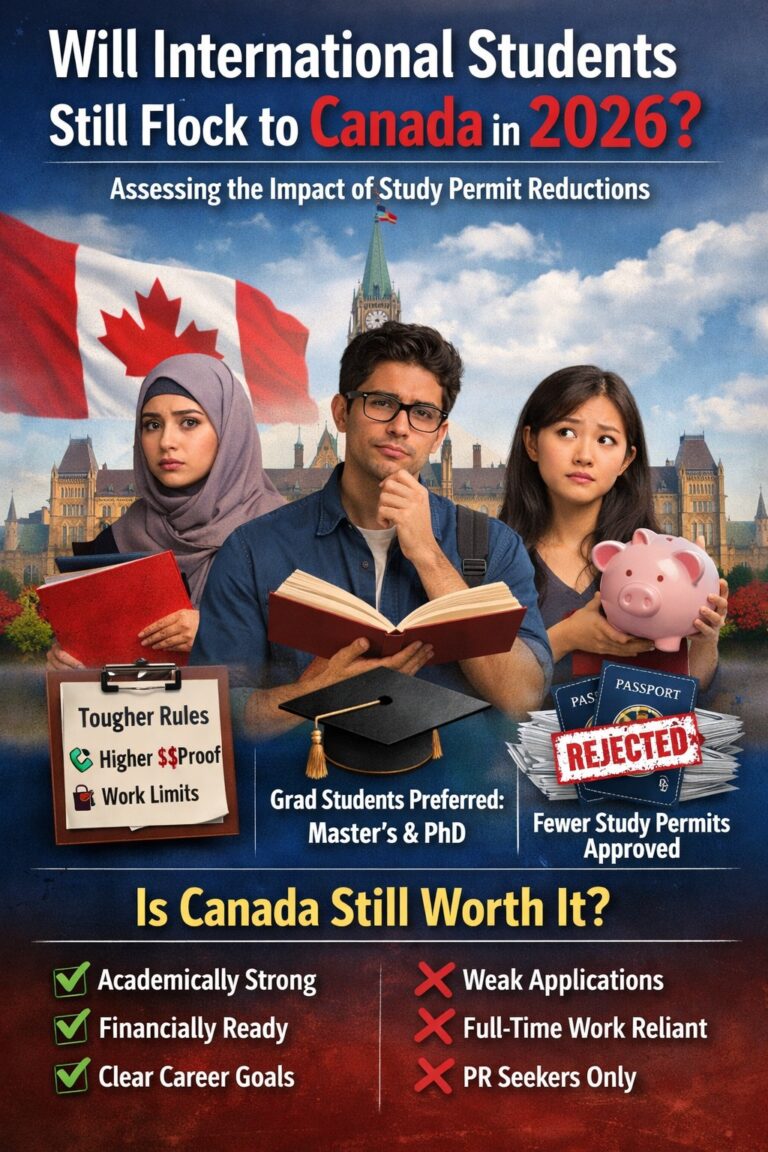
Increased scrutiny on student and work permit streams
This doesn’t mean Canada is “closing doors,” but it is slowing the flow of immigration compared to previous years.
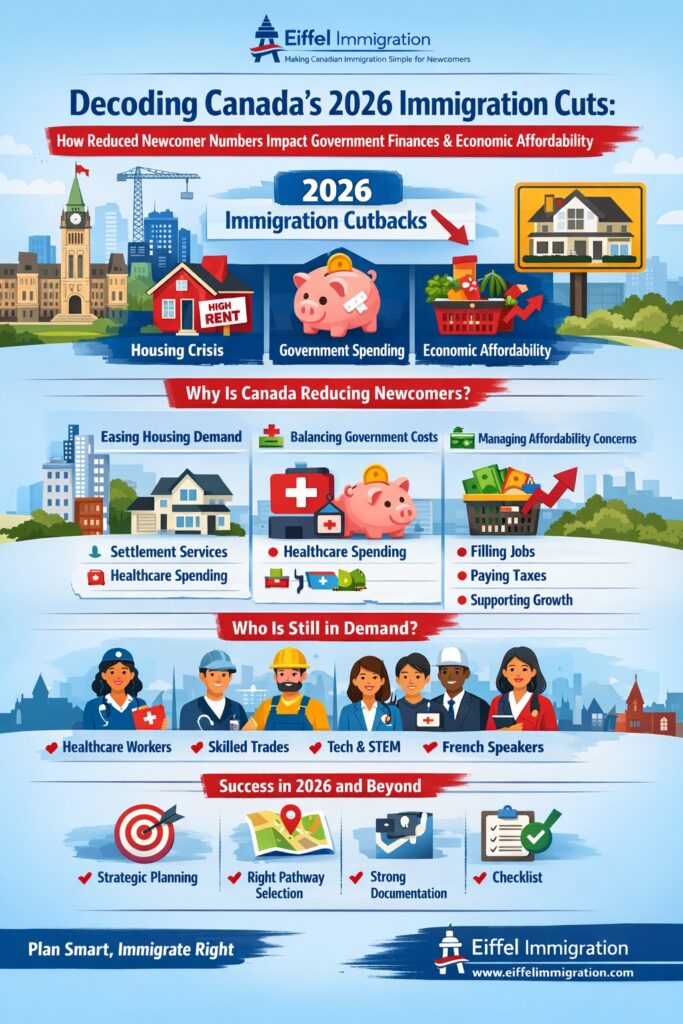
Why Is Canada Reducing Newcomer Numbers?
The decision isn’t political—it’s economic pressure.
1. Housing Crisis Is Driving the Change
Canada simply does not have enough affordable housing.
-
Rents have surged across major cities
-
Home prices remain out of reach for many
-
Infrastructure hasn’t kept pace with population growth
By reducing newcomer intake, the government hopes to:
-
Ease demand on housing
-
Stabilize rental prices
-
Give provinces time to catch up on supply
2. Government Spending Is Under Pressure
Every newcomer contributes to Canada—but not instantly.
In the short term, the government spends money on:
-
Healthcare access
-
Settlement services
-
Education support
-
Infrastructure upgrades
With inflation, healthcare costs, and social services already stretched, slowing newcomer numbers helps balance government finances.
Think of it as pausing to fix the foundation before adding another floor.
3. Economic Affordability Is Becoming a Public Concern
Canadians—new and old—are struggling with:
-
Cost of groceries
-
Transportation expenses
-
Childcare and utilities
The government believes that controlled immigration can help reduce competition for limited resources while long-term solutions are built.
How Do Newcomers Actually Impact Government Finances?
Here’s the part that often gets misunderstood.
Long-Term: Newcomers Are a Net Positive
In the long run, newcomers:
-
Pay taxes
-
Fill labor shortages
-
Support pensions for an aging population
-
Start businesses and create jobs
This is undeniable and well-documented.
Short-Term: There Are Real Costs
In the first few years, many newcomers:
-
Earn entry-level wages
-
Use public healthcare
-
Need settlement and integration support
So while newcomers strengthen the economy over time, the government still needs to manage short-term affordability pressures.
The 2026 cuts are about timing, not rejection.
Which Newcomers Are Still in Demand?
Even with reduced numbers, Canada is not reducing quality or priority needs.
High-demand newcomers include:
-
Healthcare workers
-
Skilled trades professionals
-
Tech and STEM workers
-
French-speaking newcomers
-
Caregivers and essential service workers
Programs like:
-
Provincial Nominee Programs (PNPs)
-
Healthcare-focused draws
-
Employer-driven pathways
are still very much alive.
What Does This Mean for Future Newcomers?
If you’re planning to immigrate, here’s the honest takeaway:
❌ It’s Not Easier
Competition is higher. Profiles must be stronger.
✅ It’s Still Possible
Canada still needs newcomers, just more strategically selected.
🔑 Preparation Matters More Than Ever
-
Correct work experience
-
Strong documentation
-
Realistic program selection
-
Proper legal guidance
This is where professional planning becomes critical.
Why Strategy Matters More in 2026 and Beyond
In the past, many newcomers relied on:
-
High CRS scores alone
-
Temporary status extensions
-
“We’ll figure it out later” approaches
That era is over.
2026 favors well-prepared, well-advised newcomers who:
-
Choose the right pathway early
-
Understand provincial needs
-
Avoid risky shortcuts
How Eiffel Immigration Helps Newcomers Navigate These Changes
At Eiffel Immigration, we’ve spent over a decade guiding newcomers through changing policies, tightening rules, and evolving programs.
We focus on:
-
Realistic immigration strategies
-
Compliance-first applications
-
Province-specific pathways
-
Long-term settlement success
Immigration rules may change, but proper planning never goes out of style.
Final Thoughts: A Reset, Not a Rejection
Canada’s 2026 immigration cuts are not anti-newcomer.
They are a reset—a chance for the system to:
-
Catch up on housing
-
Manage affordability
-
Ensure sustainable growth
For newcomers who are prepared, informed, and guided correctly, Canada remains a land of opportunity.
The key difference?
👉 Only the well-planned journeys will succeed.
Thinking about your Canadian immigration journey?
Let Eiffel Immigration help you plan smart, lawful, and future-ready—because every newcomer deserves clarity, not confusion.