
Thinking about making the big move to Canada? You’re not alone. A recent survey shows that Canada is the #1 country Americans want to move to in 2026, with nearly 24.4% choosing Canada over any other destination. Factors like affordable living, world-class safety, excellent health care, and high quality of life continue to attract U.S. citizens looking for a fresh start.
If you’re one of the many Americans planning to move to Canada, this guide from Eiffel Immigration breaks down all the main pathways—temporary and permanent—so you can choose the one that best fits your goals.
Move to Canada as a Digital Nomad
If you work remotely for clients or an employer outside Canada, you may be able to live in Canada temporarily without a work permit.
How it works
-
Digital nomads can stay in Canada for up to 6 months, or until the date stamped in their passport.
-
If your passport was not stamped, the default stay is 6 months.
-
You cannot work for Canadian clients or employers without proper authorization.
Who qualifies?
You can enter as a:
-
Digital Nomad (working remotely for a foreign employer), or
-
Business Visitor, if you’re conducting business activities in Canada but not entering the Canadian labour market.
If you decide to work for a Canadian company while in Canada, you will need a valid work permit.
CUSMA Work Permit Options for Americans
One of the fastest ways for U.S. citizens to move to Canada for work is through CUSMA (Canada–United States–Mexico Agreement). This agreement replaced NAFTA and allows Americans to get certain work permits without an LMIA, making the process much faster.
Under CUSMA, Americans may qualify under three categories:
1. CUSMA Professionals
For Americans with a job offer in one of the eligible professions, such as:
-
Engineer
-
Accountant
-
Computer systems analyst
-
Graphic designer
-
Scientist
-
Management consultant
You must:
-
Have a Canadian job offer
-
Work in one of the listed professions
-
Meet education/licensing requirements
2. Intra-Company Transferees
This option is ideal if you work for a U.S. company that has a:
-
Canadian branch
-
Subsidiary
-
Affiliate
You must be coming to Canada as an:
-
Executive
-
Senior manager
-
Worker with specialized knowledge
Generally, you must have worked for the U.S. company for at least one year.
3. CUSMA Investors
For Americans who have made—or are actively making—a substantial investment in a Canadian business.
You must be coming to Canada to:
-
Develop and direct the business
-
Manage or oversee operations
-
Hold an essential or executive role
Validity
-
Professionals: Up to 3 years
-
Intra-company transferees: Up to 3 years
-
Investors: Usually 1 year, renewable
Bonus: U.S. citizens can apply directly at the border, making CUSMA one of the fastest ways to move to Canada.
Temporary Foreign Worker Program (TFWP)
If you don’t qualify under CUSMA, your next option to move to Canada for work is through the Temporary Foreign Worker Program (TFWP).
Key Requirements
-
A Canadian employer must give you a job offer
-
The employer must obtain an LMIA
-
Your work permit will be employer-specific (“closed permit”)
High-Wage vs. Low-Wage Streams
Your job will fall under one of two streams based on wages offered compared to your province’s median hourly wage.
For example:
-
Alberta: $36.00
-
Ontario: $36.00
-
British Columbia: $36.60
Employers hiring under the high-wage stream face different requirements than those under the low-wage stream.
Global Talent Stream (Fast-Track Option)
If you work in the tech sector or other high-demand fields, the Global Talent Stream (GTS) offers:
-
LMIA in 10 business days
-
Work permit processing in 2 weeks
This program is ideal for software engineers, IT specialists, data scientists, and tech workers.
Move to Canada Permanently: PR Pathways for Americans
If your goal is to move to Canada long-term, there are several pathways to Canadian Permanent Residence (PR).
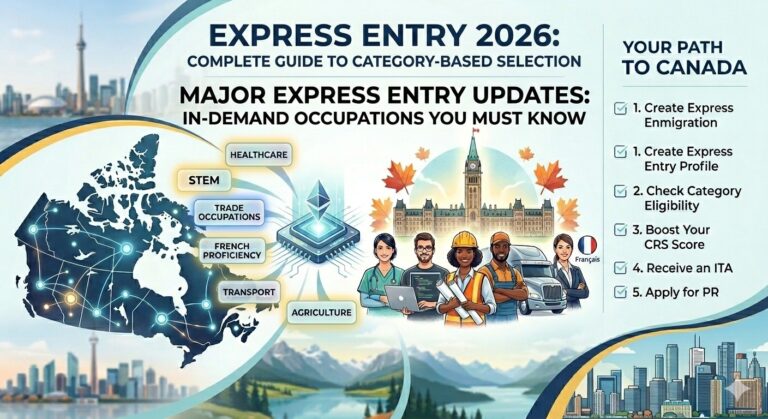
1. Express Entry – Canada’s Main Skilled Worker System
Express Entry ranks applicants based on:
-
Age
-
Education
-
Language skills
-
Skilled work experience
It manages three programs:
-
Canadian Experience Class (CEC)
-
Federal Skilled Worker Program (FSWP)
-
Federal Skilled Trades Program (FSTP)
A high CRS score increases your chances of getting an Invitation to Apply (ITA) for PR.
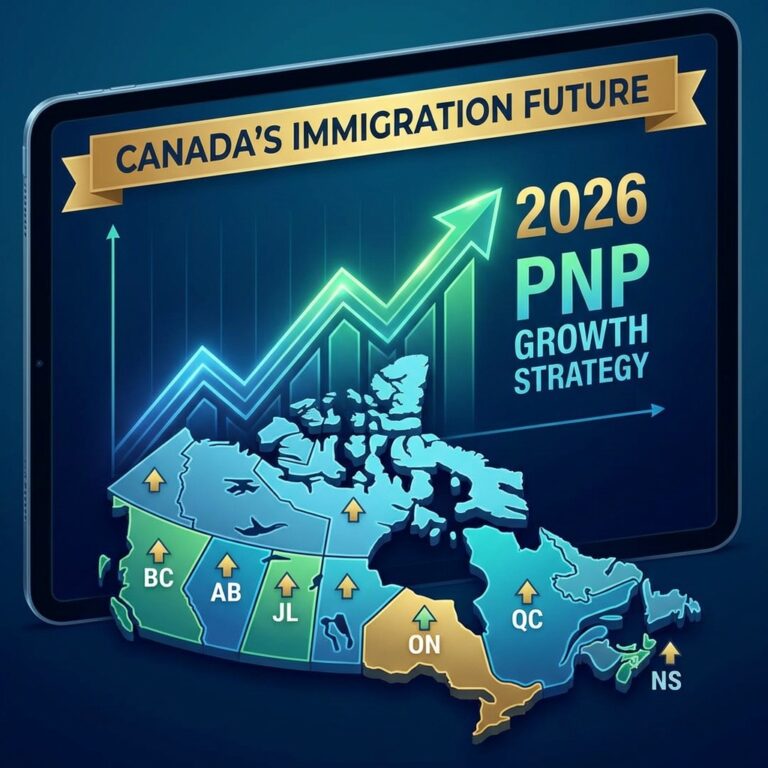
2. Provincial Nominee Programs (PNPs)
PNPs allow provinces to select immigrants based on regional labour needs.
There are 80+ PNP streams, and many are linked to Express Entry for faster PR processing.
If you:
-
Have experience in an in-demand occupation
-
Have ties to a specific province
-
Meet targeted labour market needs
… you may be able to get a provincial nomination worth 600 extra CRS points.
3. Family Sponsorship
If you have close family in Canada, you may be eligible for sponsorship through:
-
Spouse or common-law partner
-
Children or grandchildren
-
Eligible dependants
This is one of the most straightforward ways to move to Canada as a PR if your family is already settled.
4. Proof of Canadian Citizenship
Some Americans may already qualify as Canadians and not even know it.
If you have a parent or grandparent who was Canadian, you may apply for a citizenship certificate—a process that confirms citizenship rather than granting PR.
5. Study in Canada and Transition to PR
Studying in Canada is another effective pathway to PR.
How it works
-
Study at a Designated Learning Institution (DLI)
-
Become eligible for a Post-Graduation Work Permit (PGWP)
-
Gain Canadian work experience
-
Improve your CRS score for Express Entry or qualify for a PNP
Many Americans choose this route because it offers both education and a long-term immigration pathway.
Ready to Move to Canada? Eiffel Immigration Is Here to Help
Canada offers some of the world’s most flexible, welcoming, and diverse immigration pathways—especially for Americans. Whether you’re a digital nomad, skilled professional, investor, student, or simply ready for a new chapter, there’s a pathway designed for you.
At Eiffel Immigration, we help Americans:
-
Understand work permit options
-
Assess Express Entry and PNP eligibility
-
Navigate LMIA and employer-specific permits
-
Plan their PR journey from start to finish
If you’re ready to move to Canada, our team is here to guide you every step of the way.