
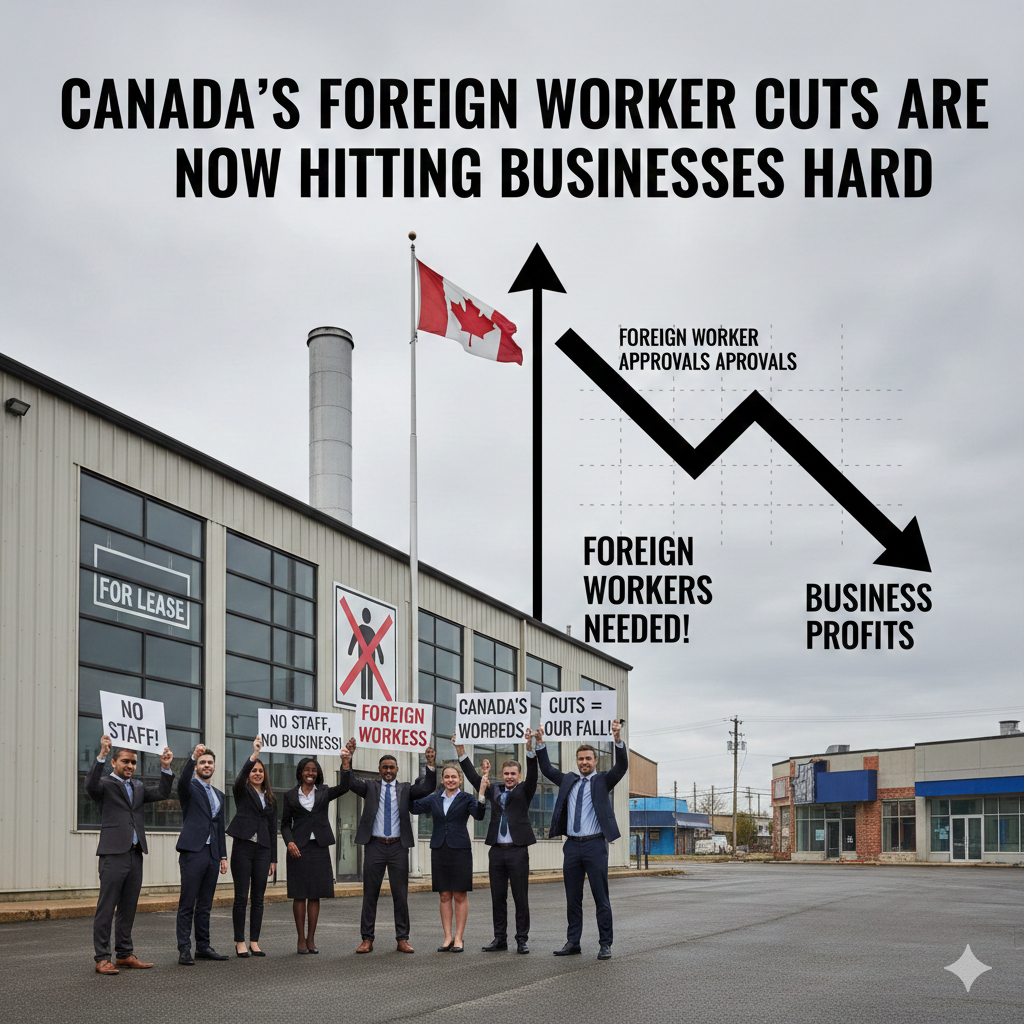
Canada’s decision to reduce foreign worker intake is no longer theoretical—it’s impacting businesses nationwide. From fast-food restaurants in Quebec to farms in Ontario and hospitality operators in Northern British Columbia, employers warn that without access to foreign worker programs, many may have to cut hours, reduce services, or even close.
Callout Box:
⚠️ “Without temporary foreign workers, small businesses in rural areas may face closures or service reductions,” warn industry leaders.
Why Foreign Workers Are Vital to Canada’s Economy
Canada has relied on foreign workers for decades to fill roles that Canadians or permanent residents are unable or unwilling to take. Key sectors affected:
| Sector | Roles Often Filled by Foreign Workers |
|---|---|
| Food Service & Restaurants | Cooks, servers, kitchen staff |
| Agriculture & Food Processing | Farm laborers, packagers, machine operators |
| Hospitality & Tourism | Housekeeping, receptionists, support staff |
| Caregiving & Support Services | Home support workers, childcare providers |
The Temporary Foreign Worker Program (TFWP) is designed to address labor shortages, not replace Canadians—but recent policy changes have made hiring foreign talent more difficult.
Foreign Worker Arrivals Drop to a Two-Year Low
According to IRCC, TFWP arrivals are at a two-year low. In October 2025, only ~3,200 foreign workers entered Canada under TFWP.
Factors Contributing to the Decline:
-
Stricter Labour Market Impact Assessment (LMIA) requirements
-
Tighter employer compliance reviews
-
Reduced validity of low-wage work permits
-
Lower annual admission targets
Callout Box:
💡 Employers are struggling to fill seasonal and low-wage roles, especially in rural regions.
New Foreign Worker Caps
The federal government’s Immigration Levels Plan caps TFWP admissions as follows:
| Year | TFWP Admissions | Total Temporary Residents |
|---|---|---|
| 2025 | 82,000 | 673,650 |
| 2026 | 60,000 | 385,000 |
| 2027 | 50,000 | 370,000 |
| 2028 | 50,000 | 370,000 |
A bar chart showing the decline of TFWP admissions from 2025 to 2028 to visualize the impact.
These reductions aim to balance housing, wages, and youth employment, but many businesses argue the cuts don’t match labor market realities—particularly in smaller towns.
Impact on Businesses Across Canada
Quebec
Fast-food restaurants warn of closures and reduced hours. Local hiring is insufficient.
British Columbia
Northern BC communities report long-standing vacancies in hospitality and retail. Regional exemptions are being requested.
Ontario
Farms, food processors, and tourism operators face operational risks, with some facilities temporarily closing and foreign workers losing status.
Callout Box:
⚠️ “The TFWP is essential for small towns. Without it, labour shortages turn into business closures,” says a Northern BC employer.
Exploitation Concerns
Reports show foreign workers, especially international students, may be:
-
Paid below minimum wage
-
Required to work excessive hours
-
Paid in cash to avoid taxes
-
Tied to a single employer due to work permit restrictions
Callout Box:
💡 Enforcement has increased with fines and bans, but stronger protections are still needed.
Are Foreign Workers Replacing Young Canadians?
Youth unemployment reached nearly 15% in late 2025. Critics suggest foreign workers are taking jobs, but Statistics Canada shows many roles filled by TFWs are positions Canadians often refuse—such as farm labor, overnight food service, and physically demanding jobs.
Public Opinion and Political Pressure
Surveys reveal:
-
Mixed opinions on TFWP’s impact on youth employment
-
Recognition that foreign workers fill jobs Canadians avoid
-
Concerns over unfair treatment of foreign workers
Provinces like Quebec are requesting transitional measures to protect current foreign workers while planning their own reductions.
Finding the Right Balance
Canada faces a delicate balancing act:
-
Employers warn of closures without foreign labor
-
Youth unemployment and housing concerns persist
-
Worker protections must be strengthened
Possible Solutions:
-
Regional exemptions for high-need areas
-
Streamlined compliance reviews for ethical employers
-
Stronger worker protections
-
Incentives for local training and higher wages
Callout Box:
💡 A sustainable TFWP ensures economic growth while protecting Canadian workers and foreign workers alike.
FAQs About Foreign Workers in Canada
Can a foreign worker apply for permanent residence?
Yes, through Express Entry or Provincial Nominee Programs.
What happens if a foreign worker loses their job?
Most employer-specific permits become invalid. Workers must find a new LMIA-approved employer, change status, or leave Canada.
Can foreign workers switch employers freely?
No. Changing employers generally requires a new LMIA and work permit.
Do foreign workers pay taxes?
Yes, most contribute to income tax, CPP, and EI.
Why doesn’t Canada train more Canadians?
Labour gaps exist in specific sectors; demographic trends mean foreign workers remain necessary.
Final Thoughts
Foreign workers are essential to Canada’s economy. The challenge is balancing labour needs, fair treatment, and youth employment.