
Immigration policy in Canada and the United States is changing rapidly, but the way each country tightens immigration could not be more different.
When immigration pressure rises, the United States reacts at the border.
When immigration pressure rises, Canada reacts inside the system.
That single difference explains almost everything about how both countries are reducing immigration today.
The U.S. Playbook: Stop People First, Fix Policy Later
The U.S. approach to control is visible, political, and enforcement-heavy.
When numbers rise, Washington’s instinct is to show action at the border:
-
ICE deployment and increased border enforcement
-
Asylum restrictions and rapid removals
-
Crackdowns on undocumented workers
-
Employer-controlled visa programs with decade-long backlogs
-
Policy changing every election cycle
In simple terms, the U.S. tries to physically stop people first and deal with the policy consequences later.
This approach creates:
-
Fear and uncertainty for migrants
-
Long waiting periods even for highly skilled workers
-
Legal limbo due to outdated visa caps
-
A system driven more by politics than labour needs
The result?
Immigration is not reduced in a structured way—it becomes chaotic, backlogged, and unpredictable.
How the U.S. Actually Reduces Immigration
The U.S. does not reduce by planning intake. It reduces it by:
-
Making entry harder at the border
-
Making legal pathways slower and riskier
-
Keeping outdated caps that silently block applicants
-
Using enforcement as a deterrent
The message is clear:
“Try not to come.”
But this does not stop demand—it just pushes people into uncertainty, overstays, or decades-long queues.
Canada’s Playbook: Quietly Tighten the System
Canada took a very different route.
Instead of freezing borders or deploying enforcement agencies, Canada reduced by changing the rules.
No drama.
No raids.
No headlines about mass removals.
Just policy.
How Canada Reduced Immigration (Without Shutting the Door)
Over the last few years, Canada has systematically tightened intake by adjusting key levers:
1. Capping International Students
Canada placed limits on study permits to control volume, housing pressure, and misuse.
Fewer students automatically means:
-
Fewer PGWP holders later
-
Fewer temporary residents converting to PR
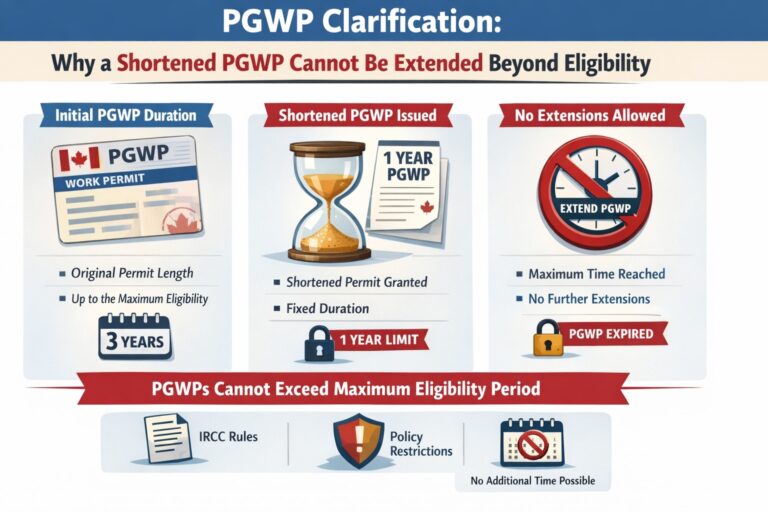
2. Restricting PGWP Eligibility
Not every graduate qualifies anymore.
Canada filtered:
-
Institutions
-
Programs
-
Fields of study
Low-outcome or “immigration-only” programs were quietly removed from the pipeline.
3. Raising CRS Scores Under Express Entry
Instead of saying “we are cutting immigration,” Canada simply raised the bar.
Higher CRS scores = fewer invitations.
No bans.
No announcements.
Just math.
4. Moving to Category-Based Draws
Canada shifted from broad draws to occupation-focused selection.
Priority went to:
-
Healthcare
-
Trades
-
STEM
-
French speakers
If your profile doesn’t match economic demand, you wait—or you never get invited.
5. Closing Low-Value Pathways
Programs that showed high misuse or low economic return were tightened or phased out.
Again, no shutdowns—just filters.
No ICE. No Border Drama. Just Filters.
Here’s the key difference:
-
Canada didn’t stop people at the border
-
Canada stopped approving applications inside the system
There was:
-
No enforcement spectacle
-
No fear-based messaging
-
No sudden mass removals
Applicants simply started seeing:
-
Higher scores
-
Fewer invitations
-
Narrower eligibility
That’s how Canada reduced without ever saying it loudly.
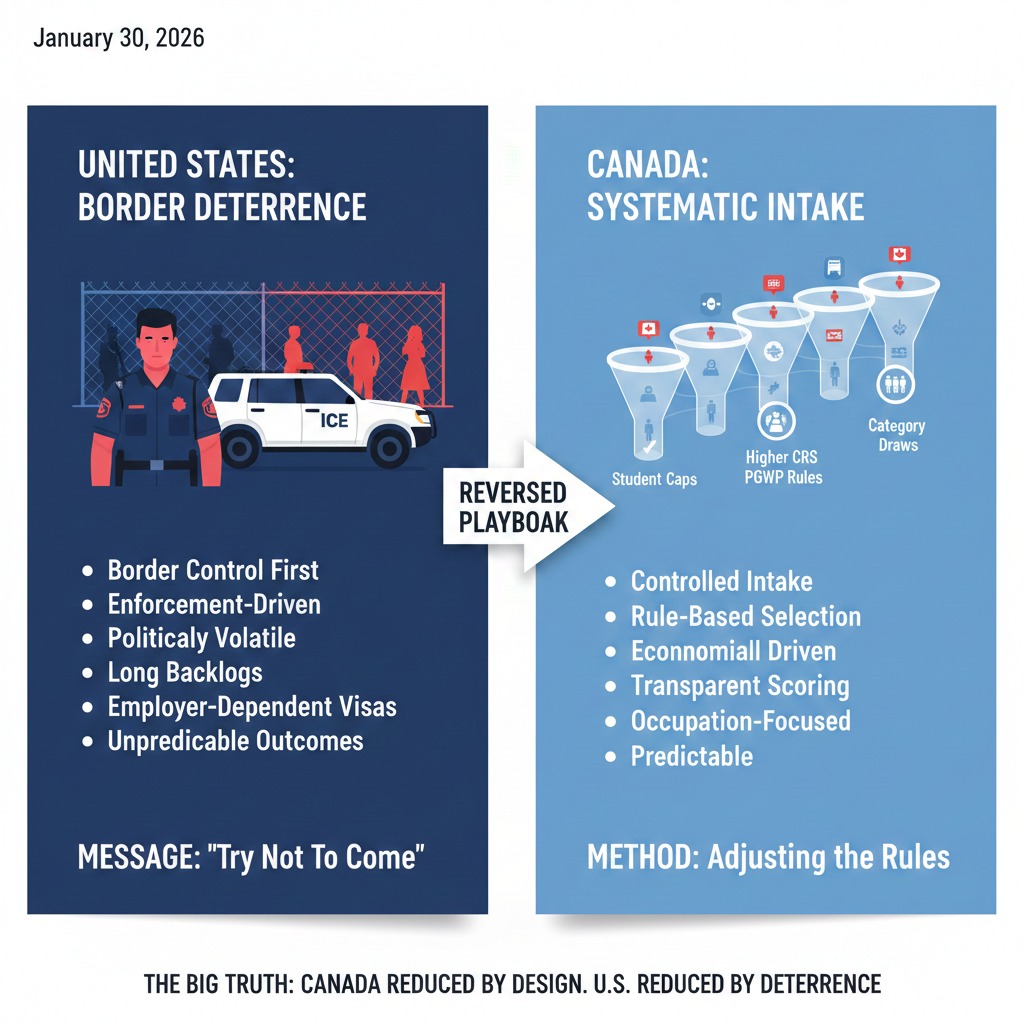
The Real Comparison
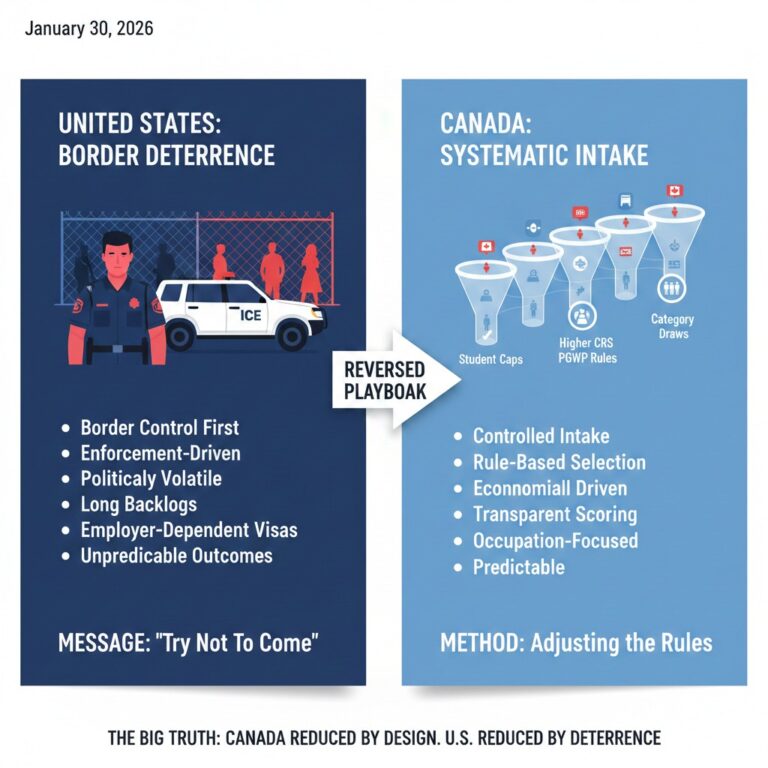
United States
-
Border control first
-
Enforcement-driven
-
Politically volatile
-
Long backlogs
-
Employer-dependent visas
-
Unpredictable outcomes
Canada
-
Controlled intake
-
Rule-based selection
-
Economically driven
-
Transparent scoring systems
-
Occupation-focused planning
-
Predictable—even when restrictive
The Big Truth
Canada has not shut immigration down.
The U.S. has not fixed immigration either.
Canada reduced numbers by design.
The U.S. reduced access by deterrence.
One system tightens quietly through policy.
The other tightens loudly through enforcement.
That is how Canada reversed the U.S. immigration playbook—and why, even today, Canada remains restrictive but still structured, planned, and rational.