
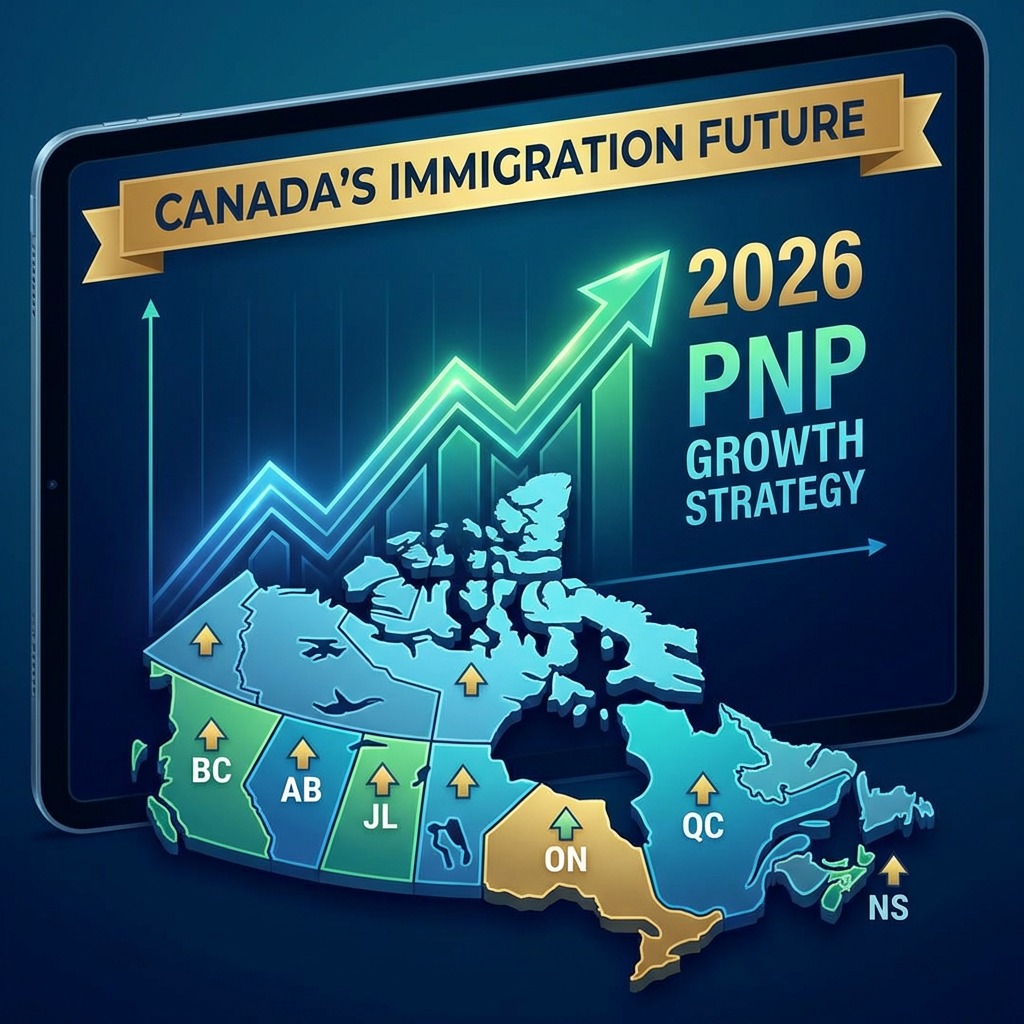
Canada’s immigration system is evolving rapidly, and in 2026, one program is clearly taking center stage — the Provincial Nominee Program. While Express Entry continues to play an important role, provinces are now exercising greater authority in selecting immigrants who directly meet their local labour market needs.
For skilled workers, international graduates, entrepreneurs, and temporary residents already in Canada, PNP has become one of the most strategic and reliable pathways to Permanent Residency (PR). In this blog, we explore why PNP is gaining momentum in 2026, how it works, and what applicants should know before applying.
What Is PNP?
The Provincial Nominee Program allows Canadian provinces and territories to nominate individuals who want to immigrate to Canada and settle in a specific province.
Unlike federal programs managed solely by Immigration, Refugees and Citizenship Canada, PNP gives provinces the authority to select candidates based on regional labour shortages, economic priorities, and demographic needs.
Each province has its own streams targeting:
-
Skilled workers
-
International graduates
-
Semi-skilled workers
-
Entrepreneurs
-
In-demand occupations
In 2026, this provincial flexibility has become one of the strongest pillars of Canada’s immigration strategy.
Why PNP Is Growing in 2026
1. Updated 2026 Targets – The “Why” Numbers
One of the most significant updates for 2026 is the target for PNP admissions. Canada plans to welcome 91,500 PNP nominees in 2026, nearly doubling the 2025 target. This makes PNP the largest single economic immigration pathway, even surpassing federal high-skilled programs.
This increase is driven by provinces seeking to fill regional labour shortages and sustain economic growth, making PNP an exceptionally strong pathway for skilled workers, international graduates, and temporary residents.
2. The “In-Canada” Priority (One-Time Initiative)
A major 2026 policy shift is the focus on temporary residents already in Canada. IRCC has allocated up to 33,000 temporary workers for transition to PR between 2026 and 2027.
This initiative gives massive advantage to candidates already in Canada, especially those on work permits or post-graduation work permits (PGWP), making now one of the best times to apply under PNP.
3. Targeted Labour Market Selection & Sector-Specific Streams
Provinces are increasingly using priority vs. capped streams to manage sector-specific demand:
-
Priority Sectors: Healthcare, Agriculture, and Skilled Trades often receive guaranteed allocations (50%+) and fast processing (sometimes 4–7 weeks).
-
Capped Sectors: Retail, Hospitality, and Trucking are limited (e.g., 25% in Saskatchewan) and open only during specific “intake windows.”
This targeted approach ensures that candidates in high-demand sectors have a higher chance of success.
4. Lower CRS Score Advantage
One of the biggest reasons PNP is popular is the CRS boost. If you receive a provincial nomination under an Express Entry–aligned stream, you get 600 additional CRS points, which almost guarantees an Invitation to Apply (ITA) for PR.
With Express Entry cut-offs fluctuating, many candidates with moderate CRS scores are now strategically pursuing PNP nomination to secure their PR pathway.
5. Opportunities for Temporary Residents
With the In-Canada Priority, temporary residents are a major focus in 2026. Several provinces now have streams targeting:
-
PGWP holders
-
LMIA-based workers
-
Open work permit holders
-
Graduates from specific provincial institutions
This makes PNP particularly attractive for candidates already working in Canada.
6. The Rise of Rural Pathways
Canada’s major cities are facing housing pressures, creating opportunities for rural immigration pathways:
-
Rural Community Immigration Pilot (RCIP) – Helps small communities attract skilled workers to address local labour gaps.
-
Francophone Community Immigration Pilot (FCIP) – Prioritizes French-speaking candidates and regional retention outside major urban centers.
These pathways are less competitive than urban streams like OINP or BC PNP, making them excellent alternatives for applicants in 2026.
Popular PNP Programs in 2026
Here are some of the most active provincial nominee programs:
-
British Columbia Provincial Nominee Program (BC PNP)
-
Alberta Advantage Immigration Program (AAIP)
-
Saskatchewan Immigrant Nominee Program (SINP)
-
Manitoba Provincial Nominee Program (MPNP)
Each program has unique eligibility criteria, occupation lists, and employer requirements. Choosing the correct stream is critical to success.
Express Entry–Aligned vs Base PNP
In 2026, applicants can apply through two types of PNP streams:
✔ Express Entry–Aligned Streams
-
Require an active Express Entry profile
-
Provide 600 CRS points
-
Faster processing after nomination
✔ Base (Non–Express Entry) Streams
-
No Express Entry profile required
-
PR portal for PR application
-
Slightly longer processing times
Provinces like Saskatchewan and Ontario have started restricting out-of-province student eligibility to ensure local retention, while French proficiency is now considered a golden ticket in streams like OINP French-Skilled Worker, with the 2026 Francophone target at 8–9%.
Key Factors That Improve PNP Approval Chances
To maximize your success in 2026, consider these factors:
-
Valid job offer, especially in small or rural communities
-
Work experience in a priority occupation
-
Canadian education (with local retention considerations)
-
Language proficiency – French can give a significant advantage
-
Genuine intent to reside in the nominating province
Provinces are carefully assessing applicants’ settlement intentions. Simply applying without real ties or employment prospects may lead to refusal.
Challenges to Watch in 2026
While PNP offers strong opportunities, there are important considerations:
-
Stream openings and closures happen quickly
-
Some provinces pause intake once quotas are met
-
Documentation requirements are strict
-
Employer compliance checks are increasing
-
Settlement intent is being closely reviewed
Timing and strategy are more critical than ever.
Why Strategic Planning Matters More Than Ever
PNP is no longer a “backup” option — it is now a primary immigration pathway. Every province operates differently, so a strategy that works for Ontario may not work for Saskatchewan or Alberta.
Applicants must:
-
Analyze occupation eligibility
-
Compare CRS and provincial scoring systems
-
Assess employer eligibility (if required)
-
Plan documentation carefully
Mistakes can delay or derail your PR process.
Final Thoughts: Is PNP the Right Path for You in 2026?
Canada’s immigration system is shifting toward decentralization. Provinces are playing a larger role in selecting candidates who meet real labour needs.
For skilled workers with moderate CRS scores, international graduates, and temporary residents, PNP in 2026 presents a powerful opportunity, especially with:
-
Expanded PNP allocations (91,500+ targets)
-
In-Canada priority for temporary residents (33,000 spots)
-
Sector-specific fast-track streams
-
Rural and Francophone pathways
-
Language and education advantages
Professional guidance can significantly improve your approval chances in this competitive environment.
Need Help With Your Application?
At Eiffel Immigration, we analyze your profile, identify the most suitable PNP stream, and guide you step-by-step toward Permanent Residency.
📌 Book your consultation today and secure your pathway to PR in 2026.