
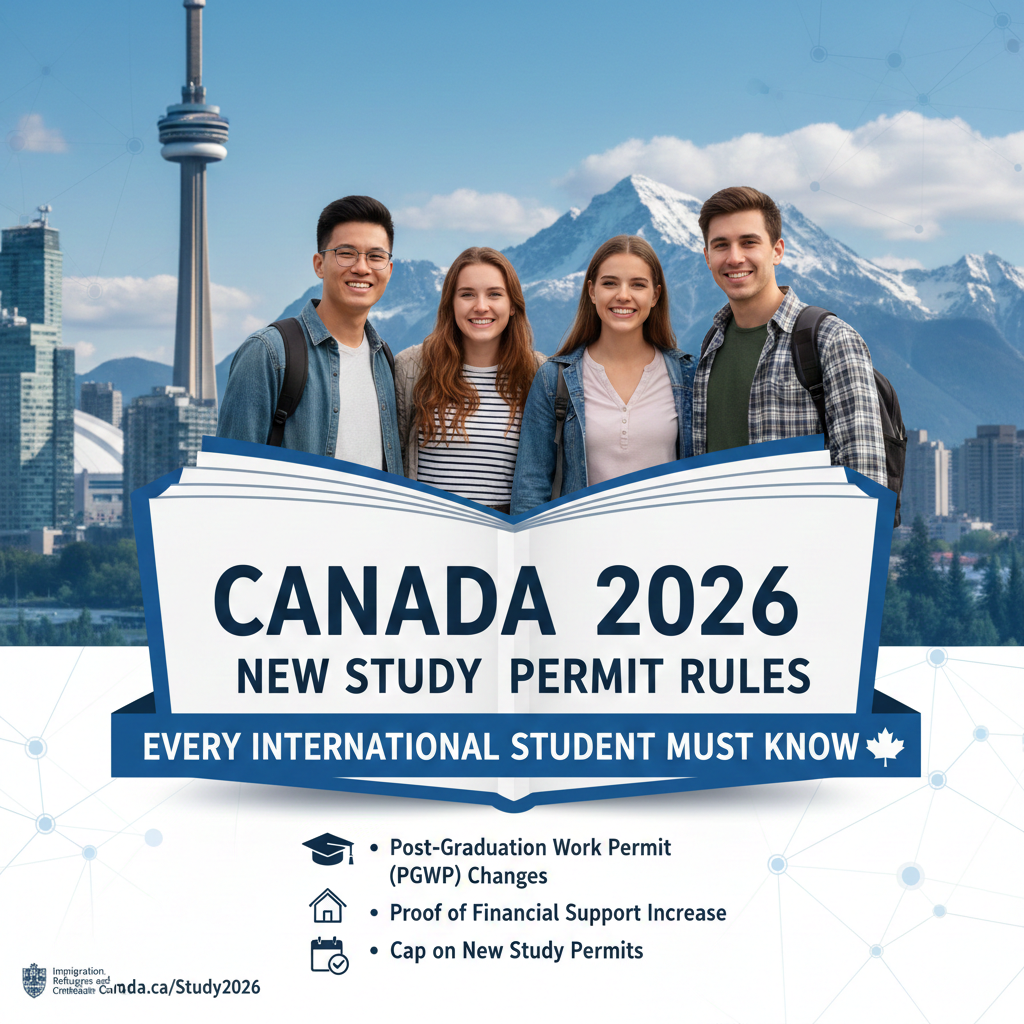
If you’re planning to study in Canada next year, this is the most important guide you’ll read on the new Study Permit rules for 2026 — and what they mean for you.
-
Study Permit Cap for 2026: What You Must Know
Canada has announced a cap of 408,000 study permits for 2026. This includes both new international students and extensions for existing students.
Here’s how it breaks down:
- 🧑🎓 155,000 permits for newly arriving international students
- 🔁 253,000 permits for students extending their status in Canada
This is about a 7% reduction compared to 2025 targets — a sign that Canada is focusing on quality and sustainability in international education.
-
Graduate Students: No PAL/TAL Needed Anymore
One of the major new study permit rules is that if you’re planning a Master’s or Doctoral degree, you no longer need a Provincial or Territorial Attestation Letter (PAL/TAL) to apply for your study permit.
Previously, PAL/TALs were required to confirm a spot under provincial study permit caps, often slowing down processing or blocking applicants once a quota was met.
What this means for you:
- Graduate-level applicants at public universities and colleges can apply without worrying about quota limits.
- Doctoral students may receive expedited permit processing, sometimes in just 2 weeks.
This is a huge win for research-focused students and international talent in Canada.
3. PAL/TAL Still Applies to Other Levels
If you’re applying for undergraduate or college programs, the PAL/TAL requirement still applies and is counted under the capped portion of 155,000 study permits.
That means:
- You must obtain a PAL/TAL from the province/territory
- There are still limits on how many students can be accepted each year
So, apply early and make sure your Letter of Acceptance and PAL/TAL are ready for submission.
4. Work While Studying: Hours and Rules (Official)
Under the updated International Student Program regulations, eligible international students can now work up to 24 hours per week off-campus during semesters — a slight uptick from previous rules and helpful if you rely on part-time work while studying.
Important to know:
- Work eligibility remains tied to maintaining full-time student status
- Working off-campus without authorization can jeopardize your study permit
This gives students much-needed flexibility to manage living costs without risking their status.
5. PGWP Eligibility and Field of Study
Another key part of planning your future after studies is the Post-Graduation Work Permit (PGWP) — which allows you to stay and work in Canada after graduation. IRCC continues to update the eligible fields of study, linked to Canada’s labour market needs.
Currently:
📍 Many previously removed fields (178 programs) have been reinstated and remain eligible until early 2026.
This means:
- Students in a wider range of study programs stay eligible for a PGWP
- You can build Canadian work experience — crucial for long-term career and PR pathways
Make sure to check the official PGWP eligible list on the government site to see if your program qualifies.
6. Official Links Every Student Should Bookmark
For accurate and up-to-date information, always refer directly to official sources:
🔗 Government of Canada: Study Permit overview
https://www.canada.ca/en/immigration-refugees-citizenship/services/study-canada/study-permit.html
🔗 IRCC News & Updates
https://www.canada.ca/en/immigration-refugees-citizenship/news.html
🔗 International Student Program regulations
https://www.canada.ca/en/immigration-refugees-citizenship/services/study-canada.html
Final Thoughts: Smart Planning in 2026
Canada’s Study Permit rules for 2026 clearly show one thing — Canada still welcomes international students, but only those who plan correctly and follow the rules. The system is now more structured, more transparent, and more focused on genuine students who truly want quality education and long-term success.
If you understand the new rules early, you already have an advantage.
Graduate students now benefit from no PAL/TAL requirement, faster processing, and fewer delays. Undergraduate and college students still have strong opportunities, but timing, documentation, and correct guidance matter more than ever. Working while studying is possible, but only within allowed limits. And choosing the right program is critical if you want a Post-Graduation Work Permit and future PR options.
Many students make mistakes not because they are unqualified, but because they:
-
Choose the wrong institution
-
Ignore PAL/TAL requirements
-
Assume all programs lead to PGWP
-
Work more hours than allowed
-
Apply late or with incomplete information
These mistakes can cost you time, money, and even your future in Canada.
That is why planning your Study Permit for 2026 should never be rushed or based on assumptions. Every student’s situation is different, and one wrong decision can change everything.
At Eiffel Immigration, we have guided international students for years through changing immigration rules. We focus on honest advice, legal pathways, and long-term planning, not shortcuts. Our goal is not just to help you come to Canada, but to help you build a stable future here.
If studying in Canada is your dream, start preparing today — because the students who plan early are the ones who succeed tomorrow