

In recent years, Canada has been evolving its immigration and travel systems to better serve the global workforce and millions of visitors who come to its cities, natural landscapes, and communities each year. Two topics gaining attention are digital visas and digital nomad visas — both buzzwords that can be confusing because they’re often used interchangeably but mean very different things. This blog breaks down what each concept involves, their current status in Canada, how you can use them, and what the future may hold.
1. Defining the Terms: Digital Visas vs Digital Nomad Visa
What Is a Digital Visas?
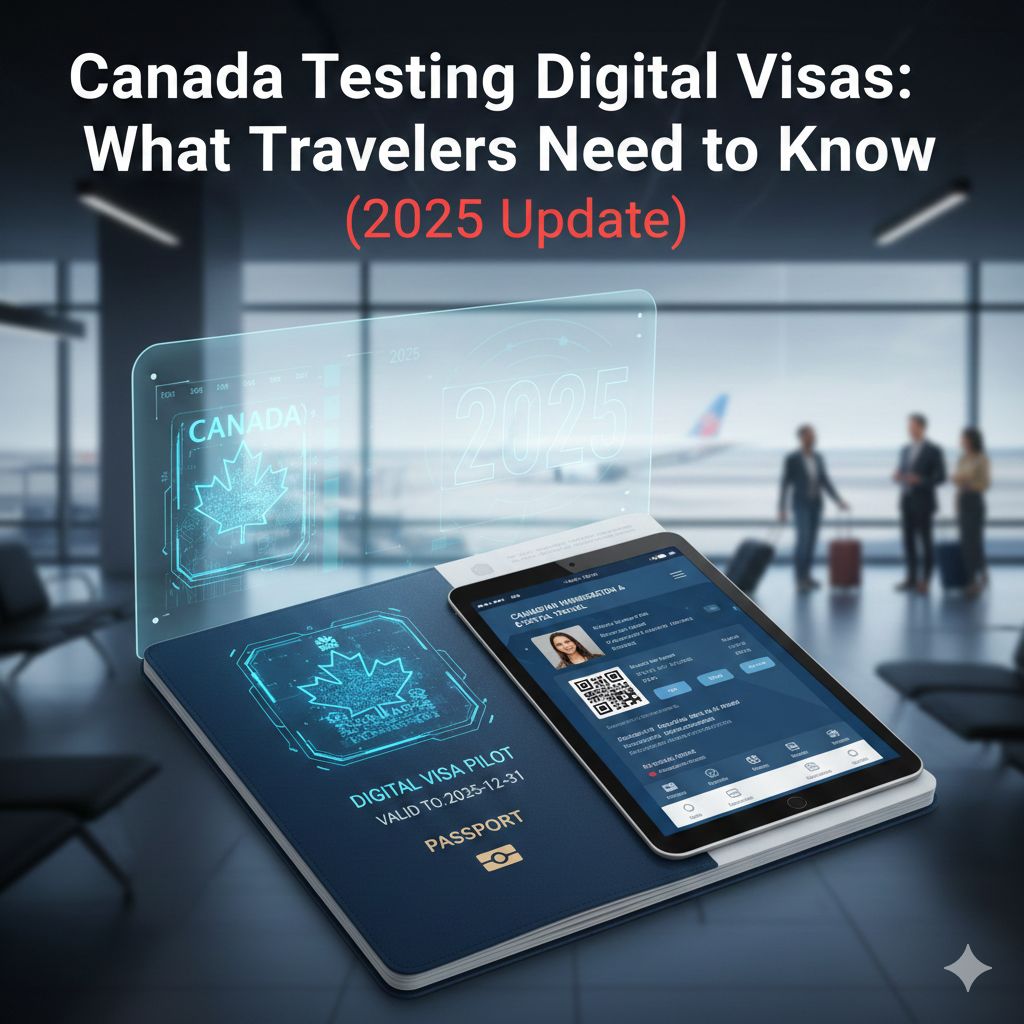
A digital visas refers to a digital version of a visa credential, meaning it is issued and stored electronically rather than in a physical passport sticker or paper document. This concept is part of Canada’s immigration modernization efforts aimed at improving convenience, security, and processing efficiency. Instead of mailing passports overseas for visa stamps, travelers could receive a digital credential online or via an app that can be shown to airlines or border officials.
Key Points:
-
Digital visas are electronic travel credentials stored digitally.
-
They are part of a pilot project by Immigration, Refugees and Citizenship Canada (IRCC) under its Digital Platform Modernization program.
-
Canada launched its first digital visas pilot for Moroccan visitors in late 2025, where approved travelers receive a digital visa alongside the physical one, with QR-code verification.
-
The goal is to eventually eliminate physical visa stamping, reduce processing times, enhance security against fraud, and streamline airport procedures.
At its core, a digital visa is about how a visa is delivered and verified, not a new immigration route or special status.
What Is a Digital Nomad Visa?
A digital nomad visa — unlike a digital visa — is a specific immigration program designed to allow remote workers to live in a country while working online for foreign employers. Many countries (e.g., Portugal, Estonia, Mexico) have introduced official digital nomad visas that grant stays from several months up to a few years without the need for a local work permit.
Canada does not currently have a dedicated digital nomad visa in the formal sense. Instead, remote workers can use existing pathways — especially the visitor visa or the Electronic Travel Authorization (eTA) — to stay in Canada and work remotely for an employer based outside Canada.
In other words: Canada’s “digital nomad visa” is essentially a visitor entry document that allows remote work under specific conditions.
2. How Remote Work for Digital Nomads Works in Canada (Under Current Rules)
Canada’s approach to digital nomads isn’t branded as a new visa category. Rather, its immigration framework allows remote work from within Canada under certain conditions — primarily via a visitor visa (or eTA for visa-exempt travelers).
Eligibility Conditions
Remote professionals can live in Canada and continue working for foreign employers if:
-
They hold a valid visitor visa or eTA to enter Canada.
-
They perform work remotely for companies outside Canada.
-
Their income is paid from abroad (not by a Canadian company or Canadian clients)
Duration of Stay
Most remote workers are admitted for up to six months per visit on visitor status. There may be options to extend visitor status or apply for a visitor record — but this does not automatically change one’s immigration status to a work permit holder.
Work Restrictions
Under this framework it’s not legal to:
-
Work for a Canadian employer without a proper work permit.
-
Perform work that directly involves the Canadian labor market.
If you decide to seek local employment in Canada, you must transition to an appropriate temporary work permit before starting any job with a Canadian company.
Practical Considerations
Since this system depends on existing visa categories:
-
Visitor visas can be required (costs vary by nationality).
-
Visa-exempt nationals apply for an eTA.
-
Medical insurance or private health coverage is recommended since public healthcare isn’t provided to visitors.
3. Benefits of Working Remotely from Canada
Even though Canada doesn’t label it as a digital nomad visa, many remote workers find this approach appealing due to Canada’s unique quality-of-life offerings:
High Standard of Living
Canada consistently ranks highly for safety, infrastructure, and overall well-being. Urban centers like Toronto, Vancouver, Montreal, and cities such as Halifax or Victoria combine coworking resources with vibrant cultural scenes.
Reliable Internet & Work Amenities
Canada has extensive high-speed internet coverage and coworking spaces across its major cities — essential tools for remote professionals.
Flexible Pathways
Remote workers entering as visitors have the flexibility to:
-
Explore Canada’s landscapes and urban life.
-
Network with employers (even in person during your stay).
-
Potentially transition to a temporary work permit or permanent residency route if a job offer comes through, particularly in in-demand sectors like tech.
This flexibility makes Canada an attractive option for remote workers who want a mix of adventure, culture, and professional opportunity.
4. Digital Visas: The Future of Canadian Travel Documents
While the digital nomad approach uses existing visa formats for now, Canada’s government is actively working on digitizing visas and immigration services. This is part of a broader modernization initiative by Immigration, Refugees and Citizenship Canada (IRCC).
Digital Visas Pilot Programs
Canada’s first digital visa pilot (with Moroccan nationals) marks a major milestone. Rather than replacing physical visas immediately, the program allows select travelers to test receiving digital credentials that are verifiable via QR codes and secure online storage.
What does Digital Visas Means for Travelers
If the pilot succeeds and expands:
-
You may soon receive your visa digitally instead of relying on mailed passport stamps.
-
The process could become faster, more secure, and more convenient.
-
Digital visas could become standard not just for visitor visas, but eventually for work permits, study permits, and other immigration categories.
5. Final Thoughts: What You Need to Know Before You Go
Canada does not currently have a dedicated digital nomad visa in the legal sense, but its existing systems — especially visitor visas and eTAs — allow remote work by people employed outside Canada.
At the same time, Canada is testing digital visas — modern credentials that may transform how travel documents are issued and verified in the future.
For remote workers considering Canada:
-
Ensure you have the right entry document (visitor visa or eTA).
-
Work only for a foreign employer while in Canada.
-
Plan for health insurance and costs during your stay.
-
Understand the limitations: you can’t take up a local job without a work permit.
With careful preparation and a solid grasp of the rules, Canada can be a fantastic base for remote work, offering world-class amenities, breathtaking nature, and the possibility of deeper immigration opportunities down the road.